 Save
Save My sister showed up at my apartment with a bag of perfectly ripe pears from the farmer's market, insisting we make something that didn't require turning on the oven. I was skeptical until she crumbled Gorgonzola over fresh greens and suddenly the kitchen smelled like something between a fancy restaurant and comfort. That salad changed how I think about lunch entirely—it proved that simple ingredients, when they actually like each other, need almost no help.
I made this for a dinner party once and watched my friend who claims to hate blue cheese eat three servings without commenting on it. When I finally told her what was in the dressing, she just laughed and asked for the recipe. Those quiet moments when food sneaks past someone's expectations feel like winning a small, delicious victory.
Ingredients
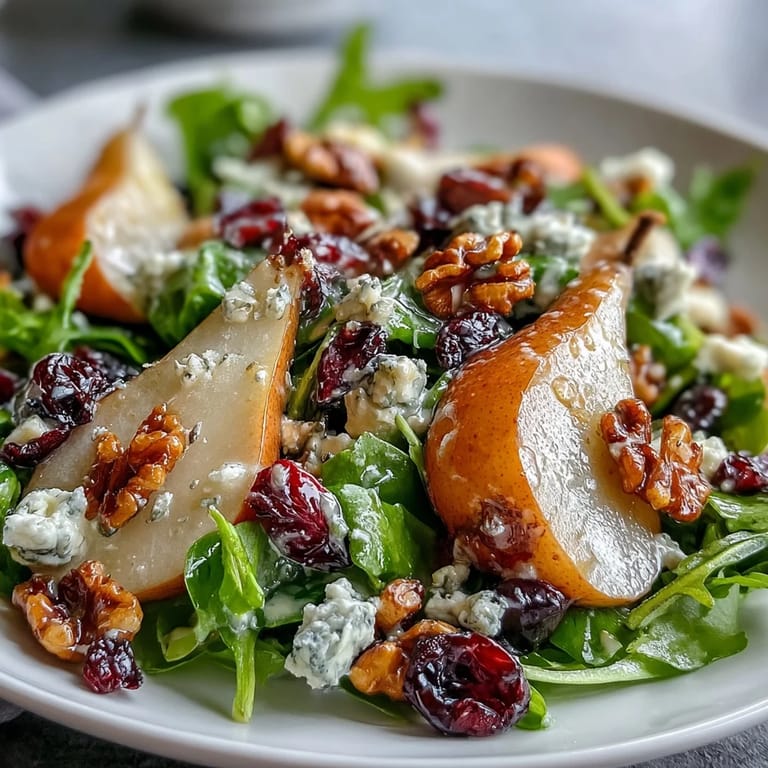
- Mixed salad greens (6 cups): Arugula brings a peppery bite, spinach adds mild earthiness, and spring mix gives you a little of everything. I've learned that greens actually matter here because they're doing the real work of holding up to the bold cheese flavor.
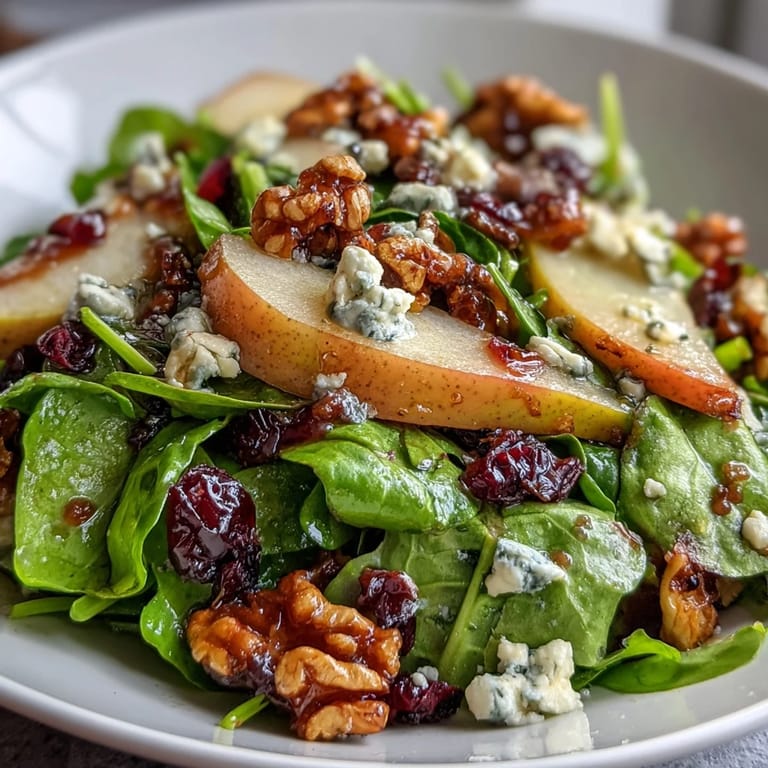
- Ripe pears (2 medium): This is where patience pays off—underripe pears taste like wood, but truly ripe ones are juicy and slightly honeyed. Slice them right before assembly so they don't oxidize and turn brown and sad.
- Gorgonzola cheese (100 g): The tangy, slightly spicy blue-veined cheese is non-negotiable in this salad, though I've used Roquefort when that's what the cheese shop had left.
- Toasted walnuts (1/2 cup, chopped): Buy them pre-toasted if you're short on time, but toasting your own for five minutes brings out a deeper, almost buttery flavor that changes everything.
- Dried cranberries (1/4 cup, optional): They add tartness and chewy texture, but I skip them sometimes when the pears are particularly sweet.
- Extra virgin olive oil (3 tbsp): The quality matters since there's nothing to hide behind—a fruity, grassy oil makes the dressing taste intentional rather than generic.
- Balsamic vinegar (1 tbsp): This is what brings sophistication, cutting through the richness of the cheese with dark, syrupy acidity.
- Honey (1 tbsp): It softens the sharpness of the vinegar and creates a dressing that feels balanced rather than aggressively sour.
- Dijon mustard (1 tsp): Just enough to add a subtle backbone and help emulsify the dressing so it clings to the greens.
- Salt and freshly ground black pepper: These seem obvious, but I've learned to taste as I go because the cheese is already salty.
Tired of Takeout? 🥡
Get 10 meals you can make faster than delivery arrives. Seriously.
One email. No spam. Unsubscribe anytime.
Instructions
- Whisk the dressing while you think about something pleasant:
- In a small bowl, combine the olive oil, balsamic vinegar, honey, and Dijon mustard. Whisk them together until they look creamy and emulsified rather than separated. The whole process takes about thirty seconds and the dressing should smell rich and slightly sweet.
- Dress the greens gently:
- Place your salad greens in a large bowl and pour about half the dressing over them, tossing with your hands or salad tongs until every leaf glistens slightly. You want them coated but not drowning, like they've been caught in a light, oily rain.
- Build the salad with intention:
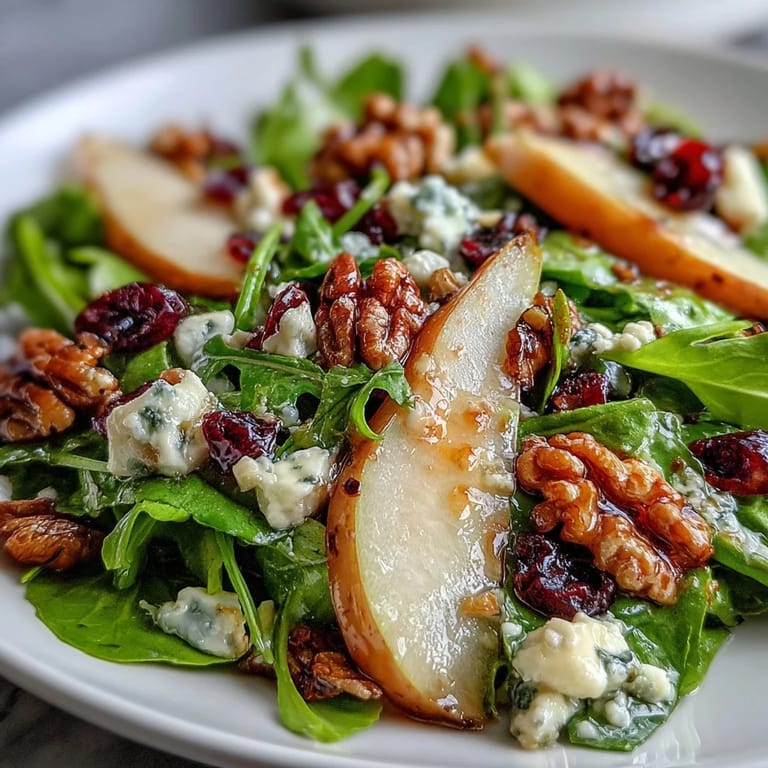
- Arrange the pear slices across the greens in a casual pattern—this isn't a competition, so overlapping and messiness are features, not bugs. Scatter the crumbled Gorgonzola and chopped walnuts over everything, then sprinkle the cranberries if you're using them. The visual appeal matters because you eat with your eyes first.
- Add the final flourish right before serving:
- Drizzle the remaining dressing in a thin stream across the top, letting it pool slightly in the bowl. This timing prevents the greens from getting soggy and keeps the pears from browning while you're fussing with plating.
- Serve immediately and watch people enjoy it:
- Transfer to plates or bowls right away and hand them around while everything is still crisp and cold. The best part of making this salad is seeing someone take that first bite and pause.
 Save
Save My mom started making this whenever my nephew visited, saying it was the only salad he'd actually eat without negotiating. Years later, he asked for the recipe to make for his college roommates, and I realized this simple combination had quietly become something people actually wanted to cook. Food that brings people together doesn't always announce itself loudly.
Why Pears and Gorgonzola Are Actually Soulmates
There's chemistry happening between these two that goes beyond mere pairing. The pear's subtle sweetness and delicate flesh provide the perfect backdrop for Gorgonzola's aggressive, funky boldness—it's like sweet and salty, gentle and sharp, all dancing together. I've tried substituting the pear with apple and it's fine, but it's never quite as elegant because apples fight back a little where pears simply surrender and absorb.
The Toast Factor That Nobody Talks About
Toasting nuts changes them from a footnote into a supporting actor. When you heat walnuts, their oils release and suddenly they taste nutty instead of just crunchy, adding depth that raw ones can't compete with. Spend five minutes on the stovetop or in a dry skillet, stirring occasionally until they smell almost coffee-like, and watch how much more substantial your salad becomes.
Variations and When to Reach for Them
This salad's beauty is that it adapts without losing its identity. I've made it through every season by changing which nuts I use—candied pecans show up in fall, hazelnuts in winter, pine nuts when I'm feeling fancy. You can add grilled chicken, crumbled goat cheese, or even crispy prosciutto, but the core magic stays the same as long as you respect the pear-and-cheese relationship.
- If dairy isn't welcome, use a plant-based blue cheese and swap the honey for maple syrup to keep that balance.
- Substitute Roquefort or any blue cheese you can find, though each one brings its own personality to the table.
- Pecan nuts, hazelnuts, or pine nuts all work beautifully—choose based on what's in your pantry and what sounds good.
 Save
Save This salad taught me that sometimes the most satisfying meals are the ones that respect their ingredients rather than trying to hide or transform them. Make it for people you like eating with.
Cooking Questions
- → Can I prepare this salad in advance?
Prepare the dressing and ingredients separately ahead of time. Toss everything together just before serving to keep the greens crisp and pears from oxidizing.
- → What type of pears work best?
Firm but ripe pears like Bosc, Anjou, or Bartlett hold their shape well when sliced. Avoid overly soft pears as they may become mushy in the salad.
- → Is there a substitute for Gorgonzola?
Roquefort, blue cheese, or feta work well as alternatives. For a vegan option, try plant-based blue cheese or omit the cheese entirely.
- → Can I use different nuts?
Pecans, hazelnuts, or even toasted almonds make excellent substitutes for walnuts. Toast them lightly to enhance their flavor.
- → How do I prevent pears from browning?
Toss sliced pears in a little lemon juice immediately after cutting. This natural acidity prevents oxidation while complementing the overall flavor profile.