 Save
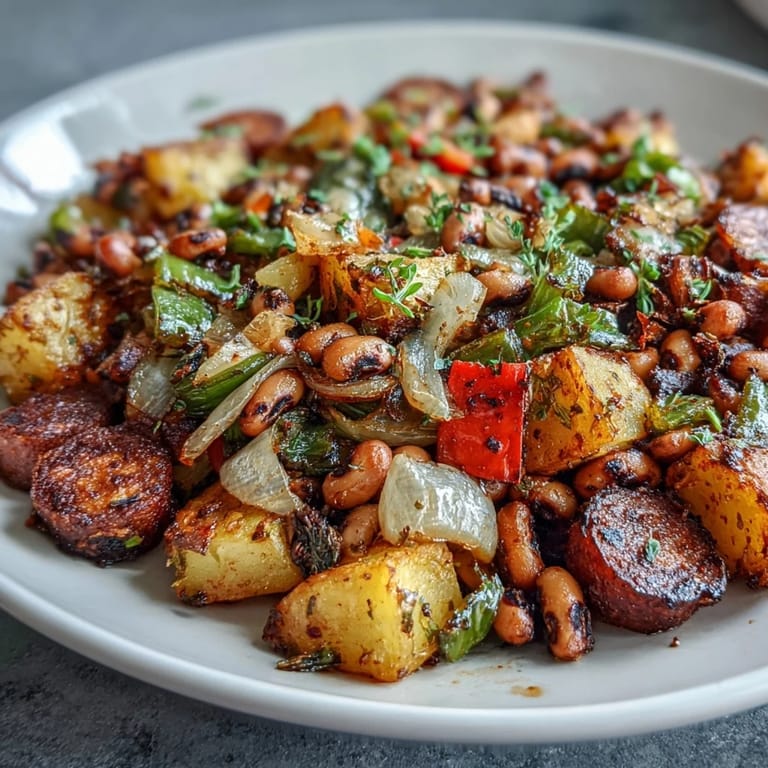
Save Sunday mornings at my grandmother's kitchen always smelled like cast iron and possibility, but it wasn't until I was tasked with feeding a crowd on a tight budget that black-eyed pea hash became my secret weapon. I'd watched her toss vegetables into a pan with such ease that I assumed it required some Southern birthright I'd never inherit, but one morning I realized she was just being practical, throwing together what made her happy. Now, this golden, crispy-edged hash sits on my own table, and somehow it tastes like both comfort and confidence.
I made this for my sister the morning after she'd had a terrible day, and watching her fork into those crispy potatoes, shoulders finally relaxing, reminded me why I cook at all. She ate half the pan in silence, then asked for the recipe, which felt like the highest compliment possible.
Ingredients
- Black-eyed peas (2 cups, cooked): These little beans carry a subtle earthiness that grounds the whole dish, and using canned saves time without sacrificing flavor.
- Yukon Gold potatoes (2 medium, diced): Their natural creaminess and golden color make them essential here, though I've learned the hard way that waxy potatoes hold their shape better than starchy ones.
- Yellow onion (1 medium, diced): The sweetness that develops when onions roast slowly is what builds the flavor foundation everyone tastes but can't quite name.
- Red bell pepper (1, diced): Not just for color, though that matters too—the slight sweetness and tender texture add brightness that keeps this from feeling heavy.
- Green bell pepper (1, diced): It contributes an almost vegetal undertone that balances the sweetness of its red cousin.
- Garlic (2 cloves, minced): Added raw to the mix, it mellows beautifully in the oven's dry heat and infuses every bite.
- Olive oil (2 tablespoons): This is your vehicle for toasting spices and creating those crispy edges that make the whole thing irresistible.
- Smoked paprika (1 teaspoon): The smoke is subtle but essential, adding depth without announcing itself loudly.
- Ground cumin (½ teaspoon): A whisper of warmth that ties everything to its Southern heritage.
- Dried thyme (½ teaspoon): Thyme dried is more concentrated than fresh, and it mingles with the roasting vegetables in the most understated way.
- Salt and black pepper (½ teaspoon salt, ¼ teaspoon pepper): Season boldly at first, then taste and adjust—your oven might behave differently than mine.
- Crushed red pepper flakes (¼ teaspoon, optional): If you want heat, start small because these little flakes intensify as they roast.
- Fresh parsley or green onions (2 tablespoons, chopped): The final garnish that says you cared enough to finish what you started.
Tired of Takeout? 🥡
Get 10 meals you can make faster than delivery arrives. Seriously.
One email. No spam. Unsubscribe anytime.
Instructions
- Get your oven hungry:
- Preheat to 425°F and let it come fully to temperature while you prep everything else. You want the oven hot enough that your vegetables start caramelizing immediately when they hit the heat.
- Start the potatoes first:
- Toss your diced Yukon Golds with a tablespoon of olive oil and half the salt and pepper, spread them in a single layer on a baking sheet, and roast for 15 minutes. This head start ensures they'll be tender, not crunchy, by the time everything comes together.
- Build your mixture while potatoes roast:
- In a bowl, combine the roasted potatoes fresh from the oven with the black-eyed peas, diced onion and peppers, minced garlic, remaining olive oil, and all your spices. The warm potatoes will start to absorb the seasonings, which is exactly what you want.
- Bring it all together:
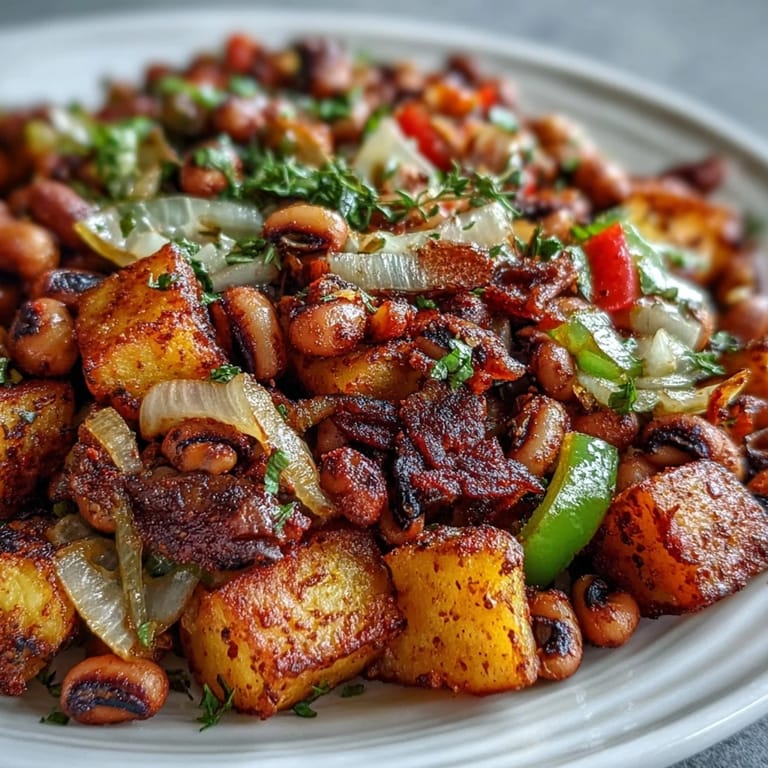
- Add this seasoned mixture back to the baking sheet, toss everything until evenly coated, and return to the oven for another 15 minutes. You're looking for golden edges on the potatoes and slightly charred spots on the peppers.
- The halfway stir matters:
- About 7 or 8 minutes in, give everything a gentle turn with a spatula so the bottom layer gets its chance to crisp up. This is when your kitchen will smell almost unbearably good.
- Finish with intention:
- Pull it from the oven when the potatoes are fork-tender and everything has taken on a warm golden hue. Scatter your fresh parsley or green onions on top and serve immediately while everything is still steaming.
 Save
Save There was this Tuesday morning when I made this hash for myself, nobody else, just because my kitchen felt quiet and I wanted to fill it with something good. Sometimes the most important meals are the ones we make without an audience, just to remind ourselves that we're worth the effort.
The Alchemy of Roasting Vegetables
Roasting is honestly a form of magic that took me years to understand—heat coaxes out sweetness from vegetables that steaming or boiling never touches. When you put all these components on one sheet at high temperature, something happens that's almost chemical in nature: the onions caramelize, the peppers soften and concentrate their flavor, and the potatoes develop a crust while staying creamy inside. I stopped thinking of roasting as a simple cooking method and started seeing it as a conversation between heat and ingredients, where everyone comes away transformed.
Playing with Variations and Seasons
The beauty of this hash is how it bends to your kitchen's mood and your pantry's offerings. I've made it with sweet potatoes when I wanted earthier sweetness, added smoked paprika's Spanish cousin when I was feeling adventurous, and once threw in some diced celery because it was there and I was curious. Winter calls for roasted root vegetables, summer begs for fresh corn stirred in at the end, and spring practically demands fresh herbs scattered across the top. The structure stays solid while the personality shifts with the seasons and whatever's caught your eye at the market.
Serving Suggestions and Next Steps
This hash is genuinely complete on its own—it doesn't need anything to justify its existence—but I've discovered it's equally happy being a supporting player. Top it with a fried egg and suddenly you have breakfast for dinner, add a handful of sautéed greens and it becomes a light main course, pile avocado on top and it feels like brunch. I've even served it at room temperature the next day as a salad situation, tossed with a simple vinaigrette and fresh herbs, which tells you something about how sturdy and versatile this really is.
- For heat seekers, drizzle with hot sauce or salsa, or use the red pepper flakes more generously than the recipe suggests.
- If you're making this vegan or want extra protein, a poached egg or crumbled tofu both work beautifully without changing the fundamental character of the dish.
- Store any leftovers in the fridge for up to three days and reheat gently in a 350°F oven to restore some of that crispy texture.
 Save
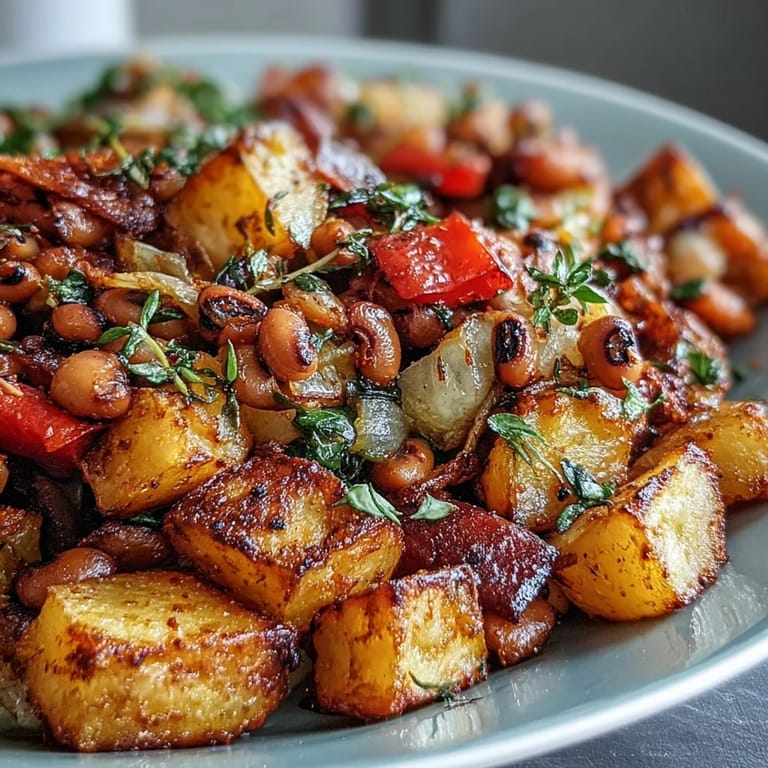
Save This hash has become the dish I make when I want to feel like myself in the kitchen, when I want something that tastes like it took effort but didn't exhaust me. That, I think, is the whole point.
Cooking Questions
- → Can I use dried black-eyed peas instead of canned?
Yes, soak and cook dried peas according to package directions until tender, then drain well before roasting. This may add extra preparation time but allows you to control the sodium level.
- → What makes this dish traditionally Southern?
Black-eyed peas have been a Southern staple for generations, often associated with good luck and prosperity. The combination with potatoes and peppers reflects the region's hearty, vegetable-focused cooking traditions.
- → Can I prepare this ahead of time?
You can dice all vegetables in advance and store them in the refrigerator. The finished hash reheats beautifully in the oven at 350°F for 10-15 minutes, though the texture is best when freshly roasted.
- → What other vegetables work well in this hash?
Sweet potatoes, butternut squash, zucchini, or corn kernels all complement the black-eyed peas nicely. Add heartier vegetables like sweet potatoes with the potatoes, and tender ones like zucchini halfway through roasting.
- → Is this suitable for meal prep?
Absolutely. Portion the cooled hash into airtight containers and refrigerate for up to 4 days. It reheats well in the microwave or oven, making it convenient for quick breakfasts or lunches throughout the week.
- → How can I add more protein?
Top with a fried or poached egg, serve alongside sausage or bacon, mix in crumbled bacon during the last few minutes of roasting, or add diced cooked chicken with the vegetables.