 Save
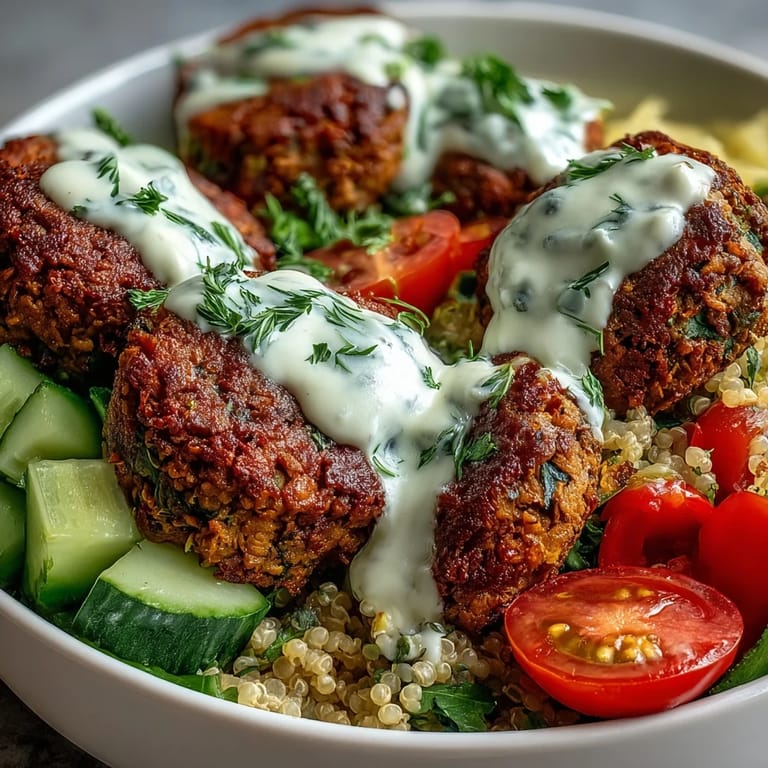
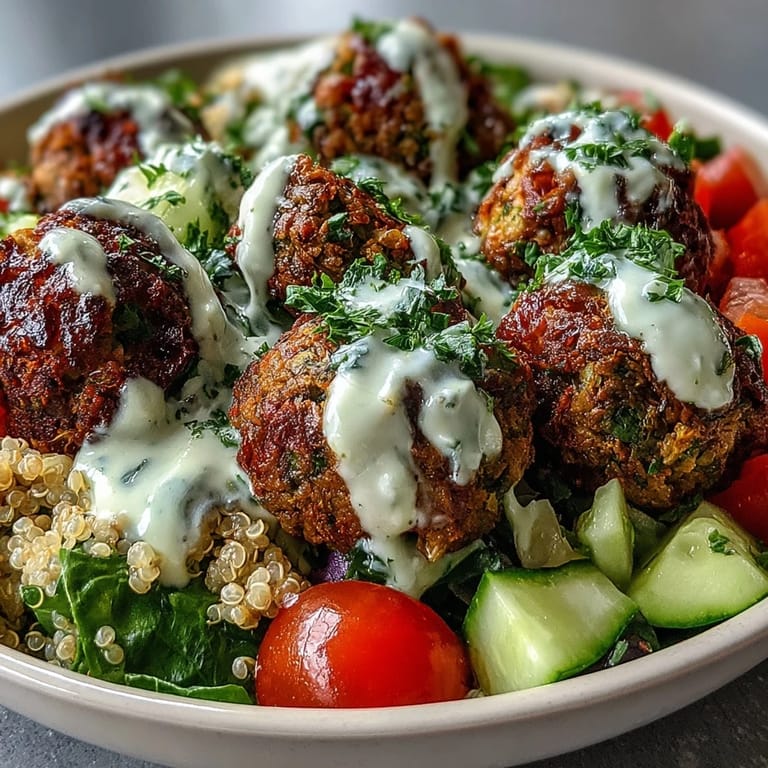
Save My kitchen smelled like a street corner in Beirut one rainy Tuesday, all because I'd tossed fresh cilantro and parsley into the food processor without measuring. The falafel mixture came together in seconds, green and fragrant, and I realized I'd been overthinking Middle Eastern cooking for years. Baking instead of frying made the whole process feel less intimidating, and when I pulled those golden rounds from the oven, crisp on the edges and tender inside, I knew I'd found my new weeknight staple. Now this bowl shows up on my table at least twice a month, sometimes more when the tomatoes are good.
I made this for a friend who swore she hated quinoa, mostly because she'd only ever had the mushy, underseasoned kind. She took one bite of this bowl, with the falafel still warm and the tahini pooling around the tomatoes, and asked for the recipe before she'd even finished eating. We sat on my back porch that evening, scraping our bowls clean and talking about how food can change your mind if someone cares enough to make it right.
Ingredients
- Cooked chickpeas: The backbone of the falafel, they need to be well drained or your mixture will turn into wet cement instead of a shapeable dough.
- Fresh parsley and cilantro: Don't even think about using dried here; the fresh herbs give the falafel that bright, grassy flavor that makes them taste alive.
- Chickpea flour: This is the secret binder that keeps everything together without gluten, and it adds a subtle nuttiness you won't get from all purpose flour.
- Quinoa: Rinse it well under cold water or it'll taste bitter and soapy, a lesson I learned the hard way on my first attempt.
- Tahini: Buy the good stuff if you can; cheap tahini separates and tastes chalky, while quality tahini turns silky and rich with just a splash of water.
- Cherry tomatoes: Halve them so they release their juice into the bowl and mingle with the tahini sauce.
- Cucumber: I like to dice it small so you get a little crunch in every forkful without overwhelming the other textures.
- Green onions: They go in twice, once blended into the falafel and again sliced thin on top for a sharp, fresh bite.
- Garlic: Use fresh cloves, not the jarred stuff, especially in the tahini sauce where it really shines through.
- Lemon juice: Freshly squeezed makes all the difference; it brightens the falafel mixture and thins the tahini into a pourable sauce.
Tired of Takeout? 🥡
Get 10 meals you can make faster than delivery arrives. Seriously.
One email. No spam. Unsubscribe anytime.
Instructions
- Get the oven ready:
- Preheat to 400 degrees F and line your baking sheet with parchment so the falafel won't stick. This step matters more than you think.
- Blend the falafel base:
- Toss chickpeas, parsley, cilantro, green onions, garlic, cumin, coriander, cayenne, salt, pepper, lemon juice, and chickpea flour into the food processor. Pulse until it's mostly smooth but still has a bit of texture, scraping down the sides once or twice.
- Shape the falafel:
- Wet your hands so the mixture doesn't cling to your palms, then roll it into 12 balls or flatten them into patties. Arrange them on the baking sheet and brush each one lightly with olive oil.
- Bake until golden:
- Slide the sheet into the oven for 22 to 25 minutes, flipping them halfway so both sides get crisp and brown. They should look like little suns when they're done.
- Cook the quinoa:
- Combine quinoa, water, and salt in a saucepan, bring it to a boil, then lower the heat and cover. Let it simmer for 15 minutes, then turn off the heat and let it sit covered for 5 more before fluffing with a fork.
- Whisk the tahini sauce:
- Stir together tahini, garlic, lemon juice, salt, and 2 tablespoons of water until it's smooth and pourable. Add another tablespoon of water if it's too thick.
- Build the bowls:
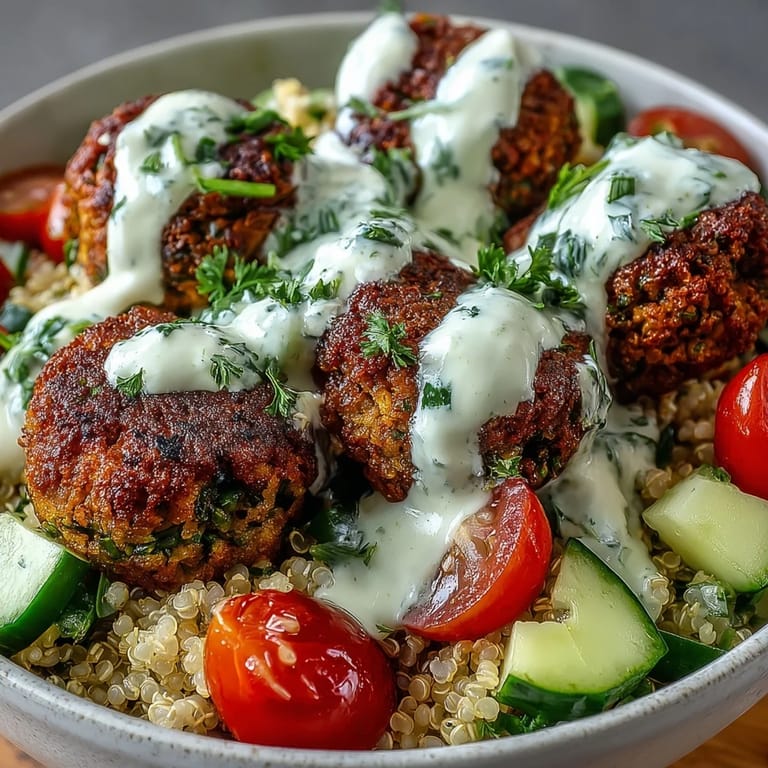
- Divide the quinoa among four bowls, then top each with cucumber, tomatoes, green onion, and three falafel. Drizzle the tahini sauce over everything generously.
- Serve right away:
- These bowls are best when the falafel are still warm and the quinoa is fluffy. Toss on extra herbs or a lemon wedge if you're feeling fancy.
 Save
Save One night I made this bowl for a potluck and forgot to label it, so everyone assumed it was just another salad and walked past it. Then one person tried it, and suddenly there was a small crowd around my dish, forks in hand, asking what was in the sauce. I realized then that this recipe doesn't need an introduction, it speaks for itself once it hits the table.
Making the Falafel Work Every Time
The texture of your chickpeas matters more than you'd think. If they're too wet, the falafel will spread and flatten in the oven instead of holding their shape. I always drain canned chickpeas in a colander, then pat them dry with a clean towel before adding them to the food processor. It takes an extra two minutes but saves you from a tray of sad, flat patties.
Getting the Tahini Sauce Just Right
Tahini seizes up when you first add water, turning thick and paste like, and the first time it happened I thought I'd ruined it. Keep whisking and adding water a little at a time, and it will suddenly loosen into a creamy, dreamy sauce. The magic moment happens right when you think it's hopeless, so don't give up too soon.
Storing and Reheating Leftovers
I keep the components separate in the fridge: falafel in one container, quinoa in another, and the tahini sauce in a small jar. That way I can reheat the falafel in a hot oven for a few minutes to crisp them up again, and everything tastes fresh instead of soggy. The assembled bowls don't hold up as well, but the individual parts stay good for three days.
- Warm the falafel at 375 degrees F for about 8 minutes to bring back the crunch.
- Thin the tahini sauce with a teaspoon of water if it thickens up in the fridge.
- Add the cucumber and tomatoes right before serving so they stay crisp and don't water down the bowl.
 Save
Save This bowl has become my answer to the question of what to make when I want something that feels special but doesn't require hours of work. It's the kind of meal that makes you feel good while you're eating it and even better after, and that's rare enough to be worth keeping in your rotation.
Cooking Questions
- → Can I make the falafel ahead of time?
Yes, you can prepare the falafel mixture and shape it into patties up to 24 hours in advance. Store them covered in the refrigerator until ready to bake. Leftover baked falafel keeps well for up to 3 days and reheats beautifully in the oven.
- → What can I substitute for chickpea flour?
All-purpose flour works as a 1:1 substitute for chickpea flour. For a gluten-free option, you can use almond flour or additional breadcrumbs. The binding agent helps hold the falafel together during baking.
- → Is this bowl protein-rich?
Absolutely. Each serving provides 14 grams of protein from the chickpea-based falafel and quinoa. The combination offers complete plant-based protein, making this a satisfying and nutritionally balanced meal.
- → How do I store leftovers?
Store components separately in airtight containers. The falafel stays fresh for 3 days, quinoa for 5 days, and cut vegetables for 2-3 days. Keep the tahini sauce in a separate jar and stir before reheating.
- → Can I air-fry the falafel instead?
Certainly. Air-fry at 375°F for 12-15 minutes, shaking halfway through. The falafel will still achieve a crispy exterior while using less oil than baking. Adjust time based on your air fryer model.