 Save
Save There's a particular magic to standing in front of an open pantry at 6 PM with nothing planned for dinner. That's when I discovered instant ramen doesn't have to taste like college dorm nostalgia—it can taste like Thailand in ten minutes. A jar of peanut butter, some chili crisp I'd been hoarding, and the kind of hunger that doesn't wait taught me that the best meals are sometimes the ones you throw together from what's already there.
I made this for my roommate on a Tuesday night when she came home exhausted from work, and she literally closed her eyes on the first bite. She asked if I'd ordered Thai takeout, which felt like winning the lottery with pantry staples. Now when she has days like that, this is what she asks for—proof that sometimes the simplest recipes are the ones people actually crave.
Ingredients
- Instant ramen noodles: Discard those seasoning packets—they're not the star here anymore, and the noodles themselves are perfectly fine on their own once they meet the sauce.
- Creamy peanut butter: This is your base, the backbone of the whole thing; use something you'd actually eat by the spoonful.
- Soy sauce: The umami anchor that makes two minutes of prep taste like hours of simmering.
- Chili crisp: Not just heat—it's oil-based crunch and flavor that transforms the whole texture.
- Rice vinegar: A splash of brightness that keeps the sauce from feeling heavy, even though it's built on peanut butter.
- Honey or maple syrup: A whisper of sweetness that balances the salt and spice without announcing itself.
- Toasted sesame oil: Use the real stuff; the smell alone tells you it's doing something important.
- Garlic clove: Fresh and minced, because one small clove somehow seasons an entire sauce perfectly.
- Hot water: Your secret tool for making thick sauce flow like silk without watering down the flavor.
Tired of Takeout? 🥡
Get 10 meals you can make faster than delivery arrives. Seriously.
One email. No spam. Unsubscribe anytime.
Instructions
- Boil the noodles:
- Bring a pot of water to a rolling boil and cook the ramen according to the package—usually three to four minutes. You want them tender but with just a hint of resistance. Reserve two or three tablespoons of that starchy cooking water before you drain; it's liquid gold for thinning the sauce without diluting flavor.
- Build the sauce:
- In a medium bowl, combine the peanut butter, soy sauce, chili crisp, rice vinegar, honey, sesame oil, and minced garlic. Whisk it all together, watching as the mixture goes from thick and reluctant to glossy and smooth. Add that reserved noodle water a tablespoon at a time, whisking between additions, until you have something that flows like satay sauce—pourable but still clinging to a spoon.
- Marry noodles and sauce:
- While the noodles are still warm, dump them into the bowl with the sauce and toss with the kind of enthusiasm you'd use for anything worth eating. Every strand should glisten, every bite should taste intentional.
- Finish and serve:
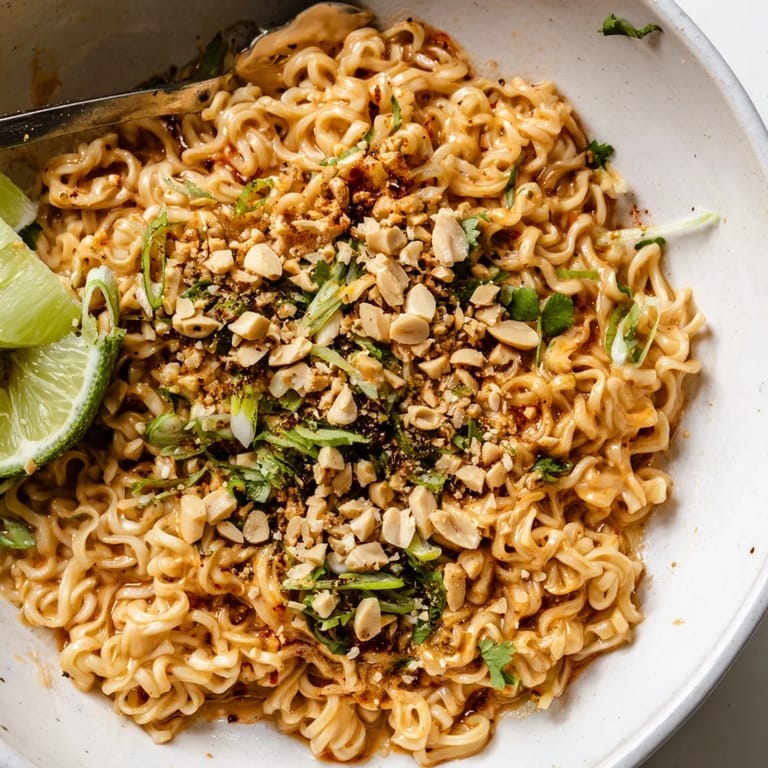
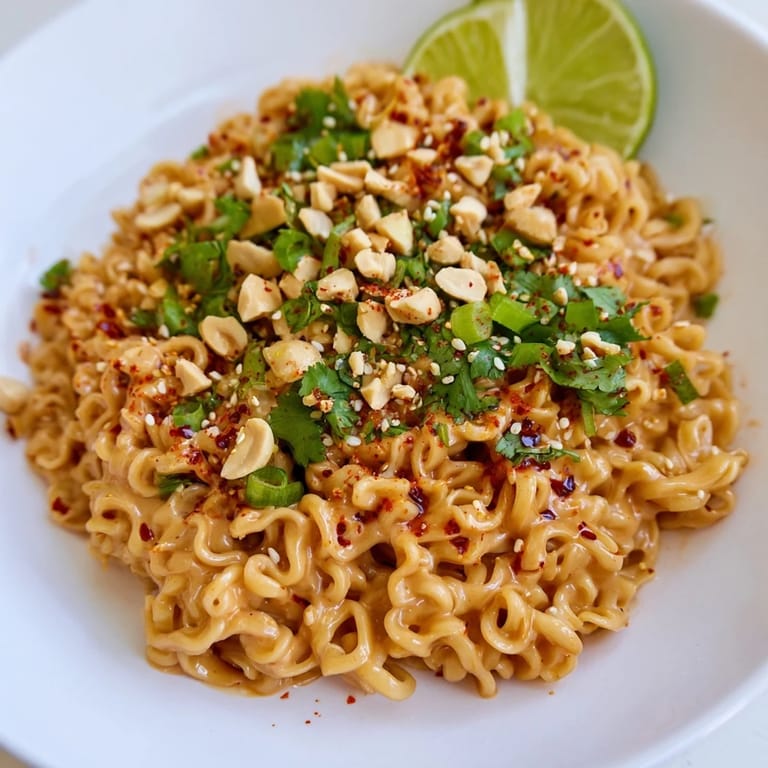
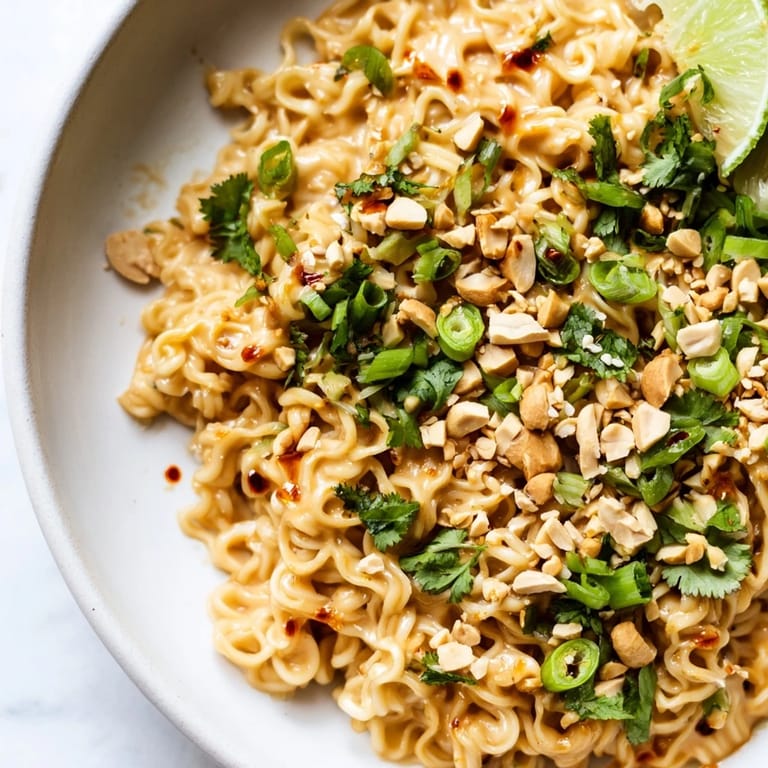
- Divide between two bowls and scatter the toppings across the top—scallions, peanuts, sesame seeds, cilantro, lime wedges. Serve immediately, while the noodles are still hot and the sauce is still clinging.
 Save
Save My friend asked me once why instant ramen—why not make something from scratch? I realized it wasn't about the noodles at all; it was about knowing you could make something delicious in the time it takes to change clothes. That's when food stops being an obligation and becomes a small kindness you do for yourself.
The Peanut Butter Question
Creamy versus crunchy isn't just preference here—it's architecture. Creamy dissolves into the sauce like it was always meant to be there, creating something silky and seamless. Crunchy peanut butter keeps its texture, which some people love, but I find it fights against the sauce's flow rather than joining it. Stick with creamy unless you're specifically craving that resistance.
Heat and Sweetness: Finding Your Balance
The chili crisp is adjustable, and that's the whole point—start with one tablespoon if you're cautious, and work your way up knowing it's easy to add more next time. The honey balances the heat in a way that sugar wouldn't; it rounds the corners instead of just sweetening. If you find yourself reaching for more of both, that's not a problem; that's you learning what your taste buds actually want.
Making It More Than a Quick Dinner
This sauce is patient with additions—a handful of stir-fried vegetables won't overwhelm it, a soft-boiled egg won't drown in it, pan-seared tofu finds a home in it. The beauty is that nothing feels forced, everything feels intentional.
- Steamed bok choy or snap peas add color and crunch without changing the essential character of the dish.
- A soft-boiled egg with a runny yolk turns the sauce into something almost creamy, almost luxurious.
- Keep lime wedges on the side so people can brighten or mellow their own bowl.
 Save
Save This is the recipe I've made more times than I can count, and it's still exciting. Instant ramen stopped being a shortcut and became its own kind of cooking.
Cooking Questions
- → Can I make this dish gluten-free?
Yes, substitute gluten-free noodles and tamari sauce for soy to avoid gluten while keeping the flavors balanced.
- → How can I adjust the spice level?
Modify the amount of chili crisp added to the sauce based on your desired heat preference.
- → What proteins pair well with these noodles?
Pan-seared tofu, grilled chicken, or a soft-boiled egg complement the creamy peanut sauce perfectly.
- → Are there nut-free alternatives for the peanut butter?
Almond butter or sunflower seed butter can replace peanut butter for a nut-free variation with a slightly different flavor.
- → What fresh toppings enhance the dish?
Scallions, roasted peanuts, sesame seeds, fresh cilantro, and lime wedges add texture and brightness to the noodles.
- → How do I thin the peanut sauce if it’s too thick?
Add reserved noodle cooking water or hot water gradually until the sauce reaches a smooth, pourable consistency.