 Save
Save There's something almost magical about the kitchen on a quiet afternoon when tomatoes are at their peak—the kind of day when you open the oven door and the aroma hits you like a warm embrace. Years ago, I discovered that roasting tomatoes transforms them into something entirely different from fresh, something deeper and almost wine-like. That afternoon led to this soup, a recipe that's become my go-to when I want to feel like I'm dining at a trattoria in Tuscany without leaving home.
I made this for my sister on a drizzly October evening when she'd had the kind of day that needed more than just food—it needed warmth. As she took that first spoonful, the tension in her shoulders seemed to melt, and she closed her eyes. We didn't say much, just sat there with the soup and some crusty bread, and somehow that moment reminded me why cooking for people matters so much.
Ingredients
- Ripe tomatoes (1.5 kg): Use the ripest, most flavorful tomatoes you can find—this is where all the magic happens, and their quality makes the difference between good soup and unforgettable soup.
- Yellow onion (1 large): The sweetness balances the acidity of tomatoes and caramelizes beautifully as it roasts.
- Garlic cloves (6): Roasting mellows garlic into something almost sweet and buttery rather than sharp.
- Extra-virgin olive oil (2 tbsp): The foundation for roasting vegetables evenly and adding richness to the final bowl.
- Kosher salt and black pepper: Season generously before roasting to draw out the tomatoes' natural juices and deepen flavors.
- Vegetable broth (2 cups): Low-sodium broth lets the roasted vegetables be the star without competing flavors.
- Fresh basil leaves (1/2 cup): Add these after blending to preserve their delicate, aromatic qualities and color.
- Unsalted butter and sugar (optional): A tiny bit of butter adds silkiness, while sugar gently rounds out acidity if your tomatoes taste slightly sharp.
- Heavy cream or crème fraîche (optional): A swirl on top transforms the soup into something more luxurious, though it's equally beautiful on its own.
Tired of Takeout? 🥡
Get 10 meals you can make faster than delivery arrives. Seriously.
One email. No spam. Unsubscribe anytime.
Instructions
- Set your oven to roast:
- Preheat to 220°C (425°F) and line a baking sheet with parchment paper so the vegetables won't stick and cleanup will be effortless.
- Arrange and season:
- Halve the tomatoes, quarter the onion, and scatter both across the sheet with peeled garlic cloves. Drizzle everything with olive oil and season generously with salt and pepper, then toss until each piece glistens with oil.
- Roast until caramelized:
- Let them roast for 35-40 minutes until the tomato edges look almost burnt and the onions have collapsed into tender sweetness. The kitchen should smell absolutely incredible at this point.
- Combine and simmer:
- Scrape the roasted vegetables and all their precious juices into a large pot, pour in the vegetable broth, and bring everything to a gentle simmer over medium heat.
- Add basil and flavorings:
- Stir in the fresh basil, butter if using, and a touch of sugar if your tomatoes are acidic. Let it simmer for just 5 minutes so the basil releases its aroma without losing its color.
- Blend until smooth:
- Use an immersion blender to puree everything into silky submission, or work in batches with a countertop blender and return it all to the pot. The texture should be luxuriously smooth.
- Taste and refine:
- Season with more salt or pepper as needed, and consider straining through a fine sieve for an ultra-refined texture if you're feeling fancy.
- Serve with care:
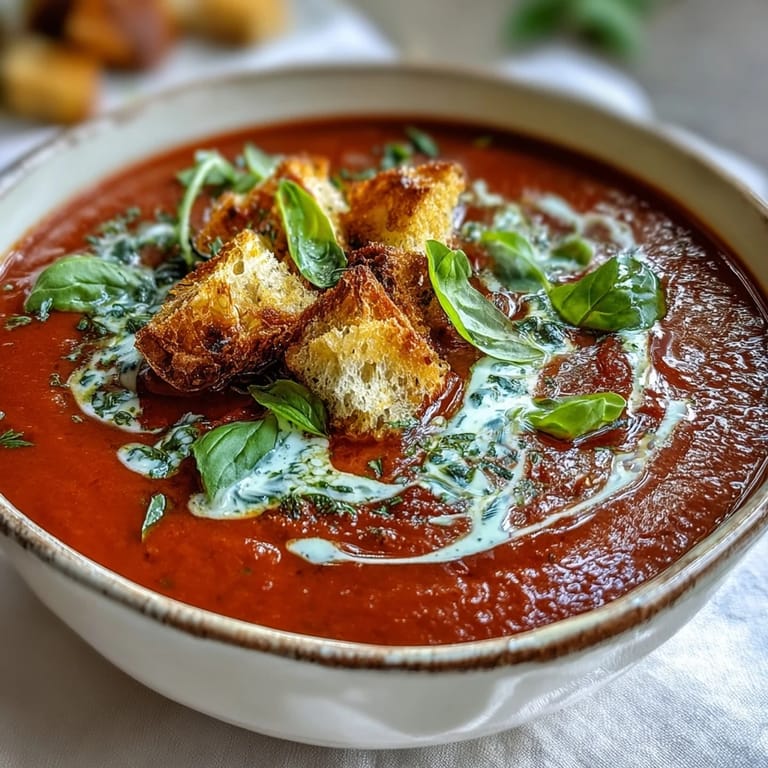
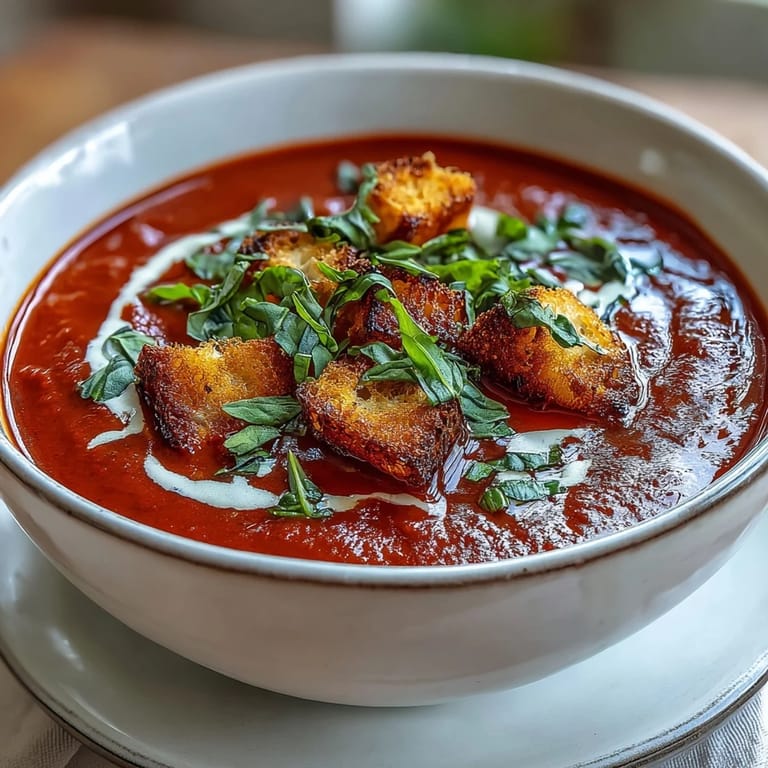
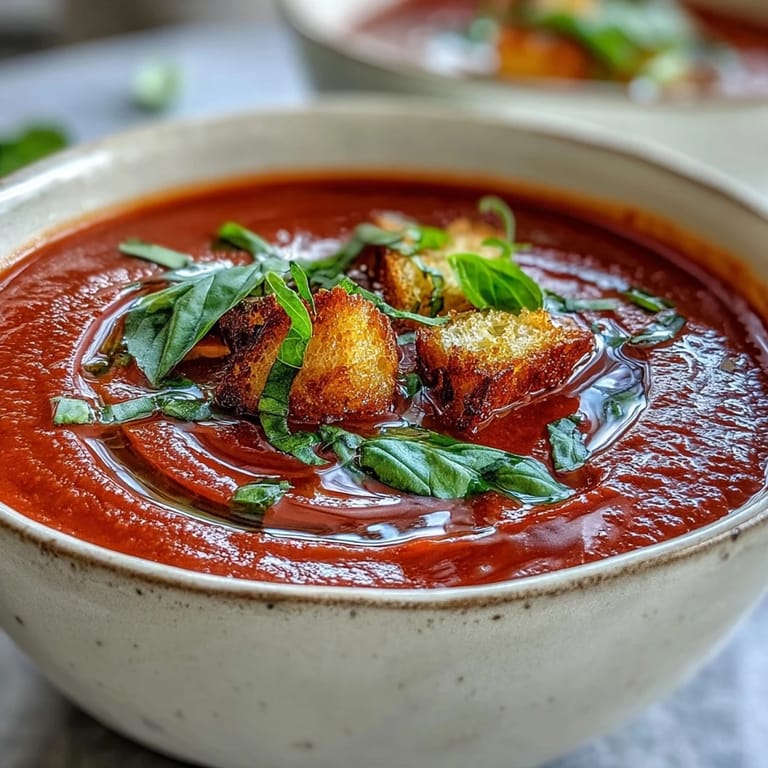
- Ladle into warm bowls, drizzle with cream if you like, and crown with fresh basil leaves and crispy croutons.
 Save
Save There was a moment last spring when my eight-year-old asked for a second bowl of this soup, entirely on her own, without any convincing whatsoever. That's when I knew this recipe wasn't just about technique or ingredients—it was about creating something that feels like home, like being cared for, like love in a bowl.
The Secret of Roasting
Roasting isn't just a cooking method here; it's a flavor transformer. The high heat caramelizes the natural sugars in tomatoes and onions, creating complex flavors that fresh soup could never achieve. When I first tried this approach, I was skeptical that it would be worth the extra step, but the moment I tasted that first spoonful, I understood. The roasting concentrates everything—the acidity mellows, the sweetness intensifies, and the garlic becomes almost creamy. It's the difference between a simple tomato soup and something that feels like a chef spent hours developing it.
Texture and Refinement
The choice between a rustic blend and a silky, strained soup is entirely yours, and both versions are absolutely delicious. I tend to strain the soup when I'm serving it for guests because there's something undeniably luxurious about that velvety mouthfeel, but on weeknights when I'm cooking for myself, I skip that step and enjoy the slight texture of tomato skin. The immersion blender makes this so easy that you can blend right in the pot without dishes piling up, which honestly matters more to me than you might think.
Variations and Personalization
This soup welcomes creativity without losing its soul. Some evenings I add a splash of balsamic vinegar for subtle sweetness and complexity, other times I stir in a pinch of red pepper flakes for warmth. You can make it entirely vegan by using olive oil instead of butter and plant-based cream alternatives, or keep it simple with nothing but the roasted vegetables and broth.
- A dollop of crème fraîche mixed with fresh basil creates an elegant topping more interesting than plain cream.
- Pairing with a crisp Sauvignon Blanc or light Italian white makes it feel like a proper dinner, not just lunch.
- Make a double batch and freeze half for those mornings when you need comfort food but have no time to cook.
 Save
Save This soup has a way of becoming a favorite that lingers, something you find yourself making again and again. It's simple enough for a quiet Tuesday, special enough for company, and honestly, there's no better feeling than ladling something this good into a bowl and watching someone's face light up at that first taste.
Cooking Questions
- → Can I make this soup ahead of time?
Absolutely. This soup actually develops deeper flavors when made ahead. Store in an airtight container in the refrigerator for up to 4 days. Reheat gently over medium-low heat, stirring occasionally. The texture may thicken overnight—simply add a splash of broth or water when reheating to reach desired consistency.
- → What type of tomatoes work best?
Roma, San Marzano, or vine-ripened tomatoes yield excellent results. The key is choosing fully ripe, flavorful specimens. In winter when fresh tomatoes lack sweetness, cherry or grape tomatoes roast beautifully and concentrate flavor exceptionally well. Avoid mealy out-of-season beefsteak tomatoes.
- → How do I achieve the silkiest texture?
After blending with an immersion blender, pass the soup through a fine-mesh sieve for restaurant-quality silkiness. This removes any remaining skins or vegetable fibers. For extra richness, finish with a tablespoon of butter or swirl in heavy cream just before serving.
- → Can I freeze this soup?
Yes, freeze without cream or garnishes. Cool completely, transfer to freezer-safe containers, and freeze for up to 3 months. Thaw overnight in the refrigerator. The texture may separate slightly—simply reheat and whisk to recombine, or blend briefly to restore smoothness.
- → What can I serve with this soup?
Crusty garlic bread, grilled cheese sandwiches, or Parmesan-crusted croutons create perfect accompaniments. A fresh arugula salad with lemon vinaigrette balances the richness. For wine pairings, try Sauvignon Blanc, Pinot Grigio, or a light Chianti.