 Save
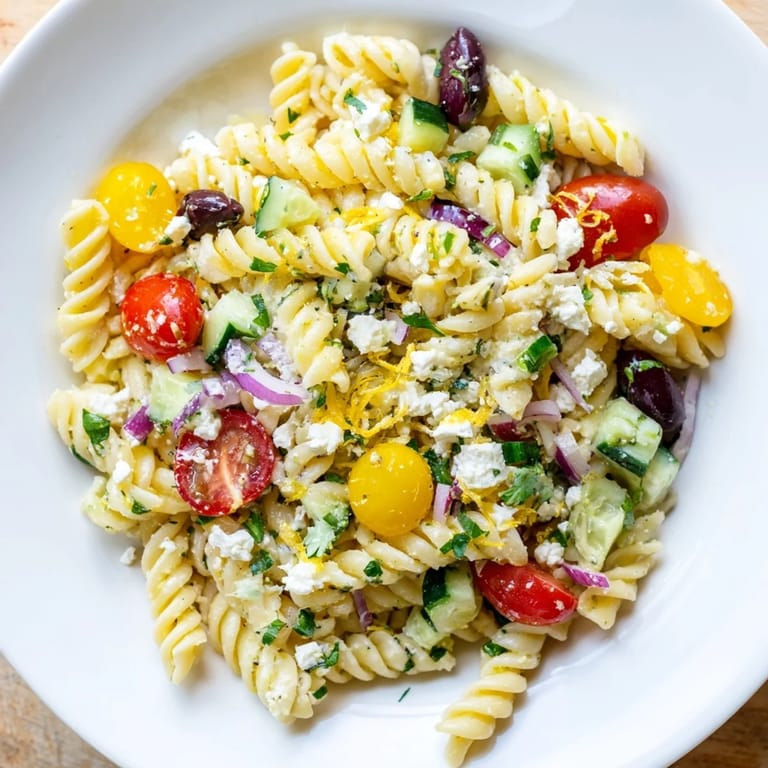
Save There's something magical about the way a wooden spoon hits cold pasta, how it tumbles through a bowl, picking up bright flecks of lemon zest and herb-studded dressing. I discovered this salad on an unexpectedly warm April afternoon when I had nothing in the pantry but pasta, half a lemon, and the vague memory of my neighbor raving about something similar she'd made for a garden party. Twenty minutes later, I was tasting summer.
I made this for the first time at a potluck where I showed up late and slightly panicked, armed only with ingredients from my car. Someone's aunt actually asked for the recipe before dessert was even served, which never happens at these things. That moment taught me that simple, honest food often wins over elaborate attempts.
Ingredients
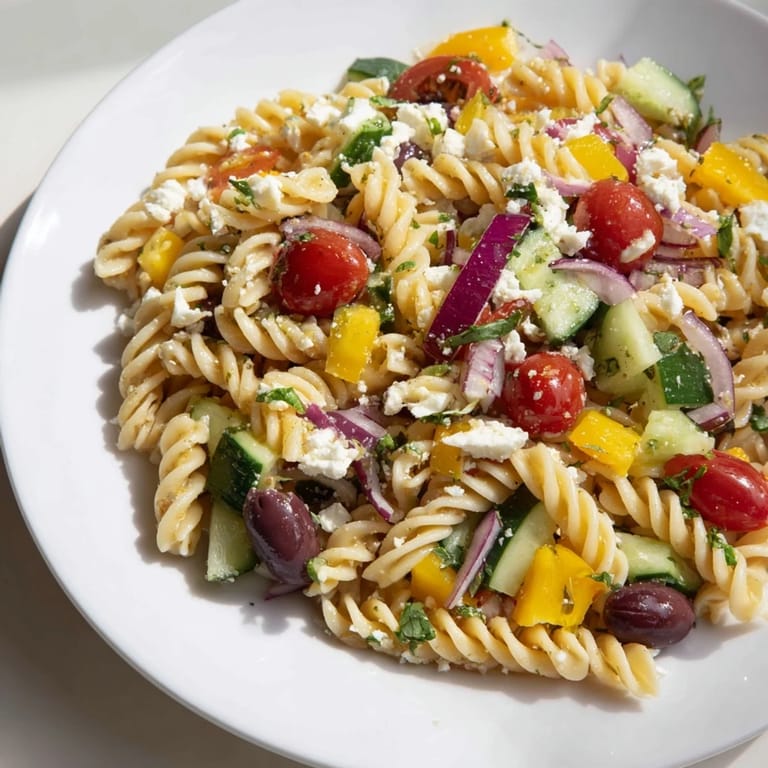
- Short pasta (fusilli, penne, or farfalle): The shapes matter here because they cradle the dressing and catch every bit of flavor. Stick with 250 g and cook it just until you can bite through it without any chalkiness in the center.
- Cherry tomatoes: Halve them right before serving if you can, so they stay bright and don't release all their juice into the salad too early.
- Cucumber: A crisp English cucumber keeps its snap better than watery regular ones, and you won't need to scoop out the seeds.
- Red onion: Finely chop it so it doesn't overpower, and if raw onion feels too sharp to you, give it a quick rinse under cold water after chopping.
- Yellow bell pepper: The sweetness balances the lemon's tartness in a way red peppers can't quite match.
- Kalamata olives: Optional, but they add that salty-briny note that makes people ask what your secret ingredient is.
- Feta cheese: Crumble it by hand instead of using pre-crumbled for better texture and flavor, and add it just before serving so it doesn't get lost in the dressing.
- Fresh parsley and basil: Fresh matters completely here. Dried herbs will make this taste like something from a 1980s potluck, and we're not doing that.
- Extra-virgin olive oil: This is one of three ingredients doing the heavy lifting, so don't skip the good stuff.
- Lemon zest and juice: Zest first, then juice, and use a real lemon, not bottled. Your mouth will taste the difference immediately.
- Dijon mustard: Just a teaspoon acts as an emulsifier and adds a subtle depth that ties everything together.
- Garlic: One small clove, minced fine, whispered into the dressing rather than shouted.
- Honey: A tiny bit rounds out the acid and makes the flavors feel polished instead of sharp.
Tired of Takeout? 🥡
Get 10 meals you can make faster than delivery arrives. Seriously.
One email. No spam. Unsubscribe anytime.
Instructions
- Boil the pasta until just right:
- Fill a large pot with water, salt it generously like seawater, and bring it to a rolling boil before the pasta goes in. Watch the package timing and pull out a piece about a minute before they say it's done—it should bend slightly when you bite it but still have a firm center.
- Cool the pasta properly:
- Drain it through a colander, then rinse it under cold running water while stirring gently so the starch washes away and the pasta stops cooking. Let it sit in the colander for a minute so excess water drips off.
- Prepare everything else while pasta cooks:
- Dice your vegetables into pieces roughly the same size so they feel intentional, not thrown together. Chop the herbs last so they stay bright green and smell alive.
- Build the salad in layers:
- Toss the cooled pasta with the vegetables and cheese in a big bowl, stirring gently so nothing gets smashed. The feta will start breaking apart slightly, which is exactly what you want.
- Make the dressing and dress the salad:
- In a small bowl or jar, whisk together the oil, lemon zest, lemon juice, mustard, garlic, honey, salt, and pepper for about thirty seconds until it thickens slightly and the oil stops looking separate from the juice. Pour it over the pasta and toss everything gently but thoroughly, making sure every strand gets coated.
- Taste and let it rest:
- Grab a fork and try it. It might taste a little sharp right now, which is fine—let that happen. Cover it and chill for at least thirty minutes so the flavors settle into each other and the pasta absorbs the dressing.
 Save
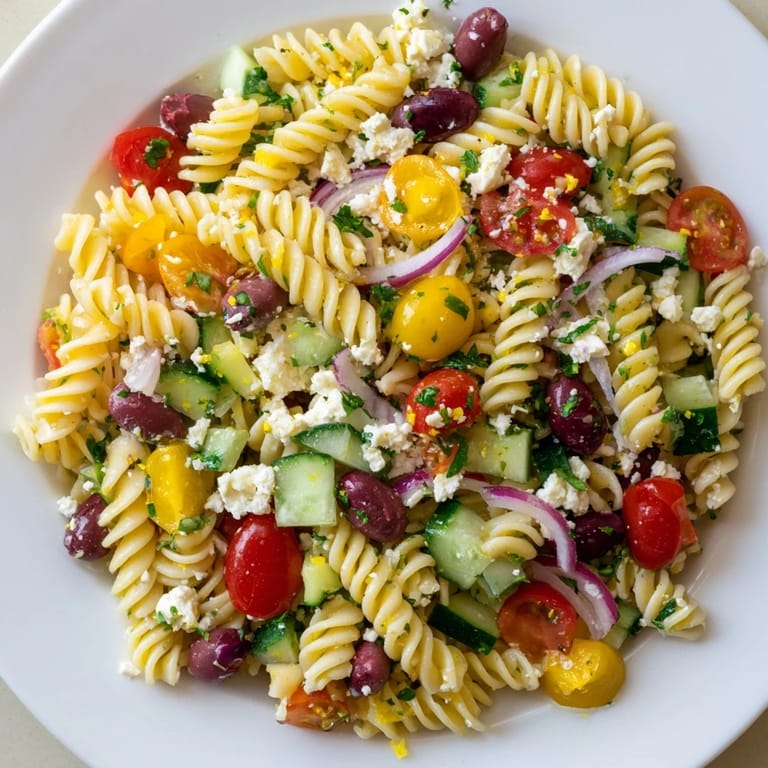
Save My partner took one bite and immediately started asking if he could take leftovers to work the next day, which is the highest compliment I get in our house. Food that makes people want more of it, that stays in their mind between bites, feels like a kind of small magic.
The Beauty of Lemon in Summer
There's a reason every summer dish worth making involves lemon. It's bright without being sour, it wakes up your mouth, and it makes everything else taste more like itself. The zest especially is underrated—it carries an oil that tastes like pure lemon flavor before the juice's tartness shows up. When I started zesting lemons into this salad instead of just squeezing them, the whole thing shifted from good to something I actually crave.
Building Flavor Through Texture
This salad lives or dies by what you bite into. Soft pasta, crisp cucumber, burst of tomato, crumble of feta—your mouth gets a conversation instead of monotony. The moment I started thinking about this salad as a textural experience rather than just a way to use up vegetables, I stopped making versions that felt flat and one-note. Every ingredient has a job beyond just being healthy.
When to Make This and What to Serve It With
This works as a standalone lunch, a side dish that actually gets eaten before it gets ignored, or the opening move in a larger meal where you want guests to arrive hungry but not ravenous. It pairs beautifully with grilled chicken or fish, holds its own next to crusty bread, and frankly, it's the kind of thing that tastes even better sitting on a patio with someone you like.
- Make it on the morning of a picnic so it has time to chill and meld before anyone gets hungry.
- Bring it to potlucks in a container with the dressing kept separate if you're traveling more than twenty minutes, then toss it together just before serving.
- If you add protein like grilled chicken or shrimp, keep that separate until the last moment so it doesn't get buried and forgotten.
 Save
Save This is the kind of recipe that becomes yours the moment you make it, and the moment you add your own favorite vegetable or remember how good it is, you'll make it again. That's the whole point.
Cooking Questions
- → What type of pasta works best for this dish?
Short pasta shapes like fusilli, penne, or farfalle hold the dressing well and complement the mix of vegetables.
- → Can I prepare the lemon dressing in advance?
Yes, the lemon dressing can be whisked together and stored in the fridge. Just bring it to room temperature before tossing with pasta.
- → How can I make this dish vegan-friendly?
Omit the feta cheese or substitute with a plant-based cheese alternative to keep it vegan.
- → Is it necessary to chill the pasta after cooking?
Rinsing pasta under cold water cools it quickly and stops cooking. Chilling for at least 30 minutes helps flavors meld and enhances the taste.
- → What are good protein additions for this dish?
Grilled chicken, shrimp, or chickpeas can be added for extra protein and more substance.