 Save
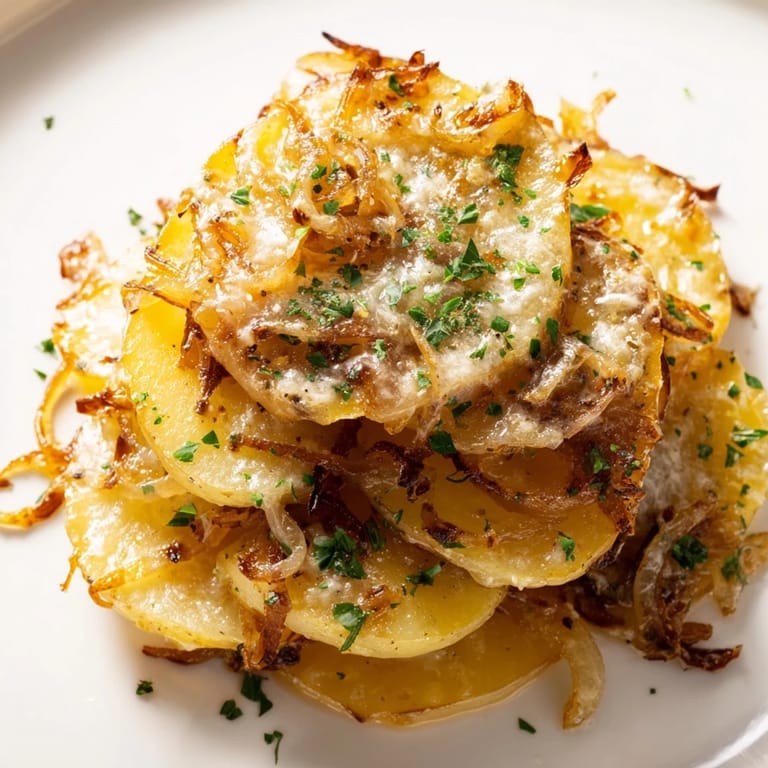
Save There's a moment in late autumn when you're standing in the kitchen, chopping onions for something else entirely, and suddenly the smell hits you—that deep, sweet caramel note that only comes from patient, low heat. I found myself staring at a pound of Yukon Golds and leftover Gruyère one Sunday, and instead of following a recipe, I just started building layers. What emerged was this impossible dish that tastes like French onion soup decided to become a side that could steal the whole dinner.
I made this for my sister's birthday dinner without telling her what it was, and watching her fork into a golden potato slice with that melted cheese pulled into strings—that's when I knew I'd accidentally created something special. She went back for thirds, which never happens with side dishes.
Ingredients
- Yukon Gold or russet potatoes (1.5 kg / 3.3 lbs): Yukon Golds hold their shape better and have a natural buttery quality, but russets work too if you're gentler with them when layering.
- Olive oil (2 tbsp for potatoes): Use a decent one that doesn't smoke at high heat—cheaper oils make the potatoes taste flat.
- Kosher salt and black pepper: Don't skip the salt on the raw potatoes; it seasons them all the way through.
- Yellow onions (3 large): Yellow onions turn genuinely sweet and golden; red onions can taste sulfurous if you're not careful.
- Unsalted butter and olive oil (2 tbsp each): The combination of butter and oil prevents the butter from burning during that long, slow caramelize.
- Fresh thyme (1 tsp leaves): If you only have dried, use half the amount—it's more concentrated and can overpower if you're not careful.
- Balsamic vinegar (1 tsp): This adds a subtle tang that stops the onions from tasting one-note and sweet.
- Gruyère cheese (200 g / 7 oz): Gruyère melts beautifully and tastes slightly nutty; don't substitute with pre-shredded—it contains anti-caking agents that prevent smooth melting.
- Parmesan cheese (30 g / 1 oz, optional): Adds a sharper edge and helps the top brown faster.
- Fresh parsley (2 tbsp chopped): Purely for color and a hint of fresh brightness against all that richness.
Tired of Takeout? 🥡
Get 10 meals you can make faster than delivery arrives. Seriously.
One email. No spam. Unsubscribe anytime.
Instructions
- Prepare your oven and potatoes:
- Heat your oven to 220°C (425°F) and line a baking sheet with parchment paper. Slice your potatoes into even 1 cm pieces—a mandoline makes this almost meditative, though a sharp knife works if you're patient. Toss them with olive oil, salt, and pepper until every slice is lightly coated.
- Roast the potatoes golden:
- Spread them in a single layer on the sheet and roast for 25–30 minutes, flipping halfway through. You're looking for edges that are turning crispy and gold, not falling apart. The centers should yield easily to a fork but still hold their shape.
- Caramelize the onions slowly:
- While potatoes roast, melt butter with oil in a large skillet over medium-low heat. Add sliced onions and a pinch of salt, then let them do their thing for 25–30 minutes, stirring every few minutes. At first they'll seem wet and pale; then around the 15-minute mark, they'll begin to turn golden. By the end, they should be deep amber and smell like caramel. Stir in thyme and balsamic vinegar, cooking just 1–2 minutes more to marry the flavors.
- Assemble the dish:
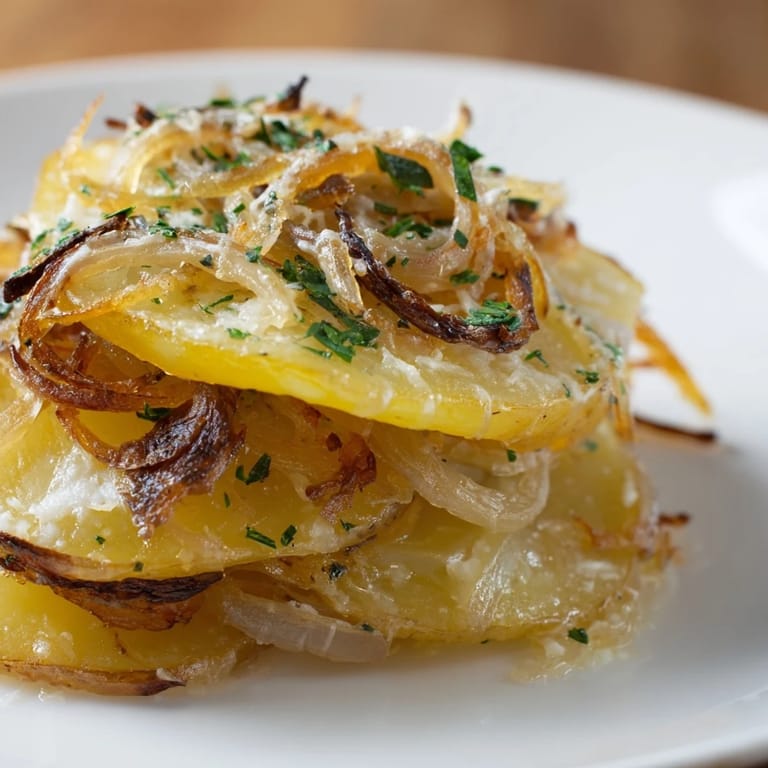
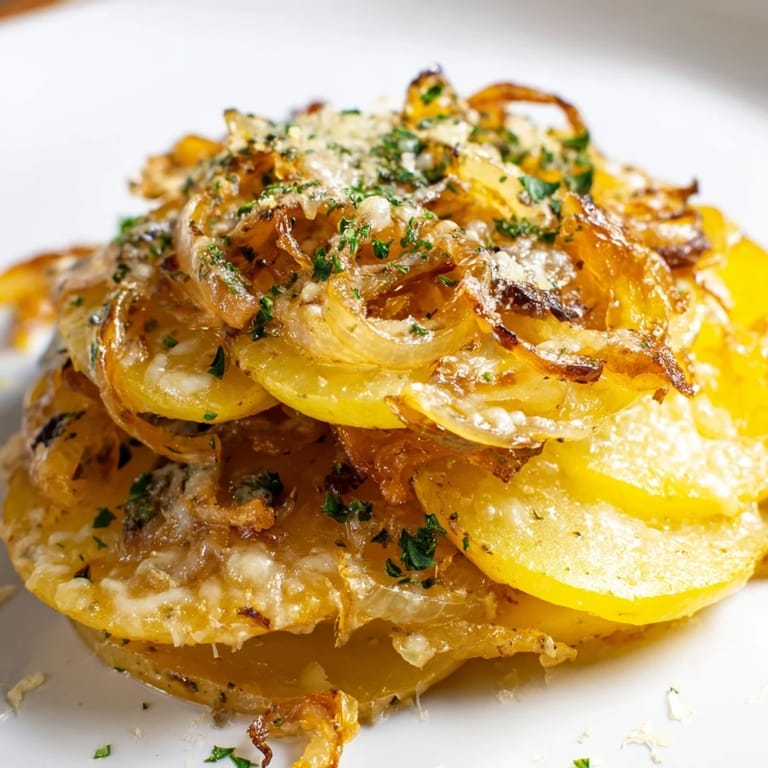
- Lower the oven to 200°C (400°F). In a lightly greased baking dish, arrange your roasted potatoes in slightly overlapping rows, as if you're making a potato gratin. Spoon the caramelized onions evenly over the top, letting some trickle down between the layers. Scatter Gruyère (and Parmesan if using) generously over everything.
- Final bake and finish:
- Bake for 10–15 minutes until the cheese is melted and bubbling at the edges, with a few brown spots. Let it rest for 2–3 minutes so the cheese sets slightly, then shower it with fresh parsley and serve warm, when the cheese is still pulling into strings.
 Save
Save A friend who claims she doesn't like onions came back for more, which tells you something about what slow heat and time can do. That moment made me realize this dish isn't really about technique—it's about being willing to wait for flavors to develop.
Why This Became My Favorite Side Dish
Most sides live in the shadow of the main event, but this one commands attention. The caramelized onions give it a depth usually reserved for soups, while the roasted potatoes bring a contrast of textures that keeps your fork coming back. It's the kind of dish that makes people linger over dinner, asking what makes it taste like that.
When to Make This
This shines alongside a perfectly cooked steak or a golden roasted chicken, but it's equally at home as the centerpiece of a vegetarian plate with a sharp green salad. It's substantial enough for a light main course and elegant enough for a dinner party, which is rare for a potato dish. I've served it at casual weeknight tables and fancy gatherings, and it never feels out of place.
Small Tweaks That Matter
The beauty of this recipe is that it's forgiving, but a few small changes can push it in different directions. A splash of dry white wine stirred into the onions adds brightness, or a tiny splash of sherry vinegar instead of balsamic gives a different kind of depth. Some nights I layer a few thyme sprigs between the potatoes before baking, so the herb flavor infuses the whole dish.
- For extra richness, add a thin layer of crème fraîche between the potatoes and onions before the final bake.
- If you want more char on the potatoes, use a broiler for the last 2 minutes of the cheese-melting stage.
- Swiss cheese works beautifully if Gruyère isn't available, though it'll taste slightly more delicate.
 Save
Save This is the kind of recipe that reminds you why cooking for people matters. When something this simple can spark that much happiness, it's worth the wait.
Cooking Questions
- → What potatoes work best for this dish?
Yukon Gold or russet potatoes are ideal due to their texture and ability to roast evenly, yielding a crispy edge and tender inside.
- → How can I achieve deeply caramelized onions?
Cook onions slowly over low heat with butter and oil, stirring often for about 25–30 minutes until they turn golden brown and sweet.
- → Can I substitute the Gruyère cheese?
Swiss cheese makes a good alternative, offering similar meltability and flavor, though slightly milder than Gruyère.
- → Is it necessary to flip the potatoes while roasting?
Flipping halfway through roasting ensures even browning and crispness on both sides of the potato slices.
- → What adds depth to the onion flavor?
Adding thyme and a splash of balsamic vinegar while caramelizing enhances the savory sweetness and complexity of the onions.
- → How do I prevent the cheese from burning during baking?
Bake at a moderate temperature and monitor closely during the final melt to allow the cheese to bubble without scorching.