 Save
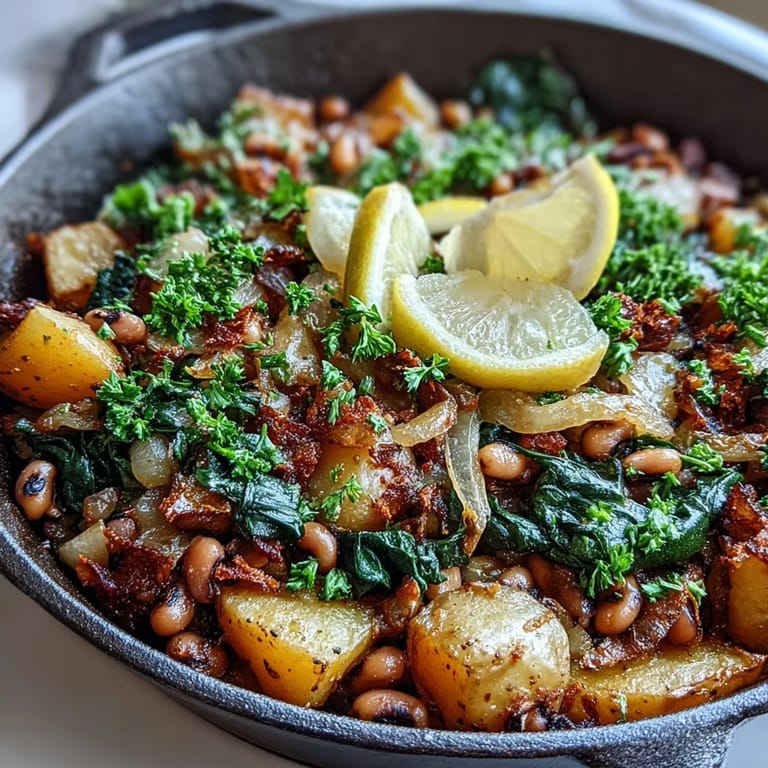
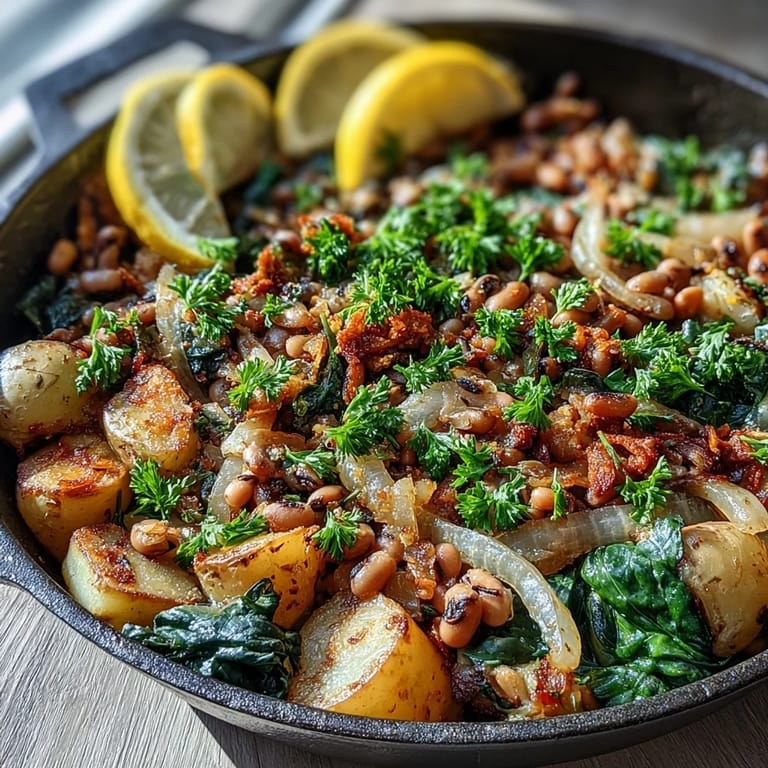
Save There's something about a cast iron skillet that makes even the simplest dinner feel like an event. One Thursday evening, I was standing in my kitchen with half an hour before guests arrived, staring at a bag of black-eyed peas and some potatoes, when it hit me—everything could go into one pan, no fuss, no complicated plating. That skillet has been my answer to "what's for dinner" ever since, especially on nights when I want something warm and substantial without the cleanup headache.
I made this for my sister after she'd mentioned craving something comforting, and watching her take that first bite—the way the soft potato broke apart on her fork, how she immediately reached for seconds—I realized this dish does something special. It doesn't pretend to be fancy, but it shows up for you completely.
Ingredients
- Olive oil (2 tablespoons): This is your base, so don't skip it or rush through the heating stage—it should shimmer almost immediately when the pan is ready.
- Yellow onion (1 large, thinly sliced): Thin slices cook faster and distribute their sweetness evenly throughout the skillet, which is the whole point of cooking them first.
- Yukon Gold potatoes (3 medium, diced): These hold their shape better than russets and have a natural buttery flavor that plays well with the other ingredients.
- Fresh spinach (3 cups, roughly chopped): The wilting happens in seconds, so add it last or you'll end up with gray mush instead of vibrant greens.
- Black-eyed peas (2 cups cooked): Canned works perfectly fine—just rinse them well to cut down on sodium and prevent a pasty texture.
- Garlic (3 cloves, minced): Don't use a jar for this one; fresh garlic toasted in the pan smells like reason enough to cook dinner.
- Smoked paprika (1 teaspoon): This is the secret that makes everything taste less "weeknight" and more "intentional," so it's worth buying the good stuff.
- Dried thyme (1/2 teaspoon): A little goes a long way, and it brings an herbaceous earthiness that ties the whole dish together.
- Crushed red pepper flakes (1/4 teaspoon, optional): I usually include this because even mild heat wakes up your palate and makes you taste everything more clearly.
- Vegetable broth (1/2 cup, low-sodium): This steams the peas and potatoes gently while keeping everything moist without making it soupy.
- Salt and black pepper: Taste as you go—canned peas and broth can be salty already, so season conservatively.
- Fresh parsley (2 tablespoons, chopped) and lemon wedges (optional garnishes): These finish the dish with brightness; parsley adds color and a gentle herbal note, while lemon cuts through the richness with acidity.
Tired of Takeout? 🥡
Get 10 meals you can make faster than delivery arrives. Seriously.
One email. No spam. Unsubscribe anytime.
Instructions
- Get your skillet singing:
- Place your cast iron over medium heat and add the olive oil, letting it warm until it shimmers and moves easily when you tilt the pan. This takes about a minute, but rushing it means the onions steam instead of caramelize.
- Soften the onion foundation:
- Scatter in your sliced onion and stir occasionally as it releases its moisture and turns translucent, about 3 to 4 minutes. You'll smell the sweetness developing, which is your signal to move forward.
- Build golden potatoes:
- Add the diced potatoes and let them sit undisturbed for a minute before stirring—this creates those beautiful golden edges everyone wants. Keep stirring every couple of minutes for the next 10 to 12 minutes until they're tender with crispy corners.
- Bloom the aromatics:
- Stir in the garlic, smoked paprika, thyme, and red pepper flakes, cooking for just about a minute until the kitchen smells like something special. This quick cooking step is called "blooming" and it releases all the hidden flavors in the spices.
- Simmer everything together:
- Pour in the vegetable broth and add the black-eyed peas, stirring well to distribute everything evenly. Cover the skillet and let it simmer for 8 to 10 minutes, during which the liquid reduces and the potatoes finish cooking through.
- Wilt in the greens:
- Uncover the skillet and stir in the chopped spinach, cooking for just 2 to 3 minutes until it transforms from rough leaves to something silky. The residual heat and moisture do most of the work here.
- Taste and adjust:
- Add salt and pepper to your preference, tasting first because some of the base ingredients may have contributed saltiness already. This final tasting moment is where you own the dish.
- Serve with intention:
- Transfer to bowls, scatter fresh parsley across the top if you have it, and set out lemon wedges for people to squeeze over as they eat. The acidity makes everything brighter.
 Save
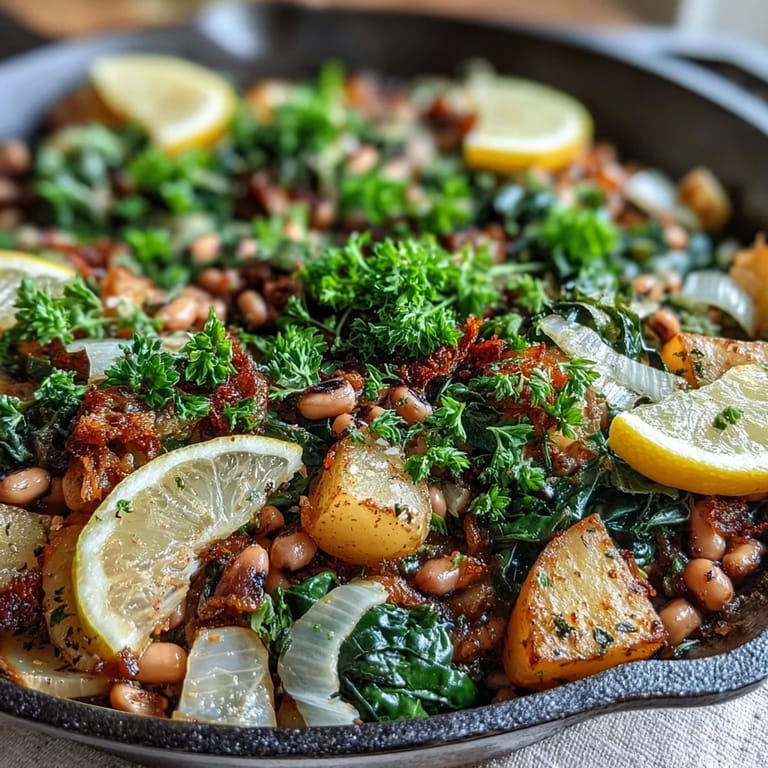
Save There's a moment about halfway through cooking this dish when your kitchen fills with the smell of smoked paprika and caramelized onions, and you feel grateful for the simplicity of it all. That's when I know I've made the right choice for the evening.
Cast Iron Care and Why It Matters
Using a cast iron skillet for this recipe isn't just traditional—it actually conducts heat more evenly than most modern pans, which means your potatoes brown more consistently and your onions caramelize rather than stew. After cooking, I wipe mine clean while still warm with a paper towel and a tiny bit of oil, which keeps it seasoned and ready for the next meal. If you don't have cast iron, a large stainless steel skillet with a lid works beautifully too, though you'll miss out on that slight nuttiness that cast iron imparts to everything cooked in it.
Variations Worth Trying
The first time I added a diced jalapeño alongside the onions, I didn't tell anyone, and three people asked what made it taste so alive. You can swap the spinach for hearty kale or Swiss chard if you want something that holds up better, or stir in some sautéed tempeh cubes if you're looking for extra protein. I've also experimented with swapping half the vegetable broth for coconut milk, which sounds strange but creates this subtle richness that catches people off guard in the best way.
Serving Suggestions and Finishing Touches
This skillet is complete on its own, but it transforms into something more special when served alongside something with texture—warm cornbread for soaking up any liquid, or a simple grain like rice to stretch it further. A squeeze of fresh lemon over everything just before eating brightens the flavors so dramatically that guests always ask what changed, even though nothing else did. The beauty of this dish is its flexibility; it asks very little and gives plenty in return.
- Make a batch of quick cornbread in a cast iron cornbread pan while the skillet simmers—they'll finish at almost the same time.
- Serve with a simple green salad dressed in lemon vinaigrette to balance the earthiness of the peas.
- Leftover skillet dinner reheats beautifully on the stovetop with a splash of water and tastes even better the next day.
 Save
Save This skillet dinner has become my proof that the best meals don't require stress or complexity, just presence and intention. Every time I make it, I'm reminded that sometimes the simplest answer is also the most satisfying one.
Cooking Questions
- → Can I use dried black-eyed peas instead of canned?
Yes, soak dried black-eyed peas overnight and cook them for 45-60 minutes until tender before adding to the skillet. You'll need about 1 cup dried peas to yield 2 cups cooked.
- → What other greens work in this dish?
Kale, Swiss chard, or collard greens make excellent substitutes. Just adjust cooking time—kale and collards may need an extra minute or two to wilt completely.
- → How do I store leftovers?
Store cooled portions in an airtight container in the refrigerator for up to 4 days. Reheat gently in a skillet with a splash of water or broth to refresh.
- → Can I make this dish spicier?
Add diced jalapeño with the onions, increase red pepper flakes to ½ teaspoon, or incorporate a dash of hot sauce during the final minutes of cooking.
- → What should I serve with this skillet dinner?
Cornbread, crusty bread, or steamed rice complement this dish beautifully. For a lighter option, serve with a simple side salad dressed with vinaigrette.