 Save
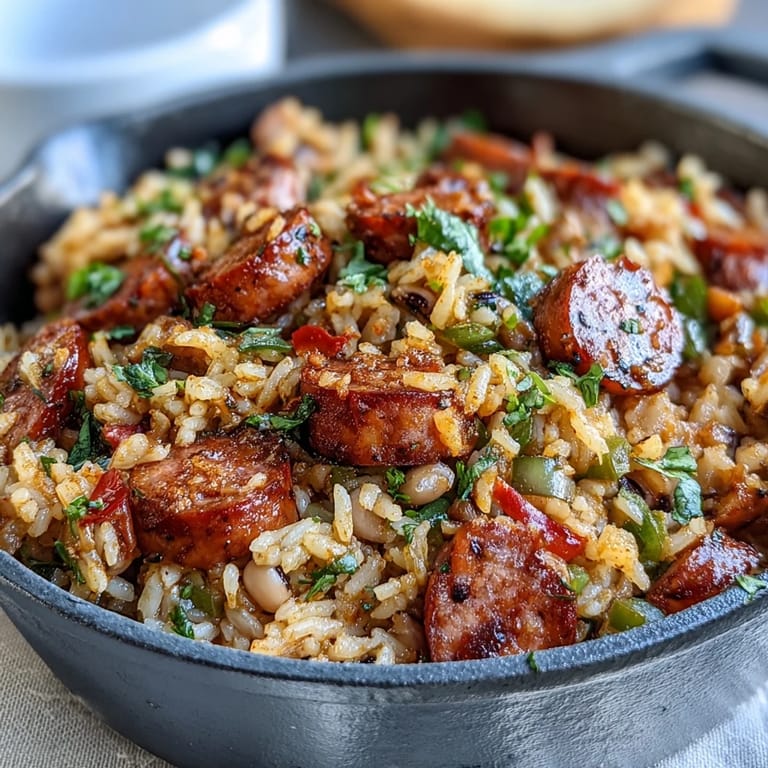
Save My neighbor Marcus showed up at my door one humid Saturday afternoon with a bag of smoked sausage and a challenge: make something that tasted like New Orleans without leaving the kitchen. I'd never attempted jambalaya before, but watching him describe the dish with such vivid hand gestures—the way the sausage browns, how the vegetables soften into the rice—I knew I had to try. What resulted was this glorious one-pot meal that turned out to be far easier than I'd imagined.
I made this for a potluck once and watched someone take their first bite, pause, and then immediately ask for the recipe while still chewing. That moment—when food does exactly what it's supposed to do—is what cooking is really about. Everyone went back for seconds, and the pot was empty by the time dessert arrived.
Ingredients
- Smoked sausage (340 g/12 oz), sliced: The backbone of flavor here—look for andouille if you can find it, as it has that deeper, smokier character, though kielbasa works beautifully too and is easier to track down.
- Onion (1 medium), diced: This creates the aromatic base that everything else builds on, so don't skip the step of letting it soften properly.
- Celery stalks (2), diced: Along with the onion, this forms the holy trinity of Cajun cooking, adding a subtle vegetal sweetness.
- Bell peppers (1 red, 1 green), diced: The color matters here as much as the taste—it signals that this dish is vibrant and alive.
- Garlic (3 cloves), minced: Add this after the softer vegetables so it doesn't burn and turn bitter.
- Black-eyed peas (1 can, 425 g/15 oz), drained and rinsed: The canned version saves time without sacrificing anything; rinsing them removes excess sodium.
- Long-grain white rice (300 g/1 ½ cups): The rice absorbs all the surrounding flavors and becomes almost creamy in texture without any cream involved.
- Chicken broth (800 ml/3 ⅓ cups), low-sodium: Low-sodium lets the spices shine rather than competing with salt, and you control the final seasoning.
- Diced tomatoes with juices (1 can, 400 g/14 oz): Don't drain these—the liquid is essential for cooking the rice and adds subtle acidity that brightens everything.
- Olive oil (2 tbsp): A neutral cooking oil works fine, but olive oil gives the sausage better browning.
- Cajun seasoning (1 ½ tsp): This is your main flavor driver; if you prefer milder, start with 1 tsp and adjust.
- Smoked paprika (1 tsp): The smoke complements the sausage and adds depth without heat.
- Dried thyme (½ tsp) and oregano (½ tsp): These herbaceous notes keep the dish from tasting one-dimensional.
- Bay leaf (1): A small but crucial detail—it infuses the broth with subtle flavor and must be removed before serving.
- Salt (½ tsp) and black pepper (¼ tsp): Season to taste at the end since the sausage and broth already contribute saltiness.
- Cayenne pepper (¼ tsp), optional: This is your heat dial—skip it if you prefer mild, or double it if you like lingering warmth.
- Spring onions and fresh parsley, for garnish: These add freshness and brightness that cuts through the richness.
Tired of Takeout? 🥡
Get 10 meals you can make faster than delivery arrives. Seriously.
One email. No spam. Unsubscribe anytime.
Instructions
- Brown the sausage first:
- Heat your olive oil over medium heat in a large Dutch oven and add the sliced sausage. Let it sit for a minute or two before stirring so it develops a caramelized edge—this takes about 4 to 5 minutes total. You'll know it's ready when the kitchen smells smoky and delicious.
- Build the aromatic base:
- Add the diced onion, celery, and both bell peppers to the pot with the sausage. Stir occasionally and let them soften for about 5 minutes—you want them tender but not falling apart. This is when the pot really starts to smell like something special.
- Toast the garlic:
- Stir in your minced garlic and cook for just 1 minute, staying close to watch that it doesn't brown or turn bitter. That aromatic spike you'll smell is your signal that it's ready.
- Coat the rice:
- Add the rice to the pot and stir it around so every grain gets coated in the oil and vegetable mixture. This small step prevents the rice from clumping later and helps it cook more evenly.
- Add the liquids and seasonings:
- Pour in the chicken broth, diced tomatoes with their juices, black-eyed peas, and all your spices—the Cajun seasoning, paprika, thyme, oregano, bay leaf, salt, pepper, and cayenne if using. Give everything a good stir so the spices distribute throughout the liquid.
- Bring to a boil and lower the heat:
- Let the mixture come to a rolling boil, then immediately reduce the heat to low, cover with a lid, and let it simmer gently for 20 to 25 minutes. Resist the urge to peek constantly; the rice needs steady, undisturbed heat to cook properly.
- Rest and finish:
- Once the rice is tender and the liquid is absorbed, remove the pot from heat and let it sit covered for 5 minutes—this lets everything finish cooking gently. Fluff with a fork, discard the bay leaf, and garnish with spring onions and parsley before serving.
 Save
Save There's something deeply satisfying about a one-pot meal that nourishes people and brings everyone together at the table. That first time making jambalaya taught me that bold, honest flavors don't require complicated technique—just good ingredients, patience, and a willingness to let the pot do its work.
The Magic of One-Pot Cooking
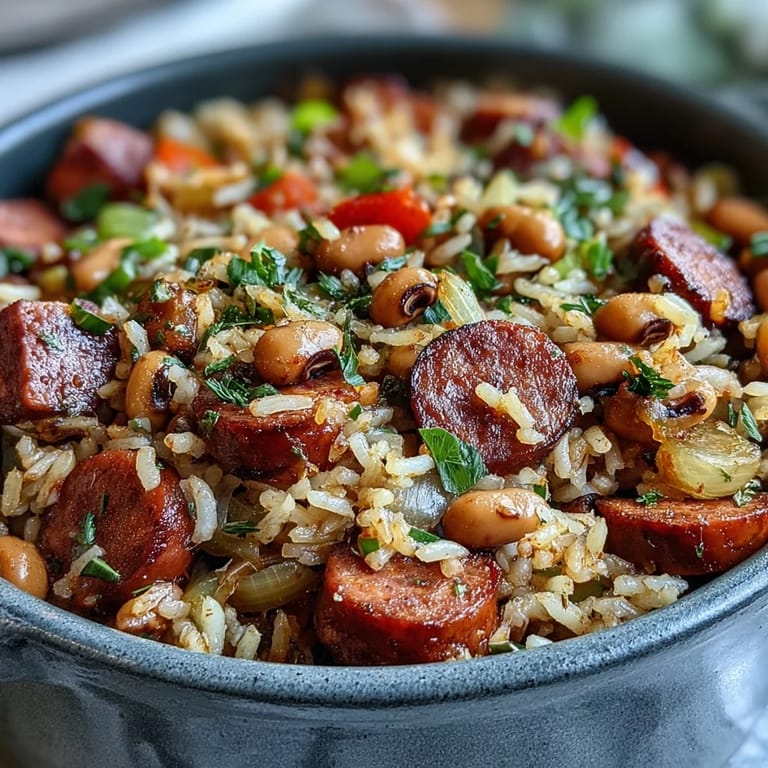
When everything cooks together in the same pot, the flavors don't just mix—they marry. The smoked sausage releases its oils, which carry the spice deeper into the rice. The vegetables break down slightly and dissolve into the broth, thickening it subtly. The black-eyed peas absorb all those aromatic notes. By the time you reach the bottom of the pot, the flavor is more complex than any of the individual ingredients suggest.
Playing with Heat and Spice
Cajun cooking walks a fine line with spice—you want it present and warming, not overwhelming. The cayenne is optional because every kitchen and every palate is different. I've learned to start conservative and taste as I go, remembering that you can always add more heat but you can't take it away. Some people I know serve hot sauce on the side so everyone can adjust to their liking, which feels like the friendliest approach.
Variations and Adaptations
This recipe loves flexibility. You can swap the black-eyed peas for kidney beans or chickpeas, or add corn for sweetness and color. For a vegetarian version, simply omit the sausage and use vegetable broth instead, then add sliced mushrooms or extra beans to replace the protein and substance. The spice blend stays the same, and the soul of the dish remains intact.
- Try adding diced okra in the last 5 minutes of cooking for authentic thickness and texture.
- A squeeze of fresh lemon juice right before serving brightens all the flavors and cuts through the richness beautifully.
- Leftovers keep for 3 to 4 days refrigerated and actually taste better as the flavors settle and deepen overnight.
 Save
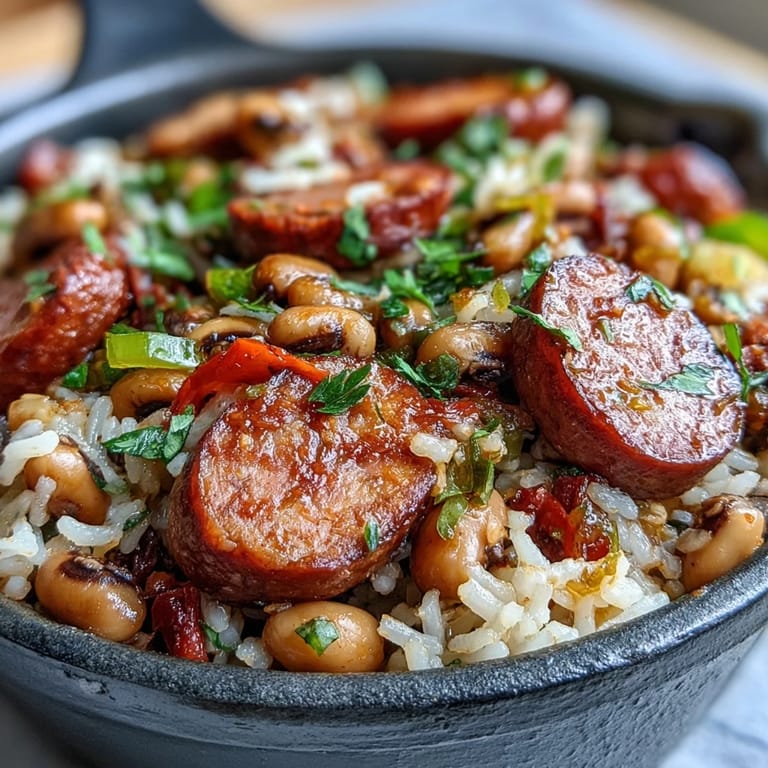
Save Black-eyed pea jambalaya sits at that perfect intersection of simple and impressive, and it's one of those dishes that tastes even better the next day. Make it once and you'll understand why it shows up again and again on tables across the South.
Cooking Questions
- → What makes Jambalaya different from other rice dishes?
Jambalaya is a Louisiana-born dish that cooks rice directly with meats, vegetables, and spices in one pot, allowing the grains to absorb all the flavorful liquids. Unlike pilaf or risotto, it requires no separate broth or constant stirring.
- → Can I use dried black-eyed peas instead of canned?
Yes, but you'll need to soak and cook them beforehand. One can (425g) equals about 1½ cups of cooked dried peas. For convenience, canned works perfectly and reduces prep time significantly.
- → What's the best sausage for Jambalaya?
Andouille sausage is traditional and authentic, offering the right smoky-spicy profile. Kielbasa makes an excellent substitute with similar texture. Choose smoked varieties for deeper flavor complexity.
- → How do I store and reheat leftovers?
Store in an airtight container in the refrigerator for up to 4 days. Reheat gently on the stovetop with a splash of broth to restore moisture, or microwave in 1-minute intervals, stirring between each.
- → Is this dish spicy?
The heat level is medium-mild with Cajun seasoning and optional cayenne. You can easily adjust by reducing or omitting cayenne pepper, or adding hot sauce at the table for personal preference.