 Save
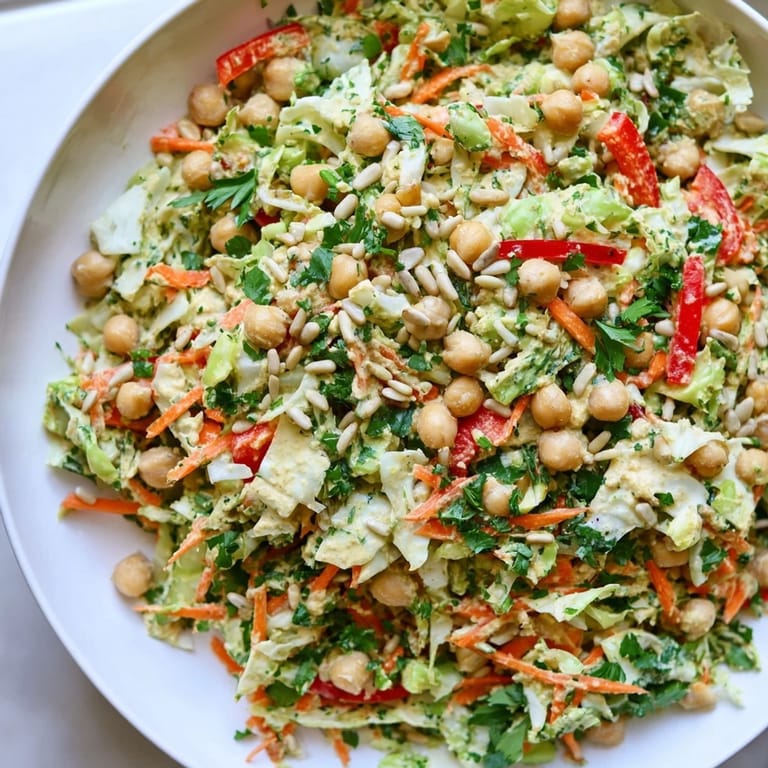
Save One afternoon, I was standing in my kitchen staring at a can of chickpeas and thinking about how tired I'd become of the same tired salads. I wanted something that felt substantial enough to be lunch but light enough that I wouldn't crash afterward. That's when I started layering raw vegetables with tahini dressing, and suddenly this simple bowl became the thing I craved all week. There's something magical about how creamy tahini transforms into this golden coating that makes every bite feel intentional.
I made this for my coworker who'd been trying to eat more plant-based, and the look on her face when she realized there was no vinegar or oil-based dressing was worth more than any compliment. She asked for the recipe that same day, and now I see her eating it at her desk at least twice a week. Food that makes people feel nourished rather than deprived—that's the kind that sticks around.
Ingredients
- Chickpeas: They're the backbone here—creamy, protein-packed, and they somehow taste better when you've drained and rinsed them yourself rather than using them straight from the can.
- Cabbage: Choose whichever color appeals to you; red adds a slight sweetness while green keeps things fresh and clean-tasting.
- Carrots: Shred them yourself if you can—they stay crisper and don't have that slightly metallic taste pre-shredded ones sometimes carry.
- Red bell pepper: Adds sweetness and a bit of crunch that keeps the salad from feeling one-dimensional.
- Green onions: The understated MVP that brings a sharp, fresh note just when you need it.
- Fresh parsley: Don't skip this—it brightens everything and makes the whole bowl taste like you actually know what you're doing in the kitchen.
- Tahini: This is where all the creaminess comes from, so use the good stuff; cheap tahini tastes bitter and chalky.
- Lemon juice: Fresh squeezed, always—bottled juice will betray you with its sharp, chemical edge.
- Maple syrup or honey: Just enough to round out the tahini's earthiness without making this a dessert salad.
- Garlic: One small clove is all you need; more will overpower the delicate balance.
- Cumin: This spice is what makes people ask 'what is that?' when they taste it—it's subtle but unmistakable.
- Sunflower seeds: Optional but recommended; they add texture that keeps you interested with every bite.
Tired of Takeout? 🥡
Get 10 meals you can make faster than delivery arrives. Seriously.
One email. No spam. Unsubscribe anytime.
Instructions
- Gather and chop everything:
- Lay out all your vegetables on a cutting board and get them prepped before you start mixing. This isn't just about efficiency—it's about giving yourself a moment to notice how vibrant everything looks together, which somehow makes the finished salad taste better.
- Build your salad base:
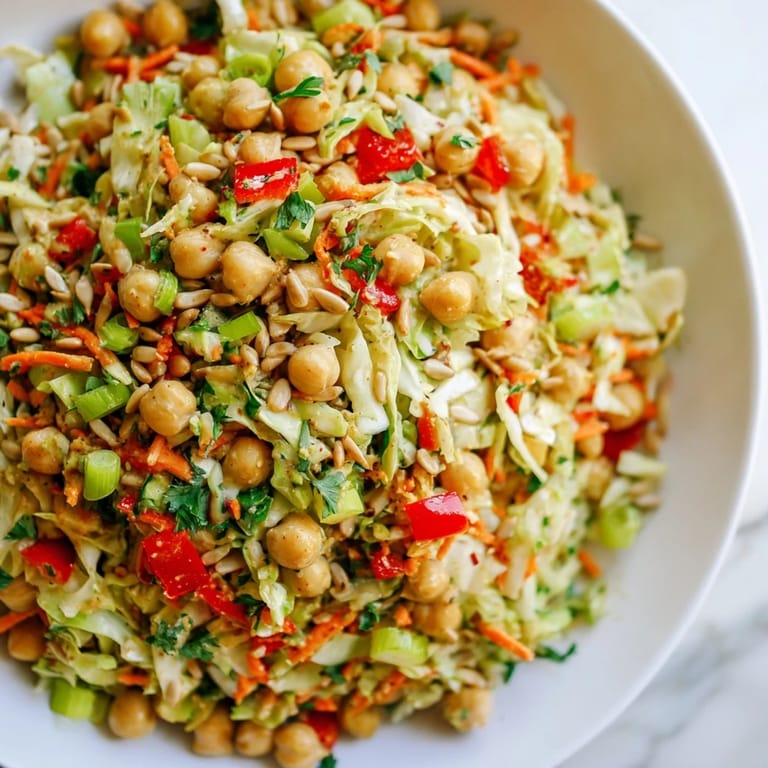
- Toss the chickpeas, cabbage, carrots, bell pepper, green onions, parsley, and sunflower seeds in a large bowl. Don't press down on anything; you want everything to stay light and separate for now.
- Make the dressing:
- In a small bowl, start whisking tahini with lemon juice—they'll seize up and look grainy at first, but keep going. Add the olive oil, sweetener, minced garlic, cumin, salt, and pepper, then drizzle in cold water a little at a time until you get something that coats a spoon but still pours.
- Bring it all together:
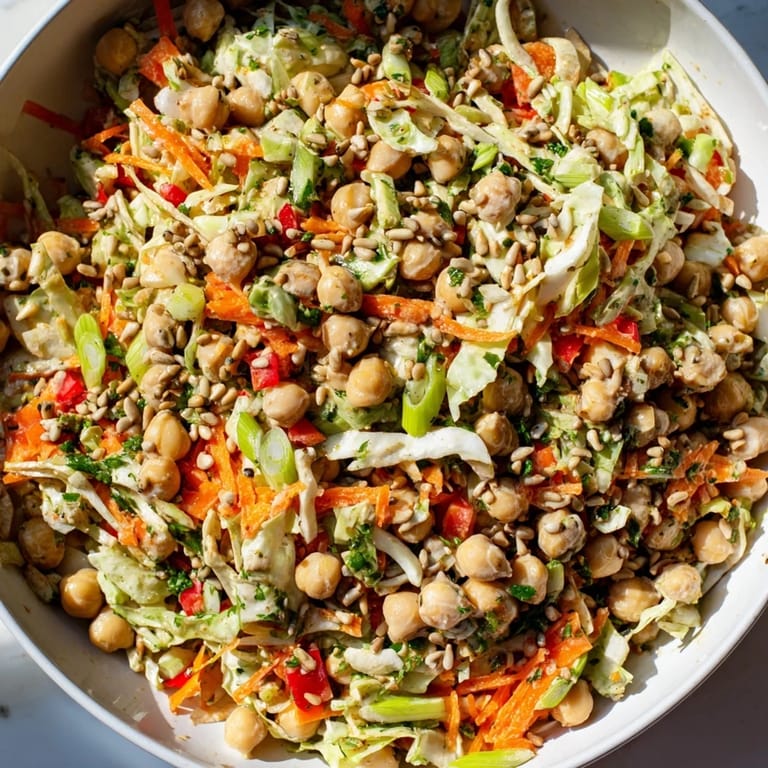
- Pour that golden dressing over the salad and toss it with confidence, making sure every piece of cabbage gets coated. Taste it before you serve—salads are forgiving, and you might want a squeeze more lemon or a pinch more salt.
 Save
Save There was this moment when a friend who'd been skeptical about anything 'healthy' took a bite and just went quiet. She didn't say 'this is good for you'—she said 'this is delicious.' That shift from 'eating well' to just eating something you genuinely want is when food stops being about obligation and becomes about joy.
Why the Tahini-Lemon Connection Works
Tahini gets a bad reputation for being heavy and one-note, but lemon juice transforms it into something alive and bright. The acid breaks down the tahini's density and creates this creamy-but-light texture that somehow feels indulgent without being heavy. Once you understand how these two interact, you'll start using tahini dressing on everything from roasted vegetables to grain bowls.
Making It Your Own
This salad is endlessly adaptable without losing its soul. You can swap the sunflower seeds for pumpkin seeds, add crispy chickpeas for extra texture, or toss in some thinly sliced radishes if you want a peppery bite. Some people add a pinch of cayenne for heat, while others crumble feta over the top if they eat dairy. The dressing is so forgiving that you can adjust the lemon, garlic, and cumin to match your mood.
Serving and Storage
This salad comes alive as either a light main course or a grounding side dish next to something warm and comforting. It keeps well in the fridge for up to three days, though the cabbage will gradually soften—which some people prefer and others find heartbreaking. I always keep the dressing separate if I'm packing it for lunch the next day, drizzling it on just before eating.
- Make the dressing while the vegetables are chilling for maximum flavor development.
- If serving a crowd, double the dressing recipe because people will want more than you expect.
- A squeeze of fresh lemon right before serving brings everything back to life if it's been sitting for a while.
 Save
Save This salad taught me that 'healthy eating' doesn't mean sacrificing flavor or enjoyment—it means finding recipes that nourish you without asking you to compromise. Once you've made this a few times, it becomes less a recipe and more a framework for whatever's in your fridge.
Cooking Questions
- → Can I use canned chickpeas for this salad?
Yes, canned chickpeas work well—just drain and rinse them thoroughly for best texture and flavor.
- → How can I make the dressing thinner or thicker?
Add cold water gradually to thin the dressing or use less water to keep it creamier and more coated.
- → What are good substitutions for sunflower seeds?
Try pumpkin seeds for a similar crunch or omit seeds entirely for a nut-free option.
- → Can I prepare this salad ahead of time?
Yes, keep the dressing separate until ready to serve, then toss to maintain freshness and texture.
- → Is this dish suitable for a vegan and gluten-free diet?
Absolutely, it uses plant-based ingredients and contains no gluten, fitting both dietary needs.