 Save
Save There's something about the smell of roasted butternut squash that fills a kitchen with warmth before you even taste a spoonful. I discovered this soup on a drizzly October afternoon when my farmer's market bag was overflowing and I needed something to do with a squash that had been sitting on my counter for a week. The result was so simple, so impossibly creamy without any cream at first, that I've made it at least a dozen times since then.
I made this for my sister on the first really cold evening of the season, and she asked for the recipe before she'd even finished her bowl. Her kids, who usually turn their noses up at anything vegetable-forward, actually went back for seconds. That's when I knew this wasn't just comfort food, it was something that could win people over.
Ingredients
- 1 large butternut squash, about 2 lbs, peeled, seeded, and cubed: The star of the show, and roasting it first is what gives this soup its depth. Don't skip this step or rush it.
- 1 medium yellow onion, chopped: Builds the flavor foundation along with the carrot and celery, creating that savory backbone.
- 2 garlic cloves, peeled: Just enough to whisper in the background without overwhelming the delicate squash.
- 1 medium carrot, peeled and chopped: Adds subtle sweetness and helps balance the spices.
- 1 stalk celery, chopped: The unsung hero that rounds out the aromatic vegetables.
- 2 tbsp olive oil: Use good quality here, one tablespoon for roasting and one for sautéing.
- 2 tbsp unsalted butter, optional but recommended: Adds richness and a slight nutty note, though the soup is delicious without it.
- 4 cups vegetable broth, low sodium preferred: You want to taste the squash, not the broth, so don't use the saltiest option.
- 1/2 tsp ground cinnamon: Brings warmth and a gentle spice that feels autumnal.
- 1/4 tsp ground nutmeg: Use freshly grated if you can, it makes a noticeable difference.
- 1/2 tsp ground black pepper: Cuts through the sweetness with a subtle edge.
- 1 tsp kosher salt, or to taste: Season at the end so you don't oversalt before blending.
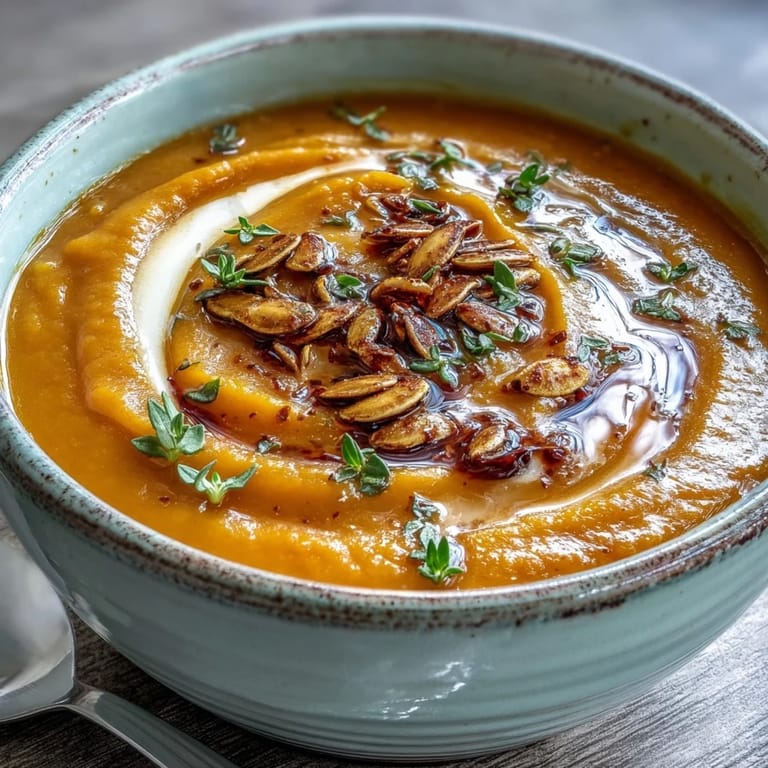
- 1/4 cup heavy cream or coconut milk, optional for serving: A drizzle at the end transforms it from good to memorable.
- Toasted pumpkin seeds for garnish: They add a delightful crunch and nuttiness.
- Fresh thyme leaves for garnish: A small sprig makes it look intentional and tastes bright.
Tired of Takeout? 🥡
Get 10 meals you can make faster than delivery arrives. Seriously.
One email. No spam. Unsubscribe anytime.
Instructions
- Heat your oven and prepare the workspace:
- Set the oven to 400°F and line a baking sheet with parchment paper. This prevents sticking and makes cleanup almost enjoyable.
- Roast the squash until caramelized:
- Toss your cubed butternut squash with 1 tablespoon olive oil, a pinch of salt, and pepper, then spread it out in a single layer. Roast for 25 to 30 minutes, stirring halfway through if you remember. You want the edges to turn golden and slightly crispy, which is where all the flavor lives.
- Build the aromatic base:
- While the squash roasts, warm the remaining olive oil and butter in a large pot over medium heat. Add the chopped onion, carrot, and celery, letting them soften for about 5 to 7 minutes until they release their fragrance and start to turn translucent.
- Add garlic and layer flavors:
- Stir in the garlic cloves and cook for just 1 minute more, until the kitchen smells absolutely incredible. This short window prevents the garlic from burning but lets it infuse the oil.
- Combine and simmer gently:
- Add the roasted squash, vegetable broth, cinnamon, nutmeg, salt, and pepper to the pot. Bring everything to a boil, then lower the heat and let it simmer for 10 to 15 minutes so the flavors can mingle and marry together.
- Blend until silky and smooth:
- Using an immersion blender, puree the soup right in the pot until you reach your desired smoothness. If using a countertop blender, work in batches and be careful with the hot liquid, letting it cool slightly first if you're cautious.
- Taste and adjust seasoning:
- This is the moment to add more salt, pepper, or spices if something feels missing. Trust your palate.
- Serve with care and garnish:
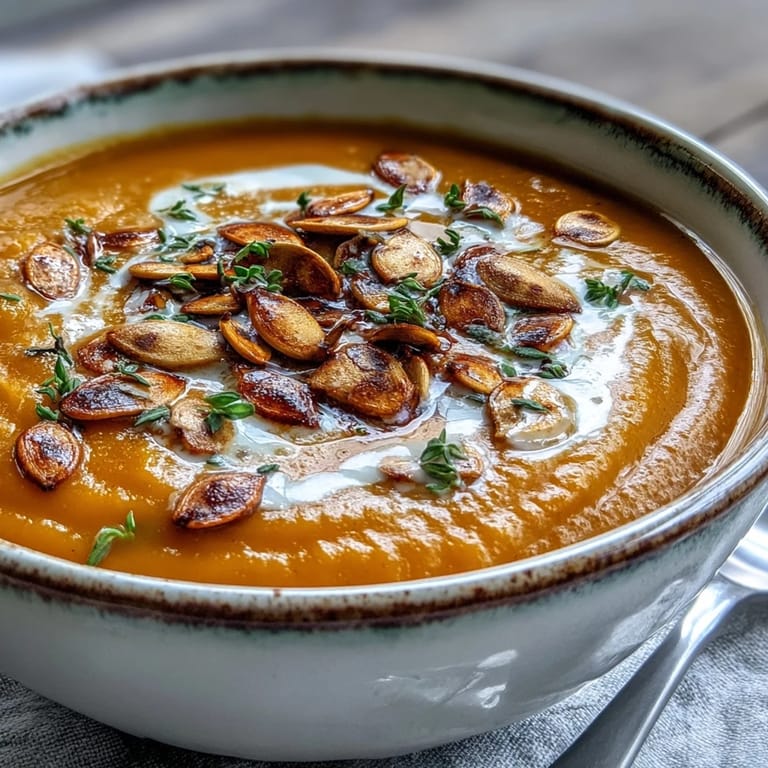
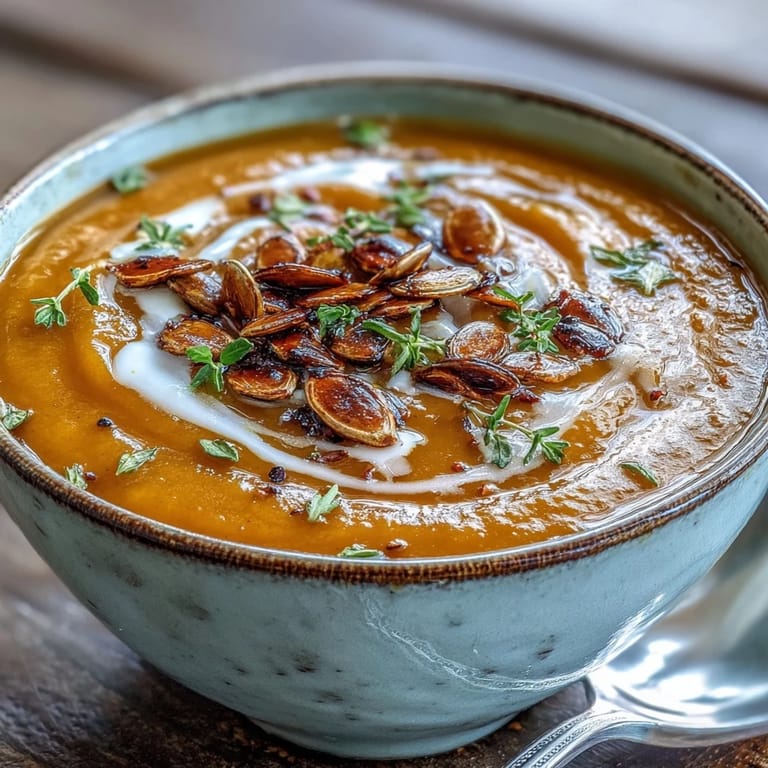
- Ladle the soup into bowls and drizzle with cream or coconut milk if you'd like, then scatter pumpkin seeds and fresh thyme on top. The contrast of warm soup and cool cream is one of life's small luxuries.
 Save
Save The first time someone told me they made this soup three times in one month, I felt oddly proud. There's something satisfying about sharing a recipe that people actually make, not just save and forget.
Why Roasting Makes All the Difference
I learned early on that raw butternut squash boiled in broth tastes vaguely watery and one-dimensional. Roasting caramelizes the natural sugars, creating depth and complexity that no amount of seasoning can replicate. The browned edges are flavor gold, so don't crowd the pan and don't skip the stirring halfway through.
Making It Vegan or Dairy-Free
If you're cooking for someone avoiding dairy, this soup barely notices the omission. Use coconut milk instead of cream and olive oil instead of butter, and honestly, it's just as luxurious. The soup gets its richness from the squash itself, not from dairy, so you're not losing anything except maybe the indulgence of butter.
Serving Suggestions and Storage
This soup keeps beautifully for three days in the refrigerator and freezes wonderfully for up to three months. I like serving it with crusty bread for dipping, or alongside a simple green salad for balance. It also reheats gently on the stovetop without breaking, which is more than can be said for some soups.
- Make a double batch and freeze half in portion-sized containers for busy weeknights.
- Add a pinch of cayenne pepper if you want heat, or try a dash of sage for earthiness.
- Freshly grated nutmeg tastes noticeably better than pre-ground, so grab a whole nutmeg if you can.
 Save
Save This soup has become my answer to almost every chilly evening question, and it never disappoints. Make it once, and you'll understand why it keeps making its way back to the table.
Cooking Questions
- → Can I freeze this soup?
Yes, this soup freezes exceptionally well. Let it cool completely, then transfer to freezer-safe containers. It will keep for up to 3 months. Thaw overnight in the refrigerator before reheating gently on the stovetop.
- → How do I know when the squash is properly roasted?
The squash is ready when it's tender when pierced with a fork and has golden-brown caramelized edges. This usually takes 25–30 minutes at 400°F. The caramelization adds natural sweetness and depth to the finished soup.
- → Can I use pre-cut squash to save time?
Absolutely. Pre-cut butternut squash works well in this preparation. Look for fresh, evenly sized cubes at your grocery store. The roasting time may vary slightly depending on the size of the pieces.
- → What can I substitute for vegetable broth?
Chicken broth works beautifully if you're not vegetarian. For a richer flavor, you can also use water mixed with a bouillon base. The key is using low-sodium options to control the seasoning level.
- → How do I achieve the smoothest texture?
An immersion blender makes this effortless, blending directly in the pot. If using a countertop blender, work in batches and vent the lid to allow steam to escape. For an ultra-silky result, pass the blended soup through a fine-mesh sieve.
- → Can I make this ahead of time?
This soup actually tastes better the next day as flavors meld. Prepare it up to 2 days in advance and refrigerate. Reheat gently over low heat, adding a splash of broth if needed to adjust consistency. Add garnishes just before serving.