 Save
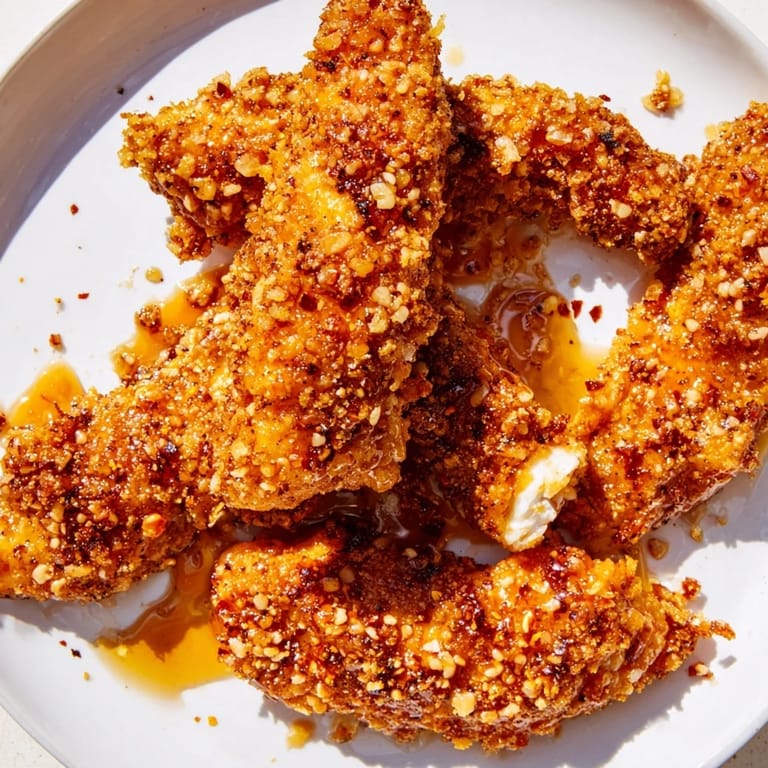
Save The first time I made these, I was chasing that impossible texture—crispy outside, tender inside—and somehow the hot honey drizzle was an accident that became the whole point. My son had requested spicy chicken, my partner wanted something crunchy, and I had panko and honey sitting on the counter. Twenty minutes later, everyone was fighting over the last tender, and I realized this wasn't just dinner, it was the kind of thing people actually ask you to make again.
I still remember my neighbor popping over just as I was plating these, and she literally stopped mid-sentence when she caught the smell of that panko crisping in the air fryer. She ended up staying for dinner, and we spent the evening dipping tenders in hot honey while talking about nothing important. That's when I knew this recipe had staying power.
Ingredients
- Boneless, skinless chicken tenders (500 g): The tenders cook faster and more evenly than breasts, and they're naturally tender, so you don't have to worry about pounding them flat.
- Kosher salt and freshly ground black pepper: Don't skip seasoning the raw chicken directly—it seasons from the inside out and makes a real difference.
- All-purpose flour (60 g): This creates the base layer that helps the egg cling, which then holds the panko coating in place like glue.
- Large eggs (2) and water (2 tbsp): The water thins the egg wash slightly, making it easier to coat and preventing a thick, gloppy layer.
- Panko breadcrumbs (100 g): Panko's larger flakes stay crunchier than regular breadcrumbs—that's the whole secret to the texture everyone comments on.
- Garlic powder, smoked paprika, and onion powder: These three seasonings in the panko add flavor without making the coating taste dusty or one-dimensional.
- Olive oil or neutral oil spray (2 tbsp): The oil is what makes the panko golden and crispy in the air fryer; don't skip this step thinking it defeats the purpose of air-frying.
- Honey (60 ml), hot sauce (1–2 tsp), and red pepper flakes (optional): The hot honey is where the magic happens, and you can adjust the heat level to match your crowd's tolerance.
Tired of Takeout? 🥡
Get 10 meals you can make faster than delivery arrives. Seriously.
One email. No spam. Unsubscribe anytime.
Instructions
- Get your air fryer ready:
- Preheat to 200°C (400°F) for 5 minutes while you prep everything else. A properly heated air fryer is the difference between soggy and crispy.
- Dry and season the chicken:
- Pat the tenders completely dry with paper towels—any moisture keeps them from crisping up properly. Season both sides generously with salt and pepper and let them sit for a minute.
- Set up your dredging station:
- Arrange three shallow bowls in a line: flour in the first, whisked eggs and water in the second, and the panko mixed with garlic powder, smoked paprika, and onion powder in the third. Having everything lined up saves you from the chaos of searching for bowls while your hands are covered in egg.
- Coat each tender:
- Dredge a tender in flour, shake off the excess, dip it in the egg mixture, then coat it thoroughly in the seasoned panko, pressing gently so it adheres. Don't be shy with the panko—you want a visible crust.
- Oil the chicken:
- Lightly spray both sides of each breaded tender with oil (or brush it on if you prefer). This step is non-negotiable for crispiness, and the oil also helps the panko turn golden brown.
- Arrange in the air fryer:
- Place tenders in a single layer in the basket without touching. If they're crowded, they'll steam instead of crisp, so work in batches if you need to.
- Air-fry and flip:
- Cook for 7–8 minutes, then flip the tenders carefully with tongs and cook for another 6–7 minutes until they're golden brown and an instant-read thermometer reads 74°C (165°F) in the thickest part. The internal temperature is what matters for food safety, not just color.
- Make the hot honey:
- While the chicken cooks, combine honey, hot sauce, and red pepper flakes in a small saucepan. Warm gently over low heat, stirring occasionally, until everything is mixed and warm—don't let it boil or the heat will cook off.
- Finish and serve:
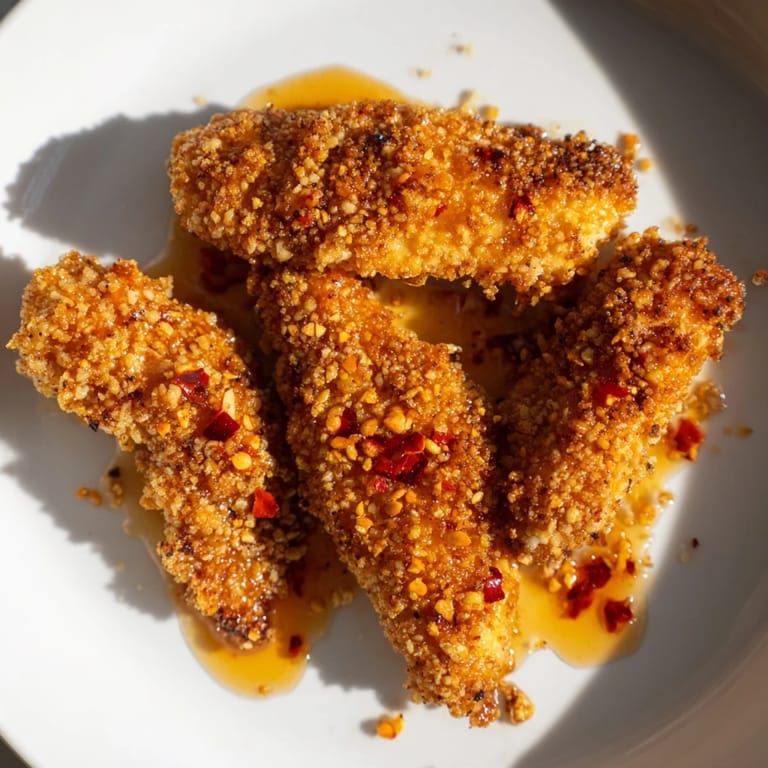
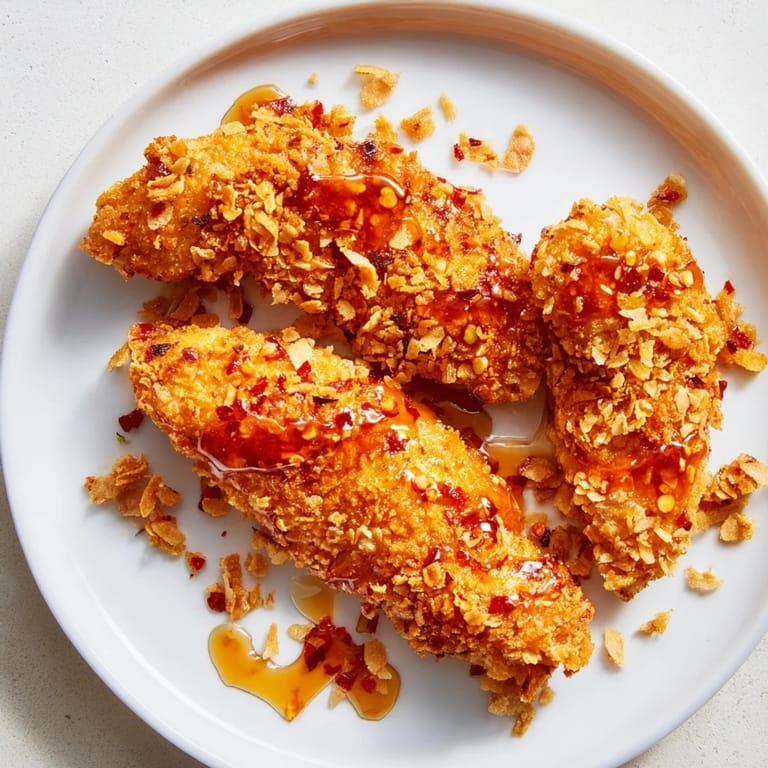
- Remove the tenders from the air fryer and immediately drizzle with the warm hot honey while they're still hot and crispy. Serve any leftover hot honey on the side for dipping.
 Save
Save There was an evening when I made these for a small gathering, and someone asked if they were homemade or from a restaurant. That moment—when food you made yourself could pass for professional—that's when cooking stops being a chore and becomes something you actually look forward to.
Why Panko Is the Secret Weapon
Panko breadcrumbs have larger, fluffier flakes than regular breadcrumbs, which means they create more surface area for air to circulate around during cooking. This is what gives you that golden, almost craggy texture that makes people reach for a second tender before they've finished the first. The oil spray seals the deal by helping those flakes turn crispy instead of staying pale and bland.
Playing with Heat Levels
The hot honey is entirely customizable, which is the beauty of it. I usually start with 1 teaspoon of hot sauce and taste, then add more if I want it spicier, or back it off with extra honey if I overshoot. Red pepper flakes add a lingering heat, while hot sauce gives you immediate fire with flavor mixed in. Some nights I make it barely warm, other nights I make it aggressive enough that my eyes water a little—it just depends on who's eating.
Sides and Serving Suggestions
These tenders don't ask for much, but they shine next to something cool and crunchy to balance the spice and richness of the hot honey. I've served them with everything from coleslaw to cucumber slices, and they've never disappointed. The key is giving people something to cleanse their palate between bites, which is also why a cold drink is practically essential.
- Coleslaw (creamy or vinegar-based) cuts through the heat beautifully.
- French fries or sweet potato fries make this feel like an indulgent meal without being one.
- A simple green salad with a light dressing keeps things balanced and fresh.
 Save
Save This recipe has become my go-to when I want to feel like I'm doing something impressive without actually stressing about it. That's the kind of cooking that sticks around.