 Save
Save There's something magical about the moment when you realize you can turn garlic bread—that beloved sidekick to pasta nights—into an entire bowl of warmth. I discovered this soup by accident, really, when I had a partial loaf of sourdough left over and didn't want it to go stale. Instead of letting it harden, I found myself tossing it into a pot with butter, garlic, and broth, watching as it dissolved into something unexpectedly luxurious. What emerged was this creamy, garlicky embrace of a soup that tastes like comfort tastes when it has a hug in it.
I made this for my sister during a surprise visit last winter when she showed up at my door talking about a terrible week at work. We didn't have time for a fancy dinner plan, so I pulled out some day-old bread from the counter and started chopping garlic while she sat in my kitchen telling me everything. By the time the soup was bubbling away, the whole apartment smelled like toasted bread and caramelized garlic, and somehow just inhaling that made the conversation feel lighter. She called the next day specifically to ask for the recipe—that's when I knew it was the kind of food that fixes more than just hunger.
Ingredients
- Day-old rustic bread (about 4 cups cubed): Use sourdough or a hearty country loaf if you can—it has the structure to soften into the soup without turning into mush, and the slight tang adds real depth.
- Unsalted butter (2 tbsp): This is where the richness comes from, so don't skip it or swap it out; it emulsifies with the cream and creates that silky texture.
- Olive oil (2 tbsp): A good one makes a difference here since it's not being cooked away entirely—it carries flavor and helps toast the bread.
- Yellow onion (1 medium, finely chopped): The sweet base that keeps the soup from being one-note garlic; chop it fine so it breaks down completely into the broth.
- Garlic cloves (6 large, minced): This is the soul of the soup, so use fresh and mince it yourself—jarred garlic tastes flat next to this.
- Celery (1 stalk, finely chopped): A classic aromatic that adds subtle structure without being tasted directly; it's the whisper behind the louder flavors.
- Fresh thyme (1 sprig or 1/2 tsp dried): Thyme has this earthy, almost piney note that keeps the soup from becoming too rich or one-dimensional.
- Fresh parsley (2 tbsp, plus garnish): Add some into the pot while cooking and save the rest for the top; it brightens everything at the last second.
- Vegetable broth (4 cups): The liquid canvas—use something you actually like the taste of, because you'll taste it in every spoonful.
- Heavy cream (1 cup): This is what makes it soup instead of just bread mush; it makes the whole thing luxurious and smooth.
- Parmesan cheese (1 cup grated): The final flavor anchor that ties garlic bread to garlic soup; freshly grated melts better than pre-shredded.
- Salt and black pepper: Start conservative and taste as you go—Parmesan is already salty, so you might need less than you think.
Tired of Takeout? 🥡
Get 10 meals you can make faster than delivery arrives. Seriously.
One email. No spam. Unsubscribe anytime.
Instructions
- Build your flavor base:
- Heat the butter and olive oil together in a large pot over medium heat, then add the onion, celery, and a pinch of salt. Let them soften for about 5 minutes, stirring every minute or so—you're looking for them to turn translucent and start releasing their sweetness, not brown. The pot should smell like Sunday dinner.
- Introduce the garlic:
- Add the minced garlic and thyme, stirring constantly for about 2 minutes. This is the moment where you pay attention because burnt garlic tastes bitter and will ruin the whole thing, but properly cooked garlic becomes almost sweet and fragrant. You'll know it's ready when the kitchen fills with that toasted garlic smell instead of the sharp raw smell.
- Toast the bread:
- Toss in all your bread cubes and stir them around for 3 to 4 minutes, making sure they're coated with the oil and butter and getting lightly golden at the edges. The bread is absorbing all the garlic and herb flavors right now, and you'll notice the cubes starting to soften slightly and break apart at the edges—that's perfect.
- Simmer into creaminess:
- Pour in the vegetable broth and bring it to a boil, then lower the heat and let it simmer gently for 15 minutes with a lid on, stirring once or twice. The bread will soften completely and start to almost dissolve into the broth, which is exactly what you want. When you pull a piece of bread out, it should fall apart without any resistance.
- Blend smooth:
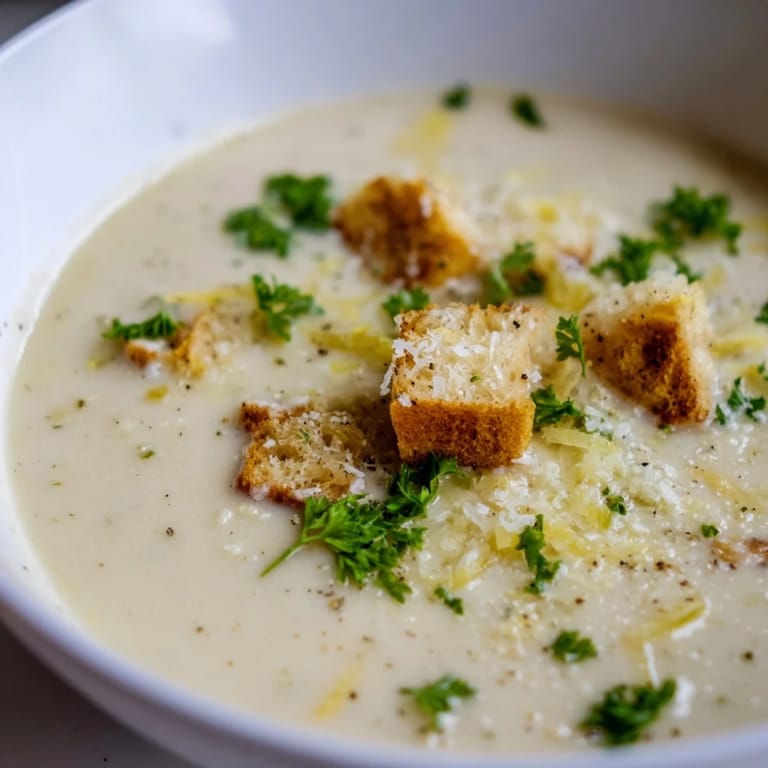
- Fish out the thyme sprig, then use an immersion blender to puree the soup until it's completely smooth and creamy. If you don't have an immersion blender, carefully transfer the soup in batches to a regular blender, blend, and pour it back in. The result should look like liquid velvet, with no visible bread chunks.
- Finish with cream and cheese:
- Stir in the heavy cream and grated Parmesan, then let it simmer gently for 3 to 4 more minutes, stirring occasionally so nothing sticks to the bottom. The cheese melts into the soup and creates this silky, rich coating on your spoon—you'll see the texture thicken slightly as it warms.
- Taste and serve:
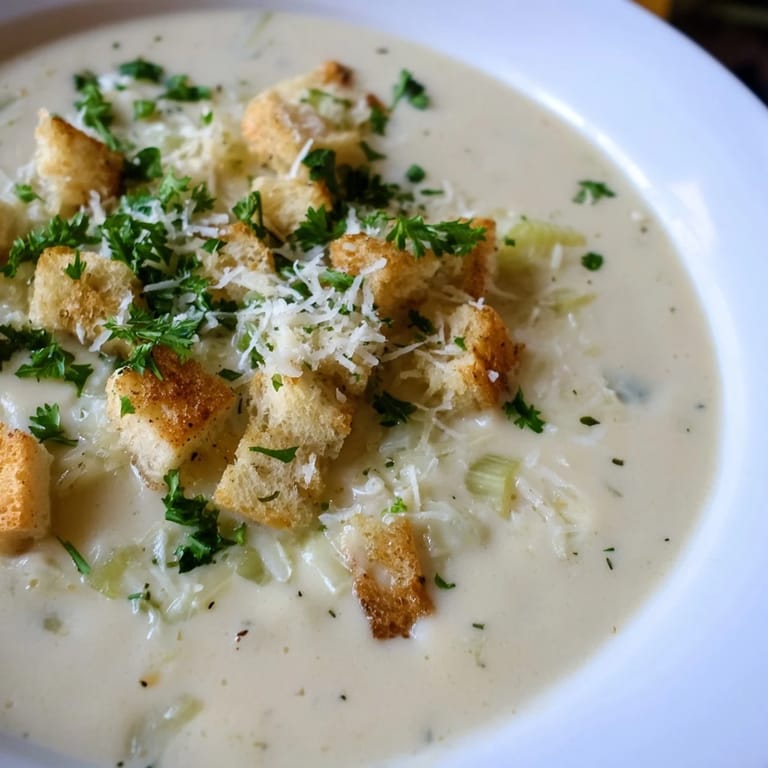
- Season with salt and pepper to your liking, keeping in mind that Parmesan is already salty, so go easy at first. Ladle into bowls and top with fresh parsley, more Parmesan, or even a few crispy croutons if you want a little texture contrast.
 Save
Save I remember my neighbor knocked on my door once while I was making this, drawn by the smell alone, and ended up sitting at my counter with a bowl and a spoon while I worked on something else. She didn't say much at first, just ate quietly, but then she asked if there were any croutons on top and whether she could crumble some bread into the bowl like she did as a kid with other soups. That's when I realized this soup does something special—it makes people feel like they're at home, like they're being taken care of, even if it's just soup.
Bread: Your Secret Ingredient
Most people think bread belongs on the side of the soup bowl, not in it—and that's because we've been trained to think of bread as separate from soup. But bread is actually one of the best thickeners a kitchen has available, and when you break it down properly, it creates a natural creaminess that's richer than just adding cream. The starches in bread dissolve and bind with the liquid, creating body and texture that feels luxurious on your tongue. I learned this lesson by accident, but now I think of bread as the reason this soup feels like you spent hours making it when you actually spent less than an hour.
Why Garlic Gets a Starring Role
Garlic is one of those ingredients that changes personality depending on how you cook it: raw garlic is sharp and spicy, barely cooked garlic is angry and bitter, but slowly softened and sautéed garlic becomes almost sweet and mellow. In this soup, the garlic goes through a journey where it starts out minced and raw, then softens in the fat, then absorbs into the bread cubes during the toasting, and finally dissolves completely into the broth. By the time you eat it, the garlic flavor is everywhere but subtle—it's the reason the soup tastes like garlic bread instead of tasting like a bowl of chopped garlic.
Make It Your Own
This soup is more forgiving than you'd think, and once you understand how it works, you can adapt it without losing what makes it special. Red pepper flakes add a gentle kick if you like heat, crispy croutons on top give you a textural contrast, and a drizzle of garlic-infused oil on the finished bowl makes it look restaurant-worthy without any extra effort.
- Try rubbing the bread cubes with a cut garlic clove before toasting them for even deeper flavor.
- A splash of white wine instead of some of the broth adds a subtle brightness and complexity.
- For a vegan version, use plant-based cream and nutritional yeast instead of Parmesan, and the soup will still be creamy and rich.
 Save
Save This soup lives in that perfect space where it's easy enough to make on a random Tuesday but feels special enough to serve when someone you care about walks through your door. It's the kind of dish that reminds you that the best meals don't have to be complicated—they just have to be made with attention and served with generosity.
Cooking Questions
- → What type of bread is best for this dish?
Day-old rustic bread like sourdough or country loaf works best as it absorbs flavors well and softens without becoming mushy.
- → Can I make a dairy-free version?
Yes, substitute heavy cream with plant-based alternatives and use vegan Parmesan to keep the creamy texture and flavor.
- → How do I prevent the garlic from burning?
Cook garlic gently over medium heat and stir often; sauté with onions and celery to mellow its flavor and avoid bitterness.
- → What herbs enhance this flavorful broth?
Fresh thyme and parsley add fresh herbal notes, while a pinch of red pepper flakes can introduce a gentle kick.
- → Is it necessary to blend the soup?
Blending creates a smooth, creamy texture that melds the flavors together, but you can leave it chunky if preferred.