 Save
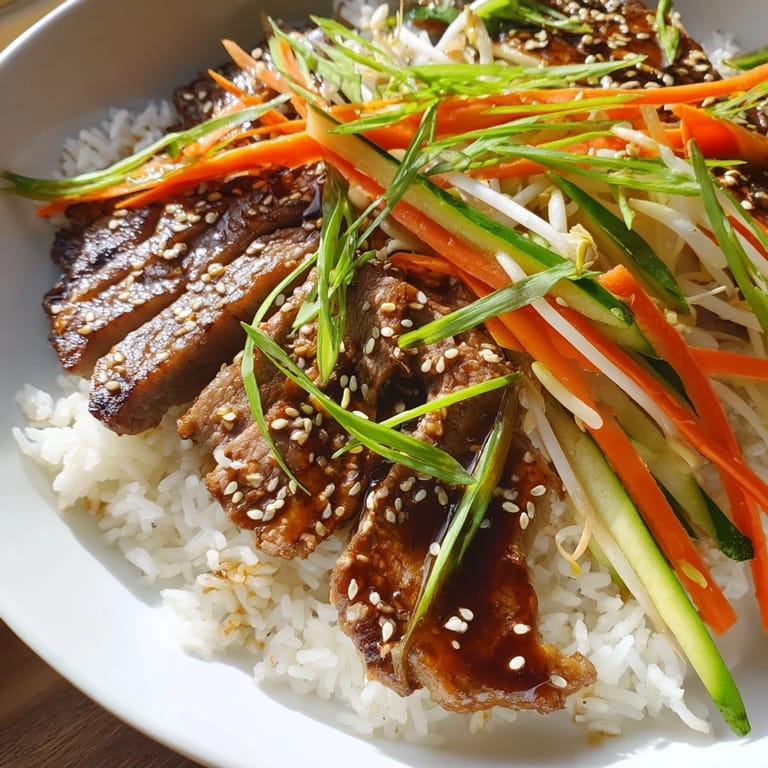
Save The first time I made bulgogi at home, I was chasing that electric sizzle sound from a Korean restaurant I'd visited months before. I remember standing in front of my open fridge, wondering if I could actually recreate that glossy, caramelized beef with just a few pantry staples and a hot skillet. Turns out, the secret wasn't fancy technique at all—it was the pear, of all things, that turned sweet marinade into something alive and complex. Now whenever I have a quiet Tuesday night and want dinner to feel special, this bowl gets made.
I made this for my sister's last-minute dinner party when she called saying she wanted something impressive but quick. She'd warned me her new roommate didn't eat dairy, and suddenly I remembered bulgogi—already naturally free from cream, butter, and cheese. Watching them both come back for seconds while barely pausing for breath felt like the greatest compliment, better than any fancy dessert could have been.
Ingredients
- Beef sirloin or ribeye, thinly sliced (500 g): The thickness matters here—ask your butcher to slice it on the meat slicer, or partially freeze it yourself and use a sharp knife. Thin beef cooks in seconds, which is exactly the point.
- Soy sauce (3 tbsp): This is your umami backbone; don't use the super cheap stuff, but expensive isn't necessary either.
- Brown sugar (2 tbsp): It melts into the sauce and caramelizes against the hot beef, creating those glossy, dark edges.
- Sesame oil (1 tbsp): Use the toasted kind; it has a nutty depth that untoasted oil just can't deliver.
- Rice vinegar (1 tbsp): This adds brightness and prevents the marinade from becoming cloyingly sweet.
- Garlic and ginger (2 cloves and 1 thumb-sized piece): Fresh is non-negotiable; this is where half the flavor comes from.
- Pear or apple (1, grated): The pear's enzymes naturally tenderize the beef while its sweetness rounds out the salty marinade. An Asian pear is ideal, but a crisp apple works beautifully too.
- Gochujang (1 tbsp, optional): Korean chili paste adds a gentle heat and funky complexity; start with half if you're unsure.
- Scallions (2, finely sliced for marinade): They wilt slightly into the sauce, adding an onion-y whisper.
- Toasted sesame seeds (1 tbsp for marinade, more for garnish): The toasting matters—it deepens their flavor from mild to almost nutty.
- Jasmine or short-grain rice (2 cups cooked): The slight stickiness catches the marinade beautifully.
- Carrots, cucumber, and bean sprouts for assembly: These vegetables stay crisp and cool against the warm beef, creating textural contrast with every bite.
Tired of Takeout? 🥡
Get 10 meals you can make faster than delivery arrives. Seriously.
One email. No spam. Unsubscribe anytime.
Instructions
- Mix your marinade in one bowl:
- Combine soy sauce, brown sugar, sesame oil, rice vinegar, minced garlic, grated ginger, grated pear, gochujang if using, sliced scallions, sesame seeds, and black pepper. The mixture should smell almost sweet at first, with an underlying savory note. Give it a good stir until the sugar begins to dissolve.
- Marinate the beef:
- Add your thinly sliced beef to the bowl and toss until every piece is coated. The marinade should cling to the meat like a glossy sauce. Cover and let it sit for at least 15 minutes—the longer you can wait, up to an hour, the more tender and flavorful it becomes.
- Heat your skillet until it's almost smoking:
- Use a large skillet or wok on high heat; you want it hot enough that a drop of water sizzles immediately. This creates that caramelized crust without overcooking the inside.
- Cook the beef in batches:
- Add the marinated beef to the hot skillet, spreading it into a single layer. Resist the urge to stir constantly—let it sit for 30 seconds to a minute so it develops color. Then stir-fry for another minute or two until just cooked through and the edges are dark and glossy. Work in batches so you're not crowding the pan.
- Assemble your bowls:
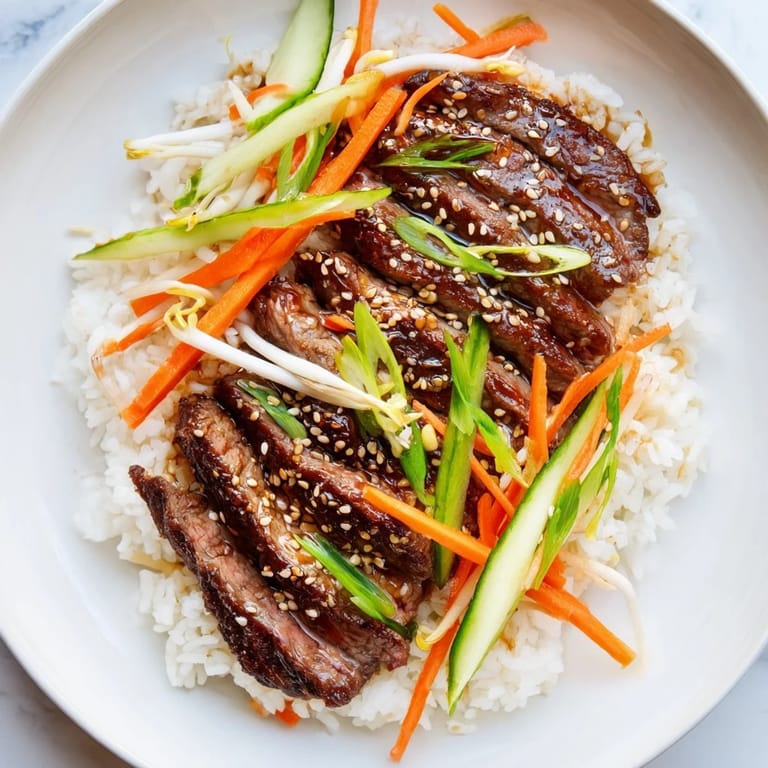
- Divide warm rice among four bowls and arrange the cooked beef, julienned carrots, sliced cucumber, blanched bean sprouts, and kimchi if using on top of or alongside the rice. The warm rice will soften the vegetables slightly while they stay mostly crisp.
- Garnish and serve immediately:
- Scatter extra sliced scallions and toasted sesame seeds over everything. Eat it while the rice and beef are still warm—the contrast with the cool vegetables is what makes it sing.
 Save
Save One evening, I made this bowl for myself alone on a night when I felt a little disconnected from cooking. Somewhere between the smell of caramelizing beef and the quiet satisfaction of arranging vegetables into the bowl, the kitchen felt warm again and the world outside felt smaller. It reminded me that cooking for yourself matters just as much as cooking for others.
Adjusting the Heat
Gochujang is the wild card here. I started with just a quarter teaspoon on my first attempt because I wasn't sure, and it added a subtle savory depth without any real spice. My friend who loves heat wanted two full tablespoons, and the bowl became something completely different—still balanced, but now with that slow burn that makes you reach for more rice. The beauty of this dish is that you can dial the paste up or down without breaking anything, so taste as you go and trust your own heat tolerance.
Variations Worth Trying
I've made this bowl three different ways now, and each one taught me something. One night I used cauliflower rice because I was trying to cut carbs, and the texture actually worked better than I expected—the rice grains were firmer and held the marinade differently. Another time I added a fried egg on top, letting the runny yolk mix into everything like a sauce, and suddenly the whole bowl felt richer and more luxurious. I've also swapped in shiitake mushrooms for some of the vegetables and started using kimchi not as a topping but as part of the marinade, which added a tangy funk that changed everything.
Timing and Make-Ahead Strategy
The beauty of bulgogi is that you can prep almost everything in advance without losing quality. I often slice the beef and make the marinade in the morning, storing them separately in the fridge so the flavors don't get too intense. The vegetables can be cut hours ahead—just keep them in separate containers so the cucumber doesn't release water into the carrots. When dinner rolls around, you're literally just heating a skillet and cooking for three minutes, which is why this became my weeknight go-to when I still wanted something that felt special.
- Store marinated beef in an airtight container for up to 8 hours; anything longer and the texture starts to break down from the pear's enzymes.
- If you're doubling the recipe for a crowd, remember that cooking time stays the same as long as you work in batches—more beef means more batches, not longer individual cooking times.
- Room-temperature leftovers (yes, there are sometimes leftovers) are surprisingly good the next day eaten cold or gently reheated in a pan.
 Save
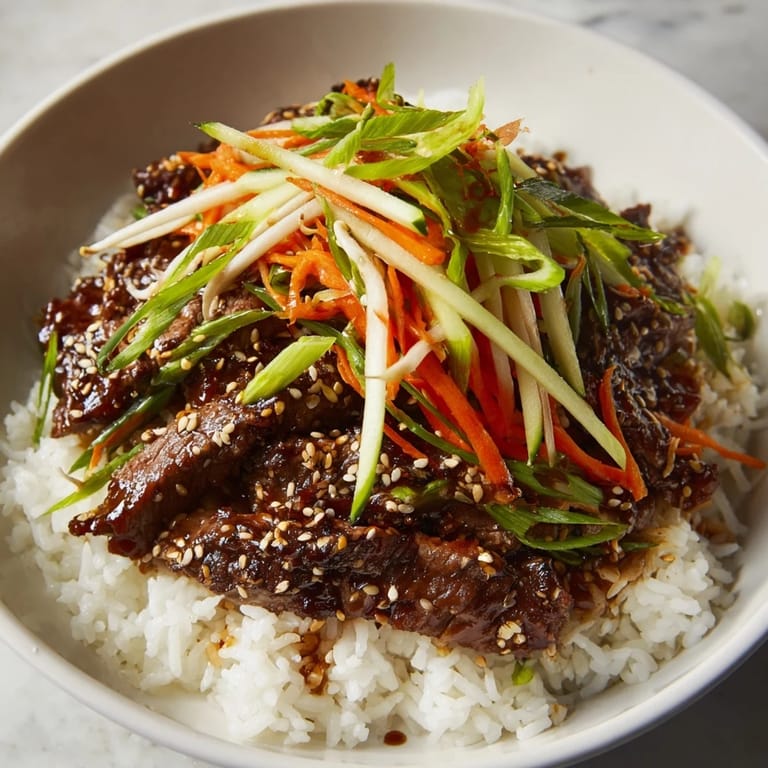
Save This bowl is comfort food that tastes like celebration, which maybe is the best kind of food to know how to make. Every time you cook it, you get faster and more confident, until one day someone asks for the recipe and you realize you're not even looking at notes anymore.
Cooking Questions
- → What cut of beef is best for this dish?
Ribeye or sirloin thinly sliced are ideal for quick cooking and tender results.
- → How long should the beef marinate?
Marinate for at least 15 minutes to allow flavors to develop; up to an hour enhances taste.
- → Can I adjust the spice level?
Yes, modify the amount of gochujang chili paste or omit it entirely for milder flavor.
- → What sides complement the bowl?
Fresh vegetables like carrot, cucumber, and bean sprouts add crunch and balance.
- → Is there a gluten-free option?
Use tamari as a gluten-free soy sauce substitute and ensure gochujang is gluten-free.
- → Can I substitute rice for something else?
Cauliflower rice works well as a low-carb alternative without compromising flavor.