 Save
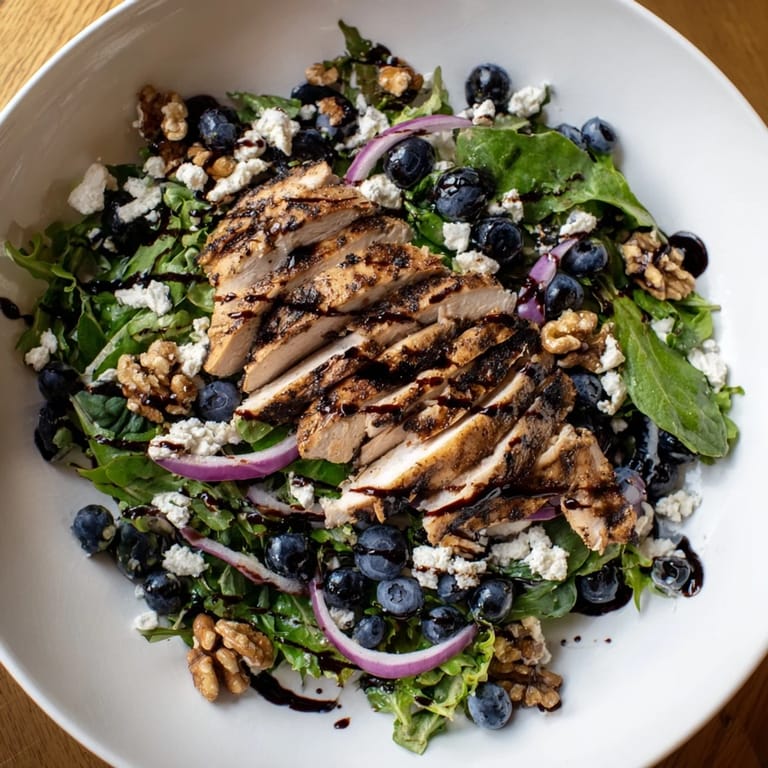
Save There's something about the contrast of warm, salty chicken hitting cool greens studded with sweet blueberries that makes you pause mid-bite and just appreciate the moment. I discovered this combination on a gray afternoon when I had leftover roasted chicken, a container of blueberries going soft, and a hunk of goat cheese that needed rescuing. What started as creative leftovers became something I now make intentionally, especially when I want a meal that feels both indulgent and light.
I made this for my sister last spring when she was going through one of those phases where everything tasted muted and wrong. She'd been off salads for months, but something about the goat cheese's tanginess against the honey-balsamic dressing sparked her appetite back to life. We sat on the back porch watching the light change, and halfway through her plate she smiled properly for the first time in weeks. Food doesn't fix everything, but occasionally it reminds you why you're still here.
Ingredients
- Boneless, skinless chicken breasts (2): Use roughly equal-sized breasts so they cook evenly; if one is thicker, gently flatten it with the side of a knife before cooking.
- Olive oil: Reach for extra-virgin for the dressing, but regular works fine for cooking the chicken—it has a higher smoke point.
- Mixed greens (6 cups): A blend keeps things interesting; pure spinach wilts too easily under warm chicken, and pure arugula can overpower if you're not careful.
- Fresh blueberries (1 cup): Buy them a day or two before if possible so they're at peak sweetness, not mealy or still too tart.
- Red onion (1/2 small): Slice paper-thin and it becomes almost sweet; any thicker and you'll have that harsh bite that dominates the whole salad.
- Walnuts (1/2 cup): Roughly chop them so you get varied textures; some toasted if your pantry allows, but raw works perfectly fine.
- Goat cheese (4 oz): Crumble it by hand rather than using a food processor, which turns it into paste that doesn't distribute evenly.
- Balsamic vinegar: Cheaper versions can taste one-dimensional; splurge slightly here since it's the backbone of your dressing.
- Honey, Dijon mustard, and balsamic glaze: The honey balances the acidity, the mustard adds subtle complexity, and the glaze is the final flourish that makes people ask what you did differently.
Tired of Takeout? 🥡
Get 10 meals you can make faster than delivery arrives. Seriously.
One email. No spam. Unsubscribe anytime.
Instructions
- Heat and prep your chicken:
- Get your pan screaming hot—literally listen for that sizzle when oil hits it. Pat your chicken dry so it sears instead of steams, then brush lightly with oil and season generously.
- Sear until golden:
- You're aiming for 6-7 minutes per side; resist the urge to move it around constantly. The brown crust that forms is flavor you cannot buy, so let it sit undisturbed. A meat thermometer reads 165°F at the thickest part when it's done.
- Rest and slice:
- Five minutes seems short, but it lets the juices redistribute so your chicken stays tender instead of dry. Slice against the grain, which means looking at the muscle fibers and cutting perpendicular to them.
- Build your dressing:
- Whisk olive oil, balsamic vinegar, honey, and mustard together in a small bowl until the honey incorporates fully and the whole thing emulsifies slightly. Taste and adjust salt and pepper; remember you're balancing sweet, tangy, and rich.
- Assemble with intention:
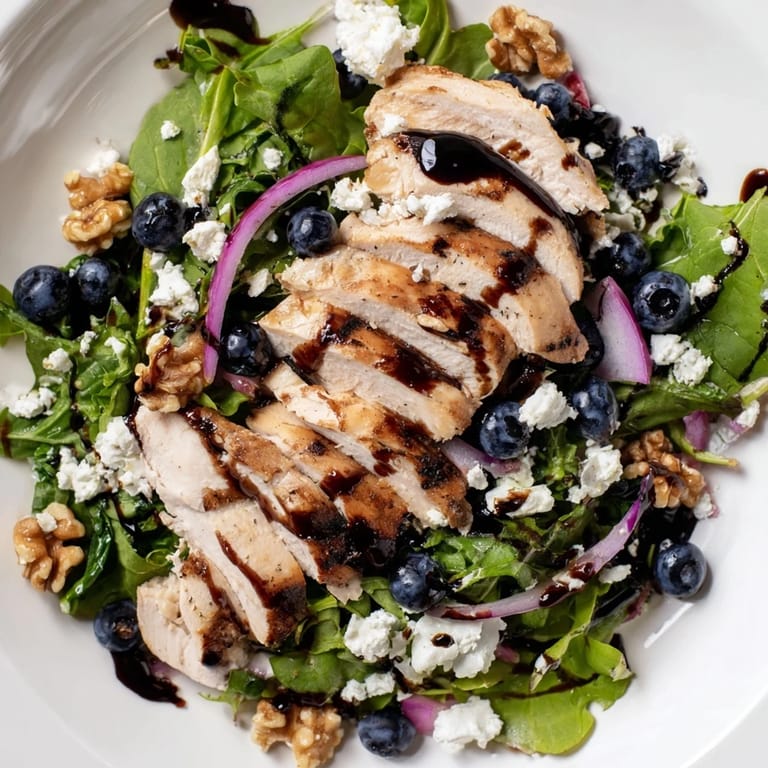
- Layer your greens first, then scatter everything else on top so each bite has a chance of hitting all the components. Think of it as an edible mosaic rather than a dump-and-mix situation.
- Dress and finish:
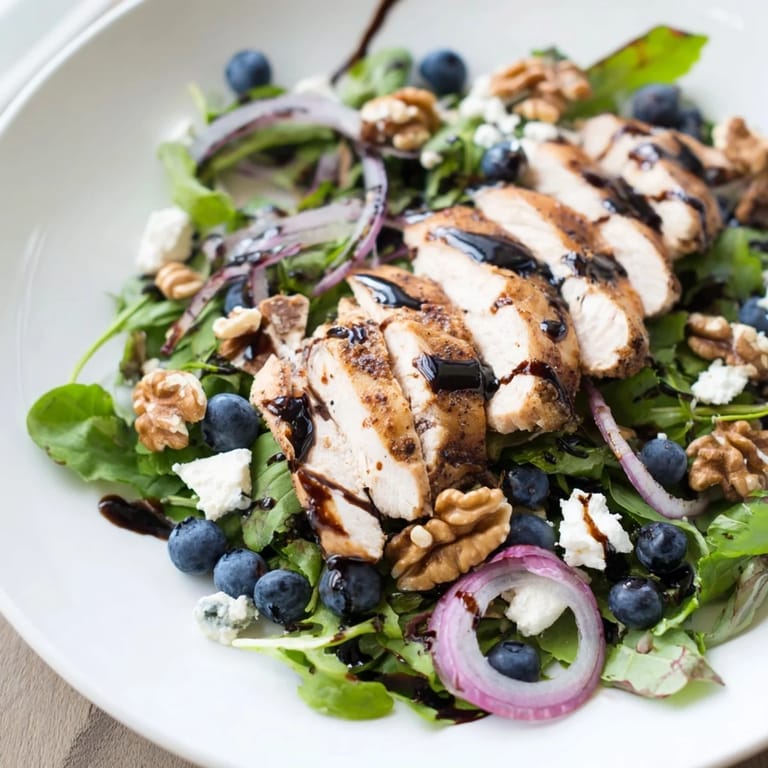
- Pour dressing evenly over the salad, then drizzle the balsamic glaze in a thin stream, almost like you're drawing with it. The glaze catches the light and tastes like concentrated sweet-tart elegance.
 Save
Save What I love most is when someone who claims not to like salad tries this and gets quiet. Not the dramatic quiet of pretending to like something out of politeness, but the genuine quiet of someone discovering they've been wrong about an entire food category.
The Alchemy of Balance
This salad works because nothing overpowers. The blueberries are sweet but not cloying because the vinegar-honey dressing cuts through. The goat cheese is tangy but creamy so it doesn't assault your palate. The chicken provides protein and substance, but it's actually secondary to the supporting cast. It's like cooking with a volume dial instead of an on-off switch. This approach changes how you think about building plates: every element should make the others taste better, not compete for attention.
When to Make This
This salad shines when you want something that feels like celebration without the effort of cooking for hours. It works beautifully in late spring or early fall when you still want something fresh and light, but there's a hint of richness creeping in. I've served it warm straight off the stove, and I've also made it entirely ahead and served it chilled. The flavors actually deepen as the dressing sits with the greens for a few hours, so it's genuinely better if you have the time to wait.
Small Tricks That Matter
The difference between a good salad and one that people actually remember often comes down to tiny adjustments. Keep your salad bowl or platter chilled before assembling if you have the time. If your blueberries are mealy or past their prime, swap them for dried cranberries or fresh raspberries, which carry enough structure to not fall apart. You can also toast your walnuts in a dry pan for three minutes to wake up their natural oils and add depth you didn't know was missing.
- Make your dressing in a jar with a tight lid so you can shake it together even when you're rushed, and it keeps for a week in the fridge.
- Slice your red onion and submerge it in ice water for ten minutes before assembling; it mellows the bite and adds a delicate crunch.
- If goat cheese isn't accessible or you want to stretch the dish, crumbled feta or shredded gruyere works beautifully in its place.
 Save
Save This is the kind of salad that doesn't ask for much but rewards attention to detail. Make it once, and it becomes something you return to when you want to feel like you're taking care of yourself.
Cooking Questions
- → Can I substitute the walnuts with another nut?
Yes, pecans work well as a substitute, providing a similar crunch and slightly sweet flavor that complements the salad.
- → What is the best way to cook the chicken for this dish?
Grilling or searing chicken breasts in a skillet over medium-high heat ensures a tender and juicy result. Let the chicken rest before slicing.
- → How do I make the balsamic glaze dressing?
Whisk extra-virgin olive oil, balsamic vinegar, honey, Dijon mustard, salt, and pepper for the dressing, then finish with a drizzle of store-bought or homemade balsamic glaze.
- → Can this dish be prepared ahead of time?
You can prepare the dressing and grill the chicken in advance. Assemble the salad just before serving to keep greens crisp.
- → Is this dish suitable for a gluten-free diet?
Yes, all ingredients are naturally gluten-free, but check labels on balsamic glaze and mustard to confirm no gluten content.