 Save
Save I put together my first yin-yang board on a whim for a small dinner party, mostly because I had too many cheeses and wanted to make them look intentional. The blackberry curve happened by accident when I ran out of room on one side. A guest gasped when she saw it, called it philosophical, and suddenly my chaotic fridge cleanout became a conversation piece. Now I make it whenever I want something beautiful without turning on the stove.
The first time I served this to my book club, someone asked if I went to culinary school. I laughed because I had literally assembled it while on a phone call, balancing the board on my lap. The curve of blackberries did all the heavy lifting. People ate slowly, pairing light with dark, and the conversation shifted from plot twists to flavor pairings.
Ingredients
- Fresh blackberries: The star of the visual divide, they need to be firm enough to hold their shape and sweet enough to balance tangy cheese.
- Goat cheese: Soft, tangy, and cloud-white, it anchors the light side with a creamy contrast to sharper flavors.
- Young Manchego or white cheddar: Mild and buttery, these cheeses keep the light side approachable and smooth.
- Pear: Slice it thin so it fans out gracefully, adding a delicate sweetness that complements mild cheeses.
- White grapes: They add juicy pops of freshness and lighten the richness of cheese and nuts.
- Raw almonds: Crunchy and neutral, they give texture without overpowering the lighter flavors.
- Rice crackers or light-colored crackers: Choose something crisp and plain to let the cheeses and fruits shine.
- Aged blue cheese: Bold, salty, and pungent, it commands attention on the dark side with its deep flavor.
- Aged Gouda or sharp cheddar: These bring caramel notes and a firm bite that contrasts beautifully with softer options.
- Black plum: Tart and slightly sweet, it mirrors the pear on the opposite side but with darker, moodier flavor.
- Red or black grapes: Juicy and rich, they echo the white grapes but feel more robust and earthy.
- Roasted hazelnuts: Toasted and warm in flavor, they add depth and a satisfying crunch to the dark side.
- Dark rye crisps or seeded crackers: Hearty and textured, they stand up to strong cheeses without crumbling.
- Fresh mint leaves: A bright green accent that adds a cooling, aromatic lift to both sides.
- Edible flowers: Optional but stunning, they make the board feel special without adding flavor.
Tired of Takeout? 🥡
Get 10 meals you can make faster than delivery arrives. Seriously.
One email. No spam. Unsubscribe anytime.
Instructions
- Set the stage:
- Place your largest, flattest board on the counter and take a moment to appreciate the blank canvas. This is the fun part.
- Draw the divide:
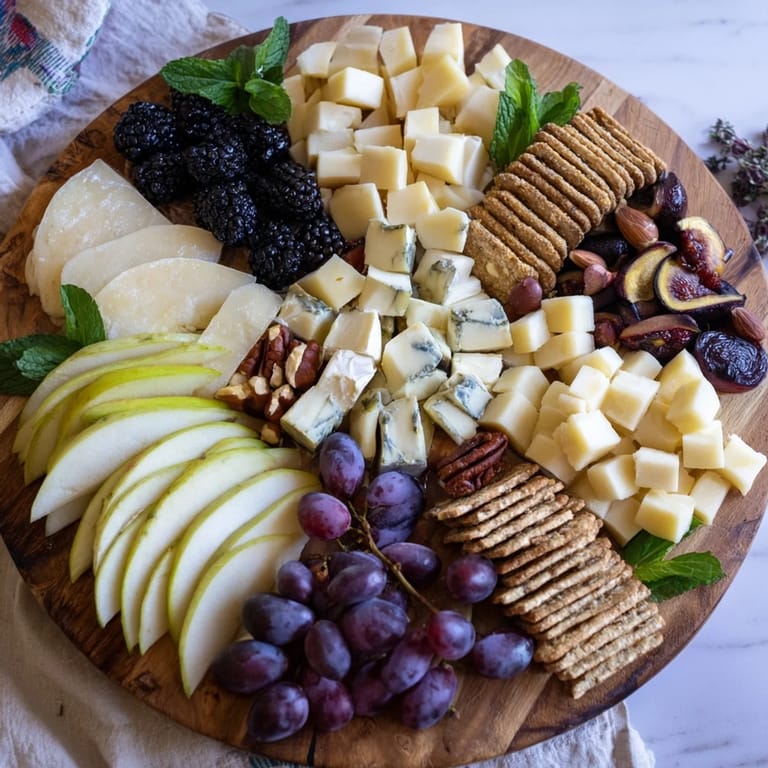
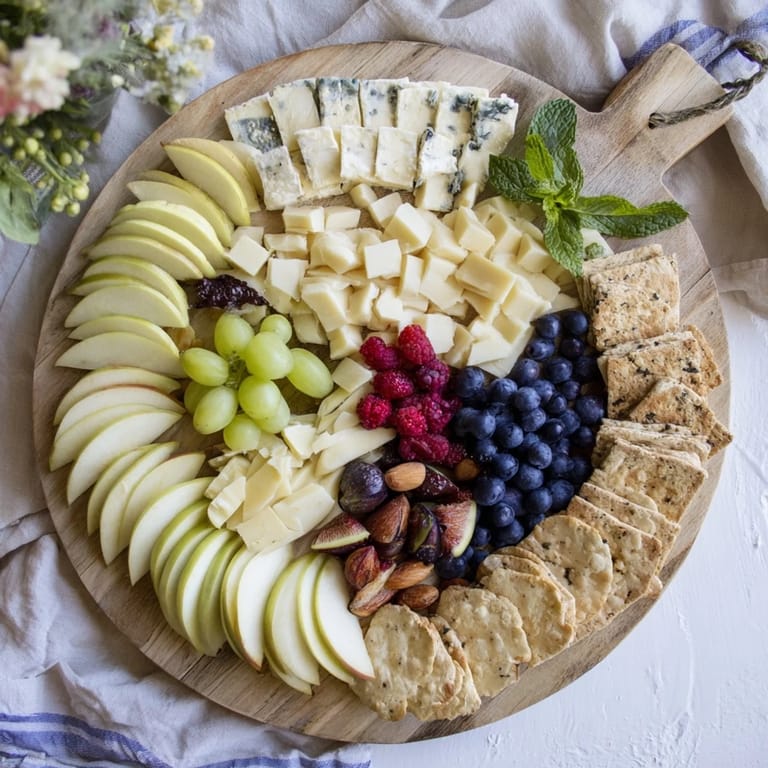
- Lay the blackberries in a gentle S-curve across the center, pressing them lightly so they stay put. Let the curve flow naturally, not rigidly.
- Build the light side:
- Start with the goat cheese and Manchego, then tuck in pear slices, white grapes, almonds, and crackers. Keep it loose and organic, not gridded.
- Build the dark side:
- Mirror the light side with blue cheese, aged Gouda, plum slices, dark grapes, hazelnuts, and rye crisps. Let the colors deepen as you go.
- Finish with flourish:
- Scatter mint leaves and edible flowers over both sides, filling any gaps and adding little bursts of green and color. Step back and admire your work before anyone arrives.
 Save
Save One evening, my nephew sat cross-legged in front of this board and methodically ate one item from each side in turn, like he was conducting an experiment. He announced that the dark side won, but only barely, and then asked if I could make it for his birthday. I did, and he wore a tie.
Choosing Your Cheeses
The key is contrast, not just color. Pair creamy with crumbly, mild with bold, soft with aged. I once used all soft cheeses and the board felt flat, no texture to surprise the palate. Now I make sure each side has at least one cheese with bite and one that melts on your tongue.
Seasonal Swaps
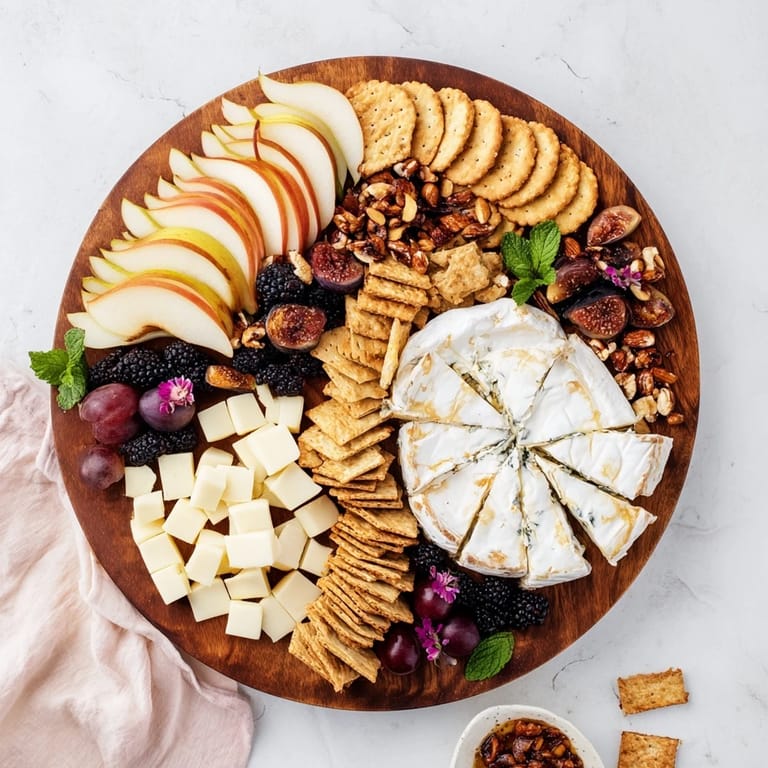
In summer, I swap pears for apricots and plums for figs, and the board takes on a sun-warmed sweetness. In winter, I use dried fruit and candied nuts, and everything feels cozier. The blackberry curve stays constant, but the sides shift with the farmers market and whatever looks good that week.
Serving and Pairing
I like to set out small plates and let people graze at their own pace, building little bites that cross the divide. A crisp white wine highlights the light side, while a light red or even a dark beer complements the aged cheeses and roasted nuts. Some guests stick to one side, others zigzag, and both approaches work perfectly.
- Add a small bowl of honeycomb on the light side for drizzling over goat cheese.
- Tuck fig jam or grainy mustard on the dark side to cut through the richness of blue cheese.
- If you have extra blackberries, scatter a few over the cheeses for pops of color and juice.
 Save
Save This board has become my go-to when I want to impress without stress, when I want people to linger and talk instead of waiting for the next course. It is as much about the pause as it is about the taste.
Cooking Questions
- → What cheeses work best for the light side?
Soft and mild cheeses like goat cheese and young Manchego provide a creamy contrast to the fruits and nuts.
- → Can I substitute the fruits on the board?
Yes, seasonal fruits like apples or figs can replace pears and plums to suit availability or preference.
- → What crackers complement the dark cheeses?
Dark rye crisps or seeded crackers enhance the robust flavors of aged Gouda and blue cheese.
- → How does the blackberry line enhance the board?
The fresh blackberries create a natural dividing line, visually separating and balancing the light and dark sides.
- → What garnishes add freshness to the presentation?
Fresh mint leaves and edible flowers introduce bright colors and refreshing aromas to the board.