 Save
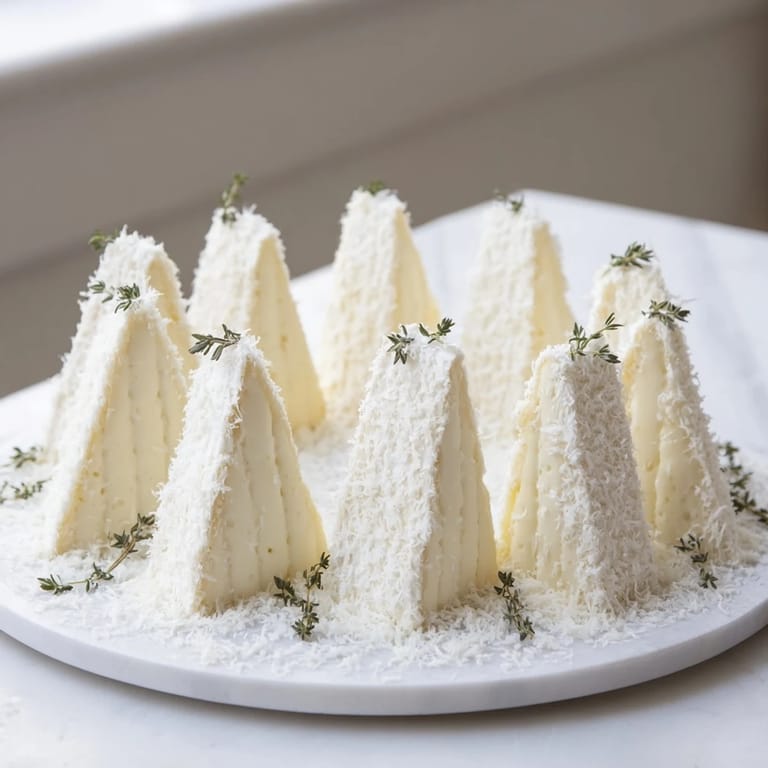
Save A few winters ago, I was standing in my kitchen trying to impress someone with something elegant but effortless, and I realized I had nothing but two wedges of Brie sitting in the fridge. I'd seen those fancy cheese platters with their impossible arrangements, but this felt different—quieter somehow. I arranged those pale triangles upright like little peaks and dusted them with Parmesan, and something just clicked. The dish practically made itself, and yet it looked like I'd spent hours thinking about it. That's when I understood the magic of The Snowcapped Range: it's all about making ordinary ingredients feel like an event.
I made this for a dinner party once where everything else had gone slightly sideways—the main course was late, the wine hadn't chilled properly. But these little cheese peaks came out looking like something from a gallery opening, and suddenly the whole evening felt intentional again. People gathered around the platter before anything else was ready, and there was this moment of genuine delight when they realized it was just cheese, just Parmesan, just something simple arranged with a little thought.
Ingredients
- Brie cheese (400g): This needs to be properly chilled—I learned this the hard way when I tried to use room-temperature Brie and ended up with wedges that looked more like abstract art than mountain peaks. The cold keeps it firm enough to cut cleanly and stand tall on the platter.
- Parmesan cheese (40g), finely grated: The sharpness here is essential; it cuts through the richness of the Brie and adds that visual snow effect. If you grate it yourself, the texture is finer and more elegant than pre-grated.
- Fresh thyme sprigs (optional): I skip it sometimes, but when I include it, the green adds a storytelling touch—like there's actual landscape beneath those snowy peaks.
Tired of Takeout? 🥡
Get 10 meals you can make faster than delivery arrives. Seriously.
One email. No spam. Unsubscribe anytime.
Instructions
- Chill your Brie properly:
- Give yourself at least 30 minutes in the fridge, longer if you have the time. A cold Brie will slice cleanly and hold its shape, while room-temperature cheese will squish and slide around.
- Make your cuts with intention:
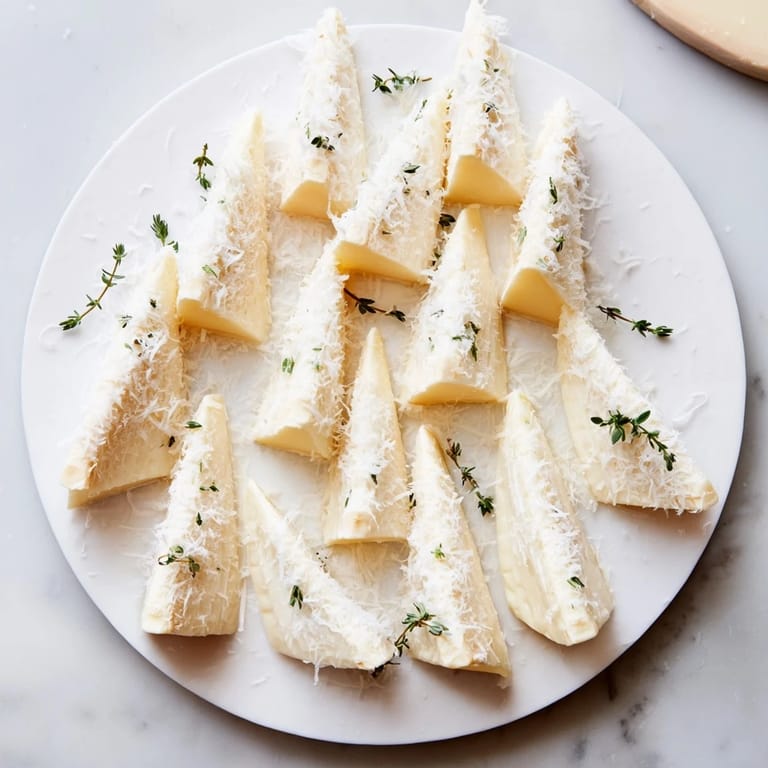
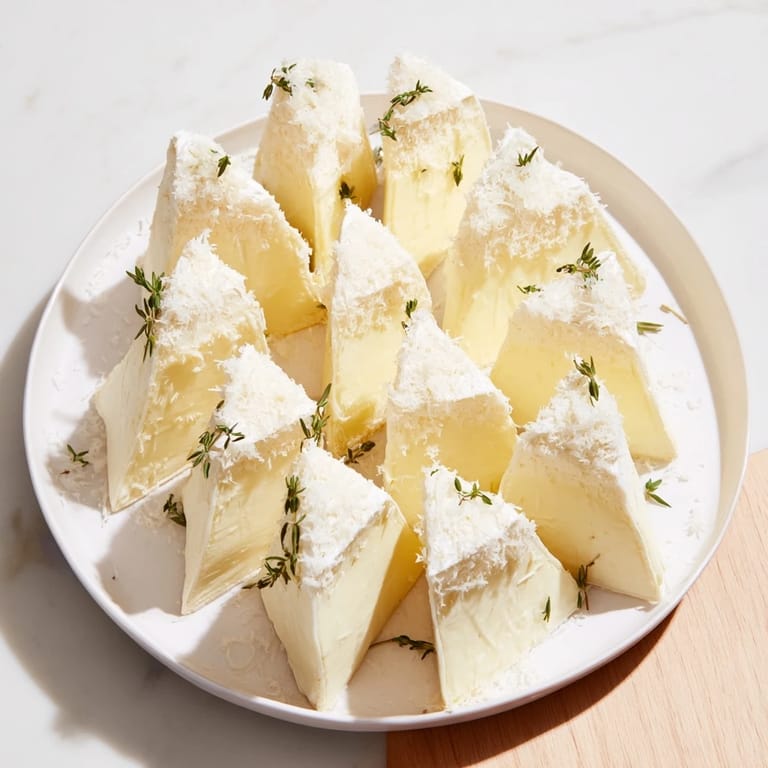
- A sharp knife is everything here—dull blades will drag through the cheese and create ragged, sad-looking wedges. I aim for triangles about the size of a large postage stamp, each one roughly 25 grams.
- Stand them upright like you're building something:
- This is where the magic happens. Arrange your wedges pointed-end up on your serving platter, leaving enough space between them so they don't crowd. They should look deliberate, like a mountain range you've actually planned.
- Dust generously with Parmesan:
- Don't be shy here—this is your snow. I use my fingers to pinch the grated Parmesan and let it fall in layers across the peaks. It's tactile, and it feels better than sprinkling from a distance.
- Garnish if the mood strikes:
- A few sprigs of thyme scattered around the base adds depth without overthinking it. This step is truly optional, but it's nice when you want the platter to feel a little more alive.
- Serve it immediately:
- The moment the Parmesan hits the Brie, something beautiful happens—just bring it straight to the table while it's pristine. Have crackers or baguette slices nearby, because people will want to taste this without waiting.
 Save
Save There was a moment at that dinner party when someone said, 'This shouldn't be this good,' and I realized they meant it wasn't just about taste—it was about the whole experience. A ten-minute dish that somehow feels generous and thoughtful. That's what I love about cooking sometimes: not every memory has to be complicated to feel meaningful.
When to Make This
This is your recipe for the moment when you want to impress but you're running short on time or energy. It works for elegant pre-dinner moments, casual wine gatherings, or when you need something beautiful on the table while you're still finishing the rest of the meal. The simplicity is part of its power—you're not stressed about timing or technique, so you can actually enjoy hosting. I've made this in winter and summer, at formal dinners and standing around the kitchen island on a Wednesday night, and it always feels a little like an event.
Small Variations That Matter
Once I toasted the Parmesan lightly in a dry pan before cooling and dusting it across the peaks, and it added a subtle nuttiness that made the whole thing feel richer. Another time, I mixed a tiny bit of fleur de sel into the Parmesan—just a whisper of it—and it somehow made both cheeses taste more like themselves. You can also swap the Brie for Camembert if you want something slightly earthier, or reach for a triple-cream cheese if richness is what you're after. The structure stays the same; only the feeling shifts slightly.
What to Serve Alongside
Crispy crackers are the obvious choice, but I've had success with thin slices of toasted baguette, water crackers, or even delicate breadsticks. The goal is something sturdy enough to hold a piece of Brie without falling apart, but not so hearty that it overwhelms the cheese. A chilled Chardonnay or sparkling wine is the natural pairing—the acidity cuts through the richness in a way that feels right. This dish has appeared at the beginning of countless meals in my kitchen, always setting a gentle tone for whatever comes next.
- Toast your baguette slices lightly to add texture without stealing focus from the cheese.
- Arrange crackers on a separate small plate so people can help themselves without crowding the cheese platter.
- Chill your glasses and your wine—the temperature matters more than you'd think for this pairing.
 Save
Save This recipe taught me that sometimes the most elegant moments come from working with what you have and paying attention to small details. The Snowcapped Range is proof that you don't need hours in the kitchen to create something memorable.
Cooking Questions
- → How should the Brie be prepared for clean cutting?
Ensure the Brie is well chilled to achieve neat, triangular wedges with a sharp knife.
- → Can Parmesan be toasted before dusting?
Yes, gently toasting the Parmesan in a dry pan enhances its flavor before sprinkling atop the wedges.
- → Are there suitable cheese alternatives?
Camembert or triple-cream cheese can be used for a richer texture and similar presentation.
- → What garnishes complement the cheese display?
Fresh thyme sprigs add color and subtle herbal notes, enhancing the visual and flavor profile.
- → What beverage pairs well with this dish?
A chilled Chardonnay or sparkling wine pairs nicely, balancing creaminess and elevating the flavors.