 Save
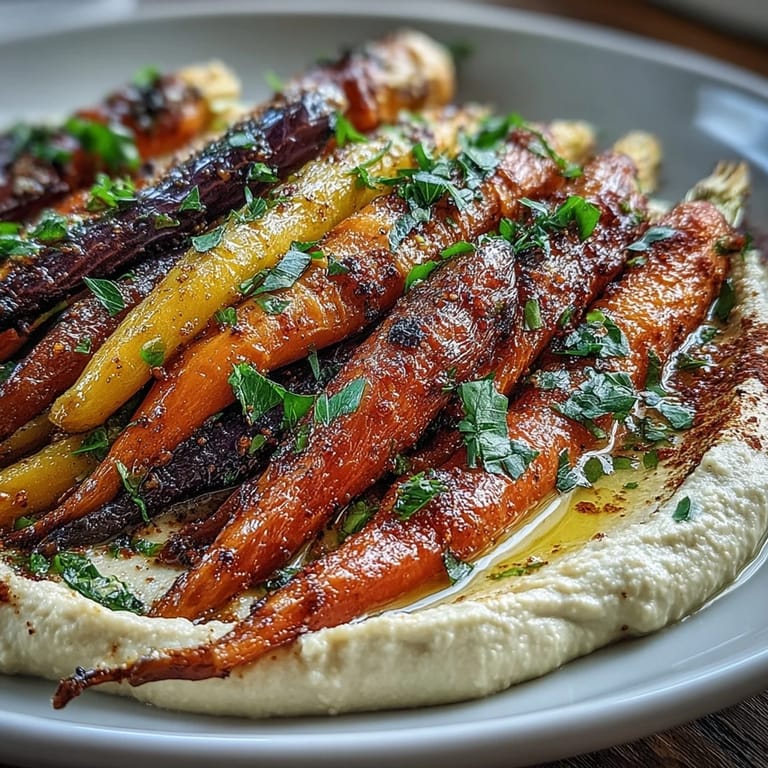
Save My neighbor knocked on my door one afternoon with a bag of rainbow carrots from the farmer's market, insisting I had to see the colors—deep purples, bright oranges, pale yellows all in one bunch. She stayed while I roasted them, and the smell that filled my kitchen was so unexpectedly sweet and caramelized that we both just stood there for a moment. That's when I realized this simple platter could become something people actually get excited about.
I made this for a potluck once and watched people's faces light up when they realized the hummus was homemade—tahini-rich and somehow smoother than anything from a store. The mom next to me dipped a carrot and closed her eyes like she was tasting something from a Mediterranean vacation, which made me laugh because I'd made it in my tiny apartment kitchen wearing an apron with a coffee stain.
Ingredients
- Rainbow carrots: These aren't just prettier than regular carrots—the different varieties have subtle flavor variations, and when roasted, they caramelize differently, creating a more interesting texture and taste on the same platter.
- Tahini: This is the secret that makes your hummus taste like it came from somewhere special; buy the best quality you can find because it's really the star here.
- Extra-virgin olive oil: Use one you actually like tasting, since it's not being cooked down into oblivion—it stays front and center in both the hummus and drizzled on top.
- Fresh lemon juice: Bottled won't cut it; the brightness of fresh juice is what keeps the hummus from tasting flat and heavy.
- Garlic: One small clove is enough; too much and you'll overpower the delicate tahini flavor that took you five minutes to develop.
- Sea salt: A pinch goes into the carrots and another into the hummus, but taste as you go because it's easier to add than to remove.
- Smoked paprika: Just a whisper of this on top adds a warmth and sophistication that makes people ask what you did differently.
Tired of Takeout? 🥡
Get 10 meals you can make faster than delivery arrives. Seriously.
One email. No spam. Unsubscribe anytime.
Instructions
- Get your oven ready and prep the carrots:
- Heat your oven to 425°F and line a sheet with parchment paper so cleanup is painless. Toss your carrots with olive oil, salt, pepper, and cumin if you're using it—the oil should coat each one evenly so they'll caramelize, not steam.
- Roast until they're barely caramelized:
- Spread them in a single layer and let them roast for about 25 to 30 minutes, turning them halfway through so they get color on all sides. You'll know they're done when a fork slides through easily and the edges are starting to turn golden and crispy.
- While the carrots are roasting, make the hummus:
- Drain and rinse your chickpeas, then add them to the food processor with tahini, olive oil, lemon juice, minced garlic, cumin, and salt. Blend until it's completely smooth and creamy, which takes longer than you'd think—usually a full minute of processing.
- Reach the right consistency:
- Add cold water one tablespoon at a time until the hummus is silky and spreadable but not soupy; you want it to hold a slight peak when you scoop it. Taste it and adjust the salt or lemon if it needs it—sometimes a tiny pinch of salt makes all the difference.
- Bring it all together on a platter:
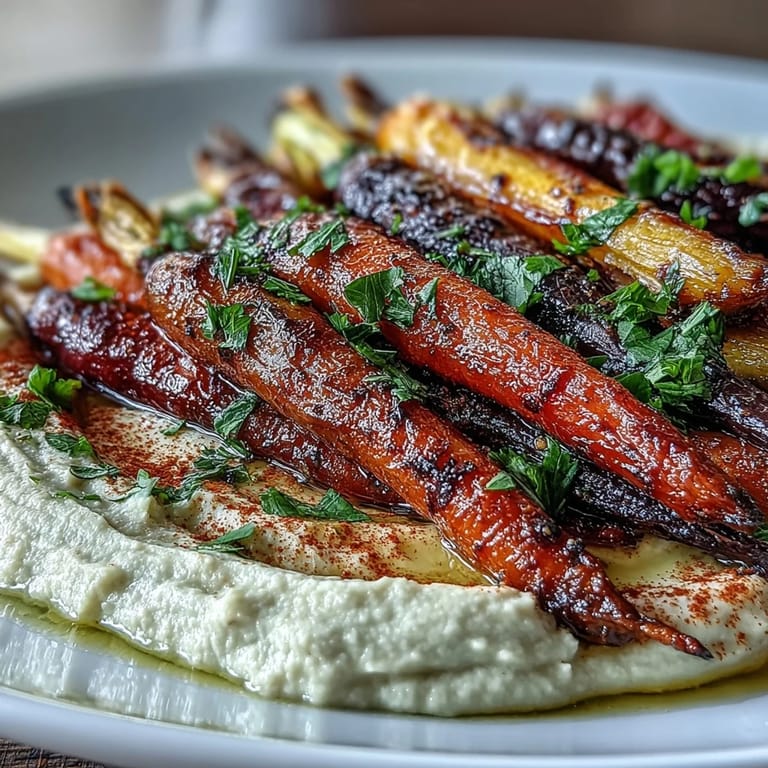
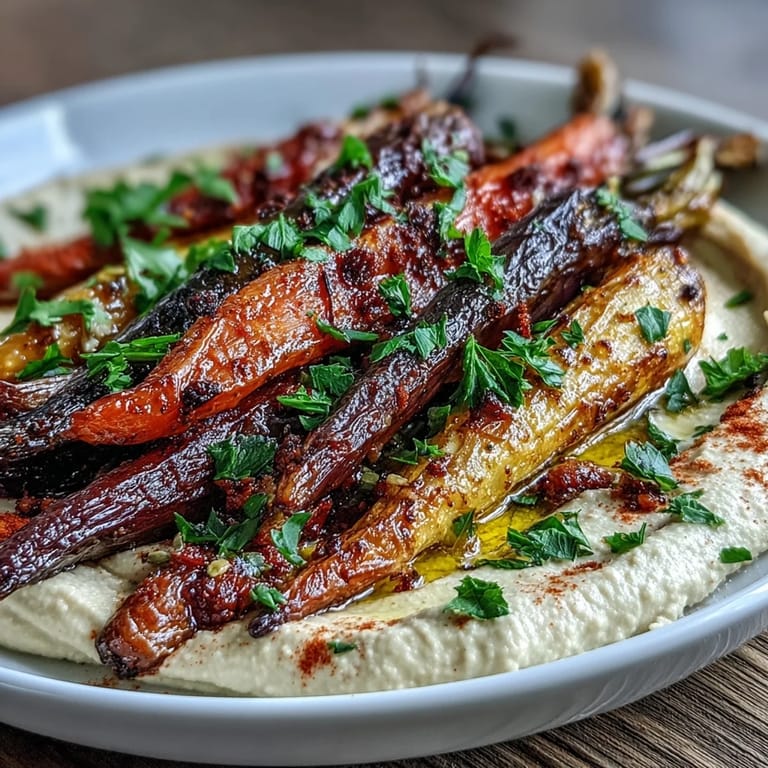
- Transfer the hummus to a bowl, drizzle with a little extra olive oil, and dust with smoked paprika for that restaurant-quality finish. Arrange your warm roasted carrots around it, sprinkle fresh parsley over the top, and serve while the carrots are still slightly warm.
 Save
Save There was a moment during a dinner party when someone asked if I'd made the hummus from scratch, and I got to say yes without any hesitation—no jarred chickpeas, no store-bought tahini sludge. My confidence in that one simple yes made me realize that sometimes the best recipes are the ones where you can actually taste how much care went into them.
The Magic of Color on a Plate
Something shifts in people when they see purple and yellow and orange carrots all roasted together—it stops feeling like just a snack and starts feeling like an event. I've learned that presentation matters not because food blogs say so, but because your guests will eat with their eyes first, and if you give them beauty, they're already half convinced it's going to taste amazing. The hummus acts like a canvas that lets those colors really shine.
The Tahini-Lemon Balance
The first time I made hummus, I added tahini and then couldn't figure out why it tasted so heavy and one-note—that's when I learned that lemon juice isn't just flavoring, it's actually transformative, cutting through the richness and waking everything up. Now I add the juice slowly while tasting, because the moment you hit that balance, something clicks and suddenly it tastes like it was made by someone who knows what they're doing. That balance is different every time, which is why no two batches taste exactly alike.
Small Touches That Change Everything
I used to skip the smoked paprika because I thought it was just for looks, but then a friend pointed out that spices aren't just visual—they add depth and warmth even in tiny amounts. Now I think about every garnish as part of the flavor story, not just a decoration. The parsley brings freshness, the paprika adds smoke, and together they're not fussy, they're intentional.
- Toast a handful of sesame seeds in a dry pan for thirty seconds and scatter them over the carrots for a surprise crunch that people will absolutely ask about.
- Try adding a tiny pinch of harissa or chili flakes if you want the hummus to have a hidden warmth that builds as people eat.
- Serve the hummus and carrots warm or at room temperature, but never cold straight from the fridge—the flavors are more expressive when they're not muffled by the cold.
 Save
Save This dish has become my go-to when I want to impress without stress, and it's taught me that sometimes the most elegant food is just really good ingredients treated with respect. Make this for someone and watch how a simple platter of roasted vegetables and hummus becomes the thing people talk about.
Cooking Questions
- → What makes rainbow carrots special?
Rainbow carrots come in purple, orange, yellow, and white varieties, each offering slightly different flavor notes from sweet to earthy. Their vibrant colors create an eye-catching presentation while providing diverse antioxidants and nutrients.
- → Can I prepare this ahead of time?
The hummus can be made up to three days in advance and stored in an airtight container. Roast the carrots fresh for best results, though they can be reheated gently at 350°F for 10 minutes if needed.
- → What other vegetables pair well with this hummus?
Cucumber slices, bell pepper strips, radishes, and raw snap beans all complement the creamy tahini hummus. Warm pita bread or crackers also work wonderfully for dipping.
- → How do I achieve the smoothest hummus texture?
Blend tahini and lemon juice first until creamy before adding chickpeas. Using cold water helps achieve a silky consistency, and letting the hummus rest for 30 minutes before serving allows flavors to meld.
- → Can I customize the seasoning on the carrots?
Absolutely. Try adding honey or maple syrup before roasting for extra caramelization, or experiment with za'atar, harissa, or fresh herbs like thyme and rosemary to vary the flavor profile.