 Save
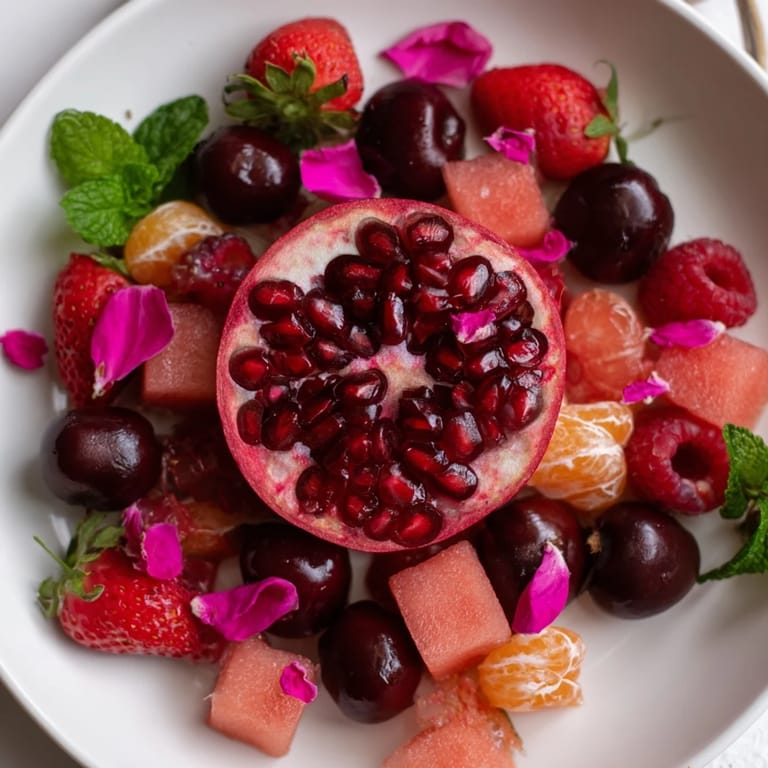
Save I discovered the magic of color gradients not in an art class, but standing in front of an almost-empty fruit bowl at a dinner party I was hosting. With only a pomegranate, some berries, and whatever else I could find in the kitchen, I started arranging them by shade—deep crimson to blush to pale cream—and suddenly what could have been a forgettable fruit plate became the centerpiece everyone kept reaching for. Now whenever I need something that looks effortless but speaks volumes, this platter is my answer.
Last summer, my friend texted asking what to bring to a potluck where everyone was trying to outdo each other. I suggested she make this, and two hours later she sent a photo of the empty platter with the caption 'They didn't even know it was vegan.' That's when I realized this dish does something special—it disarms people with its beauty and then surprises them with how genuinely delicious fresh fruit can be.
Ingredients
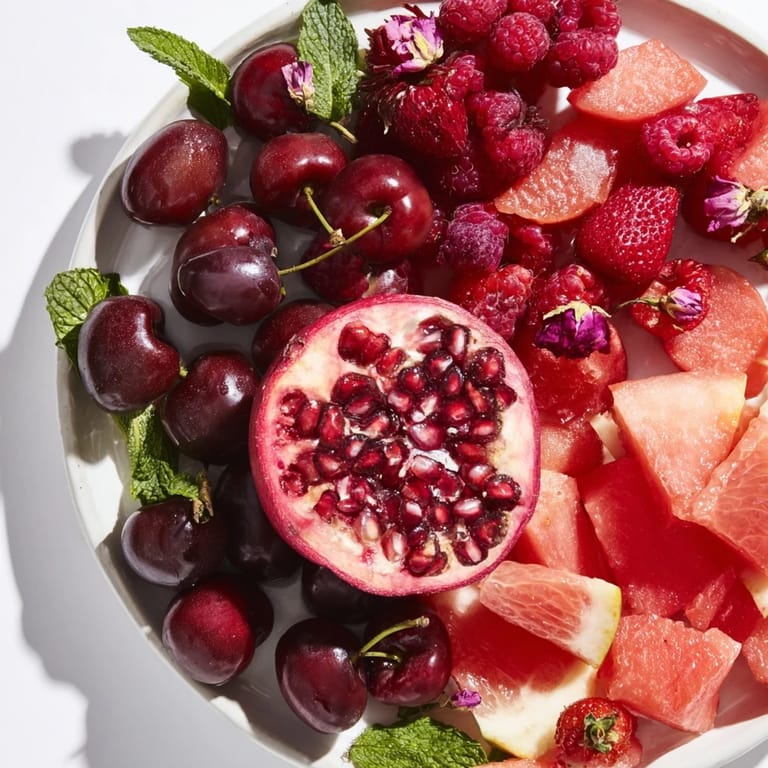
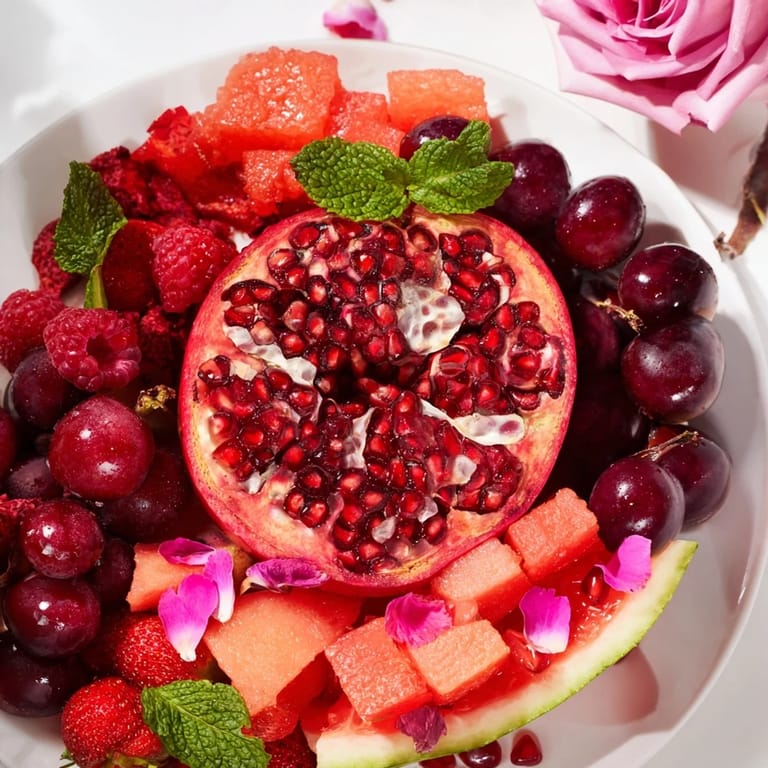
- 1 large pomegranate, halved: This is your visual anchor and the reason people stop and stare—the deep burgundy interior and jewel-like seeds create an instant focal point that makes everything else look intentional.
- Deep red fruits (1 cup dark cherries, 1 cup red grapes, 1 cup strawberries): These form the inner ring and should be the darkest, richest colors you can find—they set the tone for everything that follows.
- Pink fruits (1 cup raspberries, 1 cup watermelon cubes, 1 cup pink grapefruit segments): The middle layer where the real color magic happens; I learned to drain grapefruit segments on paper towels so they don't make everything soggy.
- Pale pink and white fruits (1 cup dragon fruit cubes, 1 cup apple slices, 1 cup pear slices): The outer edge softens the transition and adds delicate flavors that balance the sweeter berries; toss apples and pears with a little lime juice immediately after cutting to keep them looking fresh.
- Fresh mint leaves and edible rose petals (optional): These aren't just decoration—the mint releases its scent when people reach for fruit, and the petals add an unexpected touch that makes guests feel genuinely cared for.
Tired of Takeout? 🥡
Get 10 meals you can make faster than delivery arrives. Seriously.
One email. No spam. Unsubscribe anytime.
Instructions
- Set your stage with the pomegranate:
- Place the halved pomegranate in the center of your platter, cut side up, as if it's the heart of everything. Its weight and presence automatically tell you where all the other colors should dance around it.
- Begin with the deepest reds:
- Arrange your darkest fruits—the cherries, red grapes, and hulled strawberries—in a crescent around the pomegranate. Overlap them slightly so they nestle together like they chose their spots, and step back to see if the depth of red feels right.
- Build the pink transition:
- Layer your medium-toned fruits next—raspberries, watermelon cubes, and grapefruit segments—right alongside the red layer. This is where you'll feel the gradient come alive; it should feel like a sunset you're watching happen on the plate.
- Complete the color journey:
- Place the palest fruits at the outer edges—dragon fruit, apple, and pear slices arranged in gentle arcs. The eye should travel from burgundy through coral and pink and land on cream, as naturally as following a whispered instruction.
- Add final flourishes and timing:
- Scatter fresh mint leaves and rose petals if you're using them, letting them settle into small crevices rather than looking too placed. Serve immediately while everything is at its crispest, or cover loosely with plastic wrap and chill until guests arrive—never more than a few hours, or the cut fruits start to weep.
 Save
Save There was a quiet moment at the end of that same dinner party when my grandmother, who rarely comments on food, leaned over and said the platter was 'too beautiful to disturb'—then she reached for a strawberry anyway. That's when I understood this dish isn't really about the fruit at all; it's about giving people permission to enjoy something beautiful.
Choosing Fruit That Looks as Good as It Tastes
The difference between a platter that looks stunning and one that looks just okay comes down to texture and ripeness. I've learned to squeeze fruits gently as I shop—berries should give just slightly, stone fruits should have a little give without being soft, and melons should smell sweet at the stem. One Friday morning at the farmers market, I watched someone pick up a mango and sniff it like it was a clue to a mystery, and I realized they understood something I'd learned too: your nose knows better than your eyes sometimes.
Timing and Prep That Keeps Everything Perfect
I prep everything in stages now instead of all at once—the pomegranate and sturdy fruits hours ahead, and the delicate berries, cut apples, and pears just 30 minutes before serving. The platter sits in a quiet corner of my fridge, and when I pull it out, it feels like revealing something I've been working on all day, even though most of it took 25 minutes. There's something almost meditative about the careful arrangement, knowing that while the actual cooking time is zero, the presentation time is when the real care happens.
Pairing and Serving Ideas
This platter has become my secret weapon for any gathering where I want something impressive that doesn't signal stress. It sits beautifully next to sparkling rosé, pairs naturally with cheeses for a mixed board, and looks equally at home at a casual brunch or a fancier event. I've learned that fruit platters often get overlooked as 'not impressive enough,' but the people who love them love them fiercely—they're the ones who reach for seconds and remember the meal by how refreshed they felt.
- Drizzle very lightly with lime juice right before serving to prevent browning and add a subtle brightness.
- Swap seasonal fruits freely—red currants, lychees, persimmons, or stone fruits create endless variations without changing the concept.
- Chill your platter and serving spoons beforehand so every bite stays crisp and cold.
 Save
Save This platter has taught me that sometimes the most memorable dishes aren't the ones that took hours—they're the ones that showed up with intention and care. It's become my answer to a dozen different moments, and I hope it becomes yours too.
Cooking Questions
- → What fruits create the layered color effect?
Dark cherries, red grapes, strawberries form the deep red layer; raspberries, watermelon, grapefruit build the pink layer; dragon fruit, apple, and pear slices create the pale pink and white outer layer.
- → How do I keep apple and pear slices fresh?
Lightly drizzle lime juice over apple and pear slices to prevent browning and maintain fresh appearance.
- → Can the fruit choices be substituted?
Yes, try seasonal alternatives like red currants, pomegranate seeds, lychees, or peaches to customize the color palette.
- → What garnishes enhance the platter's aroma and color?
Fresh mint leaves and edible rose petals add vibrant color accents and a pleasant aroma to the arrangement.
- → How should the platter be served or stored?
Serve immediately for best freshness or cover and refrigerate until ready to serve to retain vibrant colors.