 Save
Save I'll never forget the first time I stood in a riad in Marrakech, watching a family arrange their evening spread with the same care a painter uses on canvas. Each small bowl held a different treasure—jewel-toned dips, brined vegetables, roasted nuts—arranged so thoughtfully that eating felt like an act of discovery. That night, I realized this wasn't just food; it was an invitation to slow down and taste everything. Now, whenever I recreate this Moroccan Tile Mosaic at home, I'm transported back to that moment, and my guests always seem to feel that same magic.
The first time I made this for a dinner party, I was nervous about pulling off something so visually ambitious. But as I arranged those colorful bowls on my grandmother's wooden board, something shifted. My eight-year-old nephew wandered in and gasped—he actually gasped—and suddenly I understood. This wasn't complicated cooking; it was storytelling through color and flavor. By the end of the night, there wasn't a single empty bowl, and people were still talking about how the preserved lemon changed everything.
Ingredients
- Classic hummus (1 cup): This is your creamy foundation—the one dip that bridges every flavor at the table. I learned to make my own after tasting one that was impossibly smooth, and that's when I discovered the secret: blend it longer than you think you should, and always finish with a generous drizzle of your best olive oil
- Baba ganoush (1 cup): The silky eggplant dip that converts skeptics. If you can, char the eggplant yourself over an open flame—the smoky undertone makes all the difference
- Muhammara (1 cup): Red pepper and walnut magic that tastes like warmth in a bowl. This was the dip that made my husband ask for the recipe, which rarely happens
- Labneh or Greek yogurt (1 cup): Creamy and tangy, especially when you crown it with zaatar. The olive oil drizzle is non-negotiable here
- Roasted red peppers (1 cup, sliced): Sweet and slightly charred—buy them jarred if life is busy, nobody judges
- Marinated artichoke hearts (1 cup, quartered): These little treasures have a subtle sophistication that turns a platter into something special
- Moroccan carrot salad (1 cup): Fresh shredded carrots brightened with lemon and cumin. This is where raw crunch meets North African spice in the best way
- Preserved lemons (1 cup slices): The ingredient that taught me that salty and sour could be beautiful together. Use them sparingly at first—they're a flavor accent, not the main voice
- Mixed Moroccan olives (1 cup): Deep, briny, sometimes spicy. Choose a mix of colors and sizes so the platter has visual rhythm
- Quick-pickled red onions (1/2 cup): Tart, beautiful, and they cut through the richness of the dips like a knife. Make these while you brew your tea—they only need 20 minutes
- Cornichons or baby gherkins (1/2 cup): The tiny pickles that add delicate crunch and vinegary brightness
- Roasted almonds (1/2 cup, unsalted): Earthy and satisfying. Toast them yourself if you can—the aroma alone is worth it
- Pistachios (1/2 cup, shelled): Green jewels that add visual pop and subtle, buttery flavor
- Toasted sesame seeds (1/4 cup): Nutty, golden, the finishing touch that adds texture and warmth
- Baguette (1, sliced and toasted) or gluten-free crackers: Your vehicle for the dips. Toasting bread just before serving keeps it crispy and warm—a small touch that elevates everything
- Mini pita breads (1 batch, quartered): Soft, pillowy, perfect for scooping. Warm them just slightly so they're still tender
- Pomegranate seeds (1/4 cup): Jewel-like bursts of sweet-tart juice that catch the light and make the platter sing
- Fresh mint leaves (1/4 cup): Cool and aromatic, a bridge between all the bold flavors
- Cilantro leaves (1/4 cup): Herbaceous and distinctly Moroccan, it speaks the language of this dish
- Sumac (1 tsp): Lemony without being sour, this spice dusted over everything adds a whisper of sophistication
- Extra virgin olive oil: For drizzling. Use the good stuff—this is where it matters most
Tired of Takeout? 🥡
Get 10 meals you can make faster than delivery arrives. Seriously.
One email. No spam. Unsubscribe anytime.
Instructions
- Prepare your dips with intention:
- Get your hummus, baba ganoush, muhammara, and labneh into small colorful bowls or ramekins. These are the anchors of your mosaic, so choose bowls in contrasting colors—think deep blue, warm terracotta, creamy white. If the dips have been refrigerated, let them sit out for a few minutes so they're at their creamiest. Crown the labneh with a generous pool of olive oil and a scatter of zaatar—this is where the magic starts
- Arrange your vegetables and pickles:
- Fill separate small bowls with the roasted red peppers, marinated artichoke hearts, Moroccan carrot salad, and preserved lemon slices. I like to keep these separate at first because each one deserves its own moment. The colors should already be singing—deep reds, golden yellows, bright oranges
- Build your nut and olive station:
- Set out the mixed olives, quick-pickled red onions, and cornichons in their own bowls. These are your salty, briny notes—the ones that wake up your palate and make you reach for more bread
- Toast your bread with care:
- Slice your baguette on a slight diagonal (this gives you better surface area for dipping, something I learned after many failed attempts) and toast the slices until golden and just crispy at the edges. If you're using pita, quarter it and warm it gently—you want it pliable, not brittle. The aroma of toasting bread is part of the experience, so breathe it in
- Arrange your mosaic with joy:
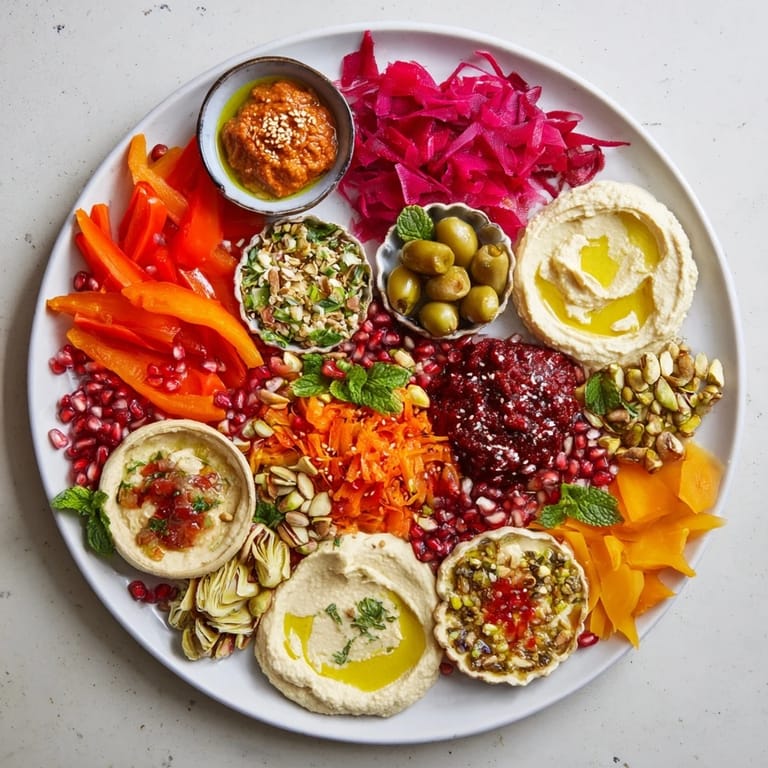
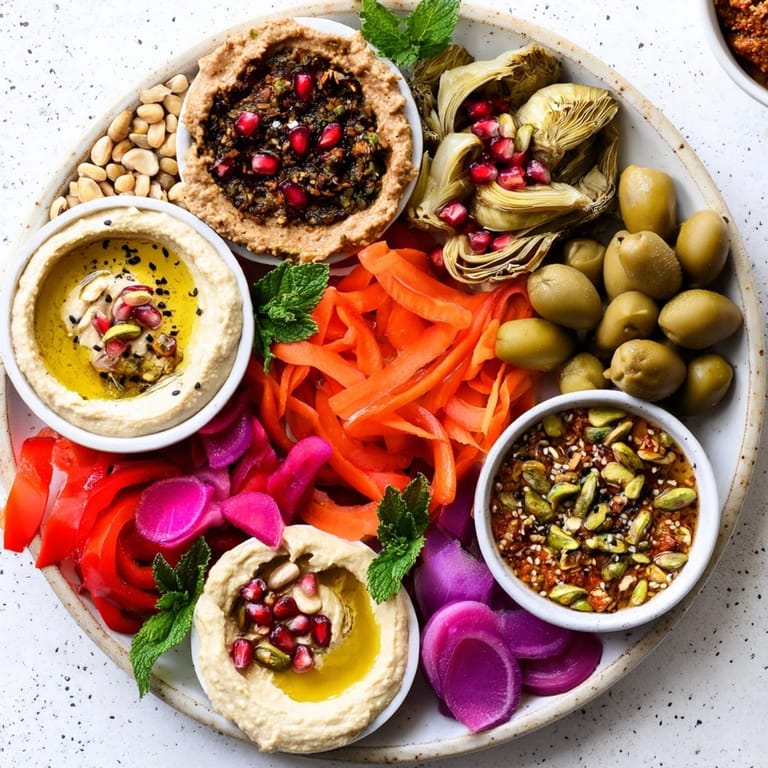
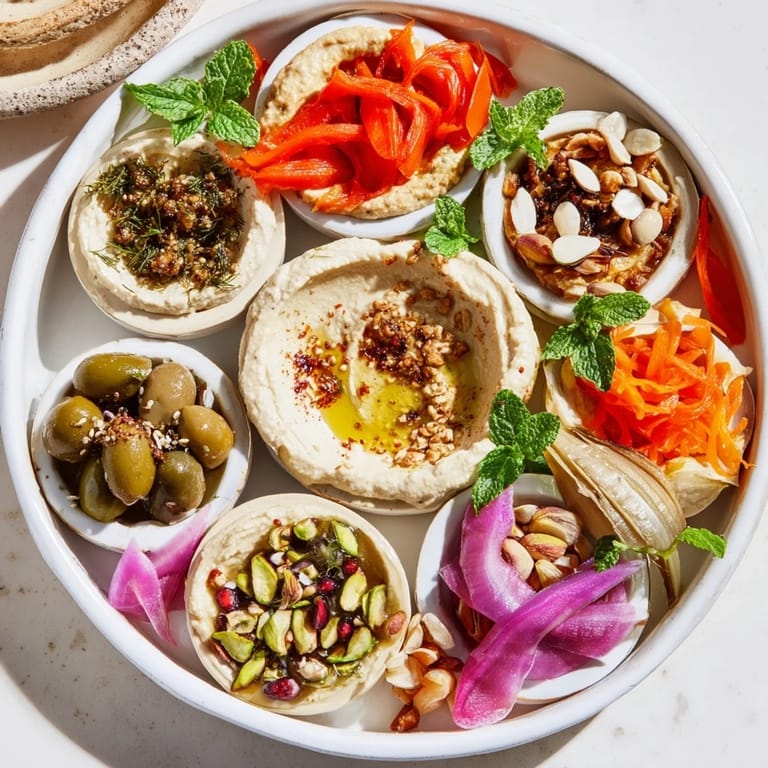
- On a large wooden board or serving tray, begin placing your filled bowls in a tight, thoughtful pattern. There's no right way to do this—think of it like creating a mosaic where each piece is essential but the pattern is yours. Fill the gaps between bowls with pomegranate seeds, fresh mint leaves, cilantro, and the remaining sesame seeds. This isn't just food anymore; it's art that happens to be edible
- The final flourishes:
- Drizzle extra virgin olive oil over the dips and across some of the vegetables. Dust everything lightly with sumac—not too much, just enough to add color and a hint of lemony brightness. Step back and look at what you've created. You did that
- Serve with generosity and invitation:
- Bring this to the table and watch people pause. Encourage them to mix flavors—a little hummus with preserved lemon, baba ganoush with pomegranate, muhammara with a crispy bread bite. This is meant to be explored, combined, discovered. Serve immediately while the bread is still warm and the herbs are still bright
 Save
Save What surprised me most about this dish was how it transformed a casual dinner into something ceremonial. There's an old-world quality to gathering around a platter this beautiful—it slows everyone down and creates a kind of shared ritual. My dad, who usually rushes through meals, spent an hour exploring flavor combinations, asking questions about where each ingredient came from. That's when I knew this recipe was about more than food.
The Art of the Mosaic
The beauty of this platter lies in its visual composition as much as its flavors. Think of your board like a canvas where colors, textures, and shapes work together to create harmony. Clustered bowls shouldn't touch—leave breathing room between them so each color stands out. The herbs and pomegranate seeds are your paintbrush, filling gaps with life and movement. I once had a guest tell me it looked too beautiful to eat, and I took that as the highest compliment. The magic is that it's meant to be both beautiful and thoroughly enjoyed.
Flavor Combinations to Guide Your Guests
While the freedom to mix and match is part of the joy, there are some flavor combinations that create especially lovely moments. The preserved lemon with baba ganoush creates a bright, sophisticated bite. The pomegranate seeds with muhammara are sweet and nutty together. The quick-pickled red onions with creamy labneh create a perfect tension between tart and cool. I suggest standing near the platter at first and gently guiding people toward discoveries—watch their faces light up when flavors click into place.
Preparing Ahead and Customizing
The genius of this recipe is that almost everything can be done in advance. Make your dips the day before, quick-pickle your red onions that morning, prep your vegetables ahead of time. Toast your bread just before serving, and arrange the whole platter not more than 30 minutes before guests arrive. This gives you freedom to actually enjoy your own party. As for customization, this is where you make it yours—add roasted beets, candied walnuts, crispy chickpeas, or seasonal vegetables. You could add grilled halloumi for richness, or crumbled feta for sharpness. The structure stays the same, but the ingredients are your signature.
- Make dips up to 24 hours ahead, storing them in airtight containers in the cool fridge
- Prep all vegetables and herbs the morning of, keeping them in separate containers so they stay fresh
- Toast bread just before serving to ensure it stays crispy and warm
- Customize boldly—this platter is meant to reflect what you love and what's seasonal
 Save
Save This Moroccan Tile Mosaic is more than a recipe—it's an invitation to slow down and celebrate the simple pleasure of gathering. It's become my favorite way to welcome people into my home because it says everything I want to communicate: I'm thinking of you, I want you to enjoy yourself, and there's room for everyone at this table.
Cooking Questions
- → What dips are included in the mosaic platter?
The platter features classic hummus, baba ganoush, muhammara, and labneh or Greek yogurt drizzled with olive oil and zaatar.
- → Can this dish accommodate gluten-free diets?
Yes, by serving the platter with gluten-free crackers or bread, it easily suits gluten-free preferences.
- → What marinated vegetables are used?
Marinated vegetables include roasted red peppers, artichoke hearts, Moroccan carrot salad, and preserved lemon slices.
- → Are there nut options included on the platter?
Yes, roasted almonds, pistachios, and toasted sesame seeds add crunch and flavor to the spread.
- → How is the Moroccan tile mosaic pattern achieved?
Dips, vegetables, olives, and nuts are arranged tightly in small colorful bowls on a tray to mimic a vibrant mosaic layout.
- → Can this platter be made vegan?
Yes, omit the labneh or substitute with plant-based yogurt to keep it vegan-friendly.