 Save
Save Last summer, I was tasked with bringing an appetizer to a friend's garden party, and I wanted something that would make people pause mid-conversation. I'd just returned from a market trip where the vegetables looked impossibly vibrant—reds that seemed to glow, yellows that caught the light. That's when the idea struck: what if I arranged everything into a tent shape, like a miniature Moroccan souk right there on the table? The concept felt playful and a little ambitious, but the moment I started layering those vegetables in pointed triangles, I knew I'd stumbled onto something special.
I served this at that garden party on a late afternoon when the sun was just starting to soften everything gold. I remember watching my friend's face light up when she saw it—not because it was complicated, but because it felt intentional and warm, like I'd brought a little piece of Morocco to her backyard. People kept gathering around, dipping and talking, and somehow the platter became the center of the whole evening.
Ingredients
- Cucumber: Slice lengthwise for long, elegant strips that hold their crunch—the coolness is a perfect anchor against warm spiced dips.
- Red and yellow bell peppers: These are your tent's color story; slice into thick strips so they stand proud and don't get lost on the platter.
- Carrots: Cut into thick sticks, not thin batons—they need presence and should stay snappy even after sitting out.
- Cherry tomatoes: Halved, they roll slightly and catch light; their sweetness cuts beautifully through earthy dips.
- Red onion: Thin slicing mellows the bite without losing the snap; this is where a sharp knife matters.
- Radishes: That peppery bite feels alive on the palate, and their pink centers add unexpected color.
- Pita or msemen: Warming them briefly makes them flexible enough to fold without cracking and transforms them from afterthought to worthy bread player.
- Hummus: Buy good hummus or make your own; it's the creamy foundation that ties everything together.
- Muhammara: This roasted red pepper dip brings smoke and warmth—it's the emotional center of your dip trio.
- Baba ganoush: Silky and subtle, it keeps things from feeling one-note and adds earthiness.
- Olives: Both green and black; their briny funk is essential for depth and contrast.
- Fresh herbs: Cilantro or parsley scattered at the last moment feels like a finishing touch, not a requirement.
- Toasted sesame seeds: These add a nutty crunch and catch the light beautifully.
- Cumin and smoked paprika: Sprinkle generously over the dips—they're your flavor whisper that says this isn't just a vegetable platter.
Tired of Takeout? 🥡
Get 10 meals you can make faster than delivery arrives. Seriously.
One email. No spam. Unsubscribe anytime.
Instructions
- Start with your canvas:
- Clear off your largest platter and give it a gentle wipe. You want a blank stage for what comes next.
- Slice with intention:
- Cut each vegetable into pieces that feel substantial and stackable. This isn't about perfection; it's about pieces that stand tall and catch the eye.
- Build your tent shape:
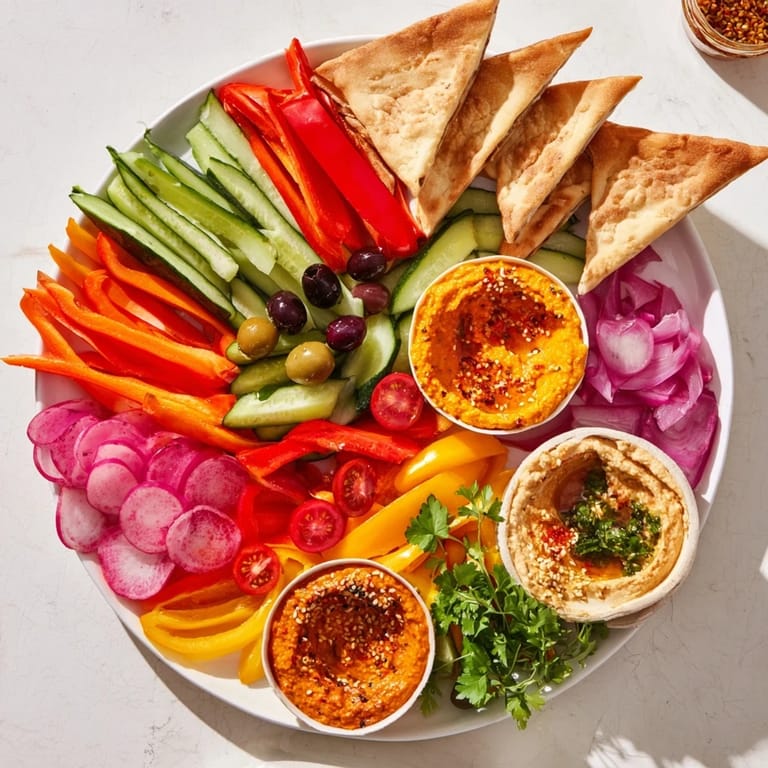
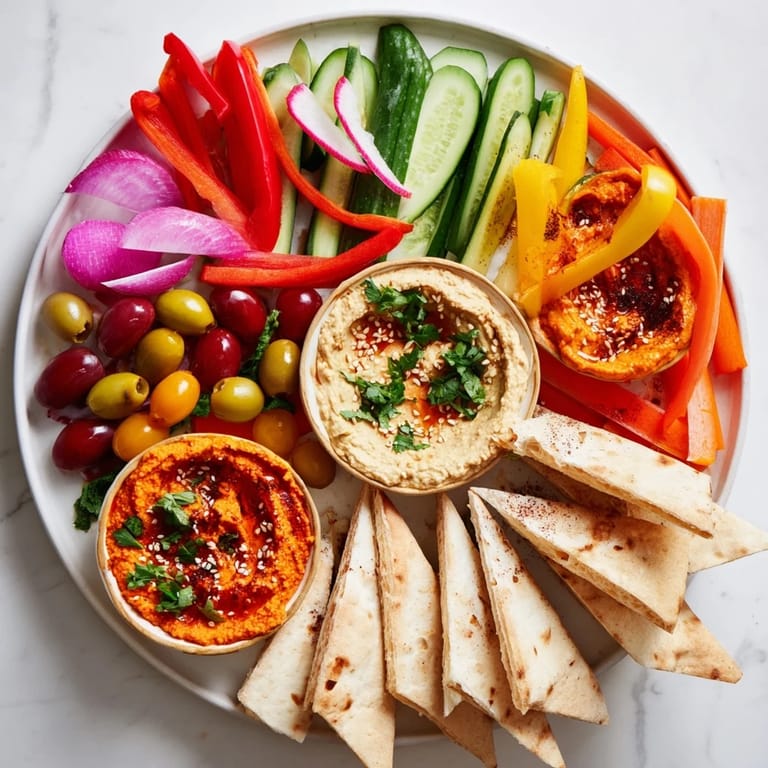
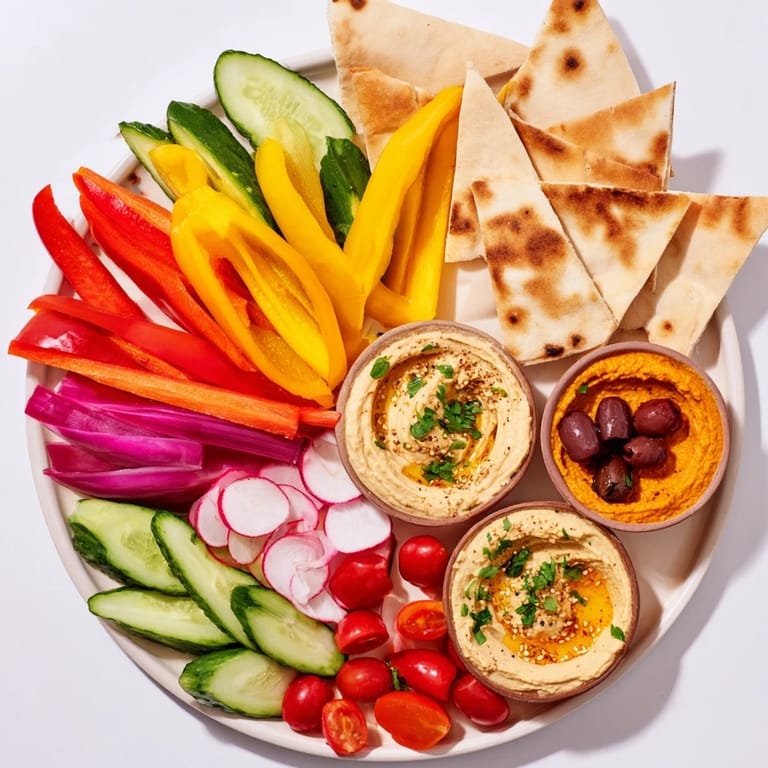
- Start from the center and work outward in a circular pattern, layering vegetables in tall triangular groupings like a canopy. Alternate colors deliberately—red next to yellow, then orange carrots, so the whole thing feels like a sunset.
- Warm your breads:
- In a dry skillet over medium heat, warm the pita or msemen for just 2–3 minutes per side until they're pliable and warm to the touch. Cut them into triangles while still warm so they fold naturally.
- Fan the bread base:
- Arrange the bread triangles around the bottom perimeter of your tent like a foundation, fanning them slightly so guests can grab easily.
- Center your dips:
- Spoon each dip into its own small bowl or nest them at the center base of the tent. Sprinkle each with a pinch of cumin and paprika, then scatter sesame seeds across the top—this tiny gesture signals that something special lives here.
- Final garnish:
- Scatter the olives around the dips and finish with a generous handful of chopped cilantro or parsley across the whole arrangement. Step back and look at what you've made.
- Serve with presence:
- Bring it to the table and give it a moment before the crowd descends. Let people see the whole picture before it becomes history.
 Save
Save There's a moment when everything shifts from preparation to presentation. I'll never forget the quiet that fell over my friend's garden when people first saw this platter—not awkward silence, but the kind that happens when something lands exactly right. It became less about an appetizer and more about an experience, a reason to gather close and try new combinations.
The Magic of Arrangement
The tent shape isn't just for looks—though it is stunning. There's something about the geometry that makes people move around the platter differently, approaching from different angles, seeing new color combinations as they shift position. The pointed canopy naturally draws the eye upward and inward, and suddenly vegetables that might have seemed ordinary become part of an intentional landscape. This is when cooking stops being about taste alone and becomes about creating a moment worth remembering.
Building Flavor Through Contrast
Each vegetable plays a specific role in the overall experience. The sweet peppers bridge the raw vegetable world and the spiced dip world. The radishes and red onion add brightness and a slight peppery bite that wakes up your palate. The cucumber stays cool and mild, a palate cleanser. Together, they're not just a vegetable tray—they're a conversation between textures and temperatures and tastes.
Making It Yours
The beauty of this platter is that it welcomes improvisation. I've added roasted chickpeas for crunch and marinated feta cubes for richness. I've swapped in snap peas when cucumbers looked tired at the market. I've even made a vegan version by ensuring every element came from plant-based sources, and honestly, no one noticed what was missing.
- Swap or add vegetables based on what looks best at your market that day—this platter is forgiving and actually better when it feels seasonal.
- Make your own dips if you have time; store-bought works beautifully, but homemade brings an extra layer of intentionality.
- Remember that this platter becomes even more stunning if you let it sit for 15 minutes after assembly so the colors and shapes settle into something cohesive.
 Save
Save This platter taught me that sometimes the most memorable food moments aren't about complexity or technical skill—they're about caring enough to present something with thought and warmth. Serve it and watch what happens.
Cooking Questions
- → What types of breads work best for this platter?
Soft flatbreads like pita or Moroccan msemen are ideal, as they can be warmed and cut into triangles to complement the vegetables and dips.
- → Can the dips be prepared in advance?
Yes, the hummus, muhammara, and baba ganoush can be made or stored ahead, allowing for quick assembly before serving.
- → How should the vegetables be arranged for the best presentation?
Arrange sliced vegetables in pointed, triangular groupings that mimic a tent canopy, alternating colors for an appealing, festive look.
- → Are there suitable variations for different dietary needs?
Using vegan dips and gluten-free flatbreads can adapt the platter to various dietary preferences while maintaining vibrant flavors.
- → What garnishes enhance the flavor profile?
Chopped fresh herbs like cilantro or parsley, toasted sesame seeds, ground cumin, smoked paprika, and pitted olives add depth and aroma.