 Save
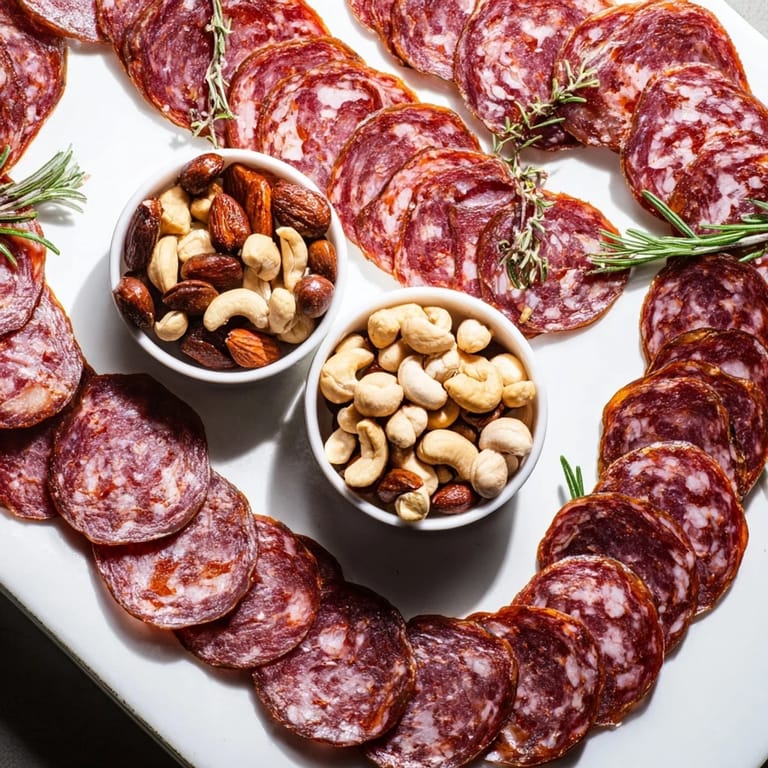
Save I first made this at a dinner party when I'd invited eight people but panicked realizing I had almost nothing prepared. Staring at my charcuterie board with some beautiful salami and two tiny bowls of nuts, I had this ridiculous moment of inspiration—what if I arranged the meat into a figure-eight that connected both bowls? It took maybe ten minutes, looked impossibly elegant, and my guests couldn't stop playing with it, weaving their fingers along the pattern while snacking. That night taught me that sometimes the best entertaining happens when you stop overthinking and just play a little.
My friend Marco laughed when he arrived and saw me fussing over the exact curve of the salami slices, insisting on perfect overlap. He grabbed a piece anyway and smiled that knowing smile of someone who realizes food isn't just about taste—it's about the small joy of discovering something thoughtfully arranged. By the end of the evening, everyone had commented on it, and Marco told me later it was the one appetizer people actually remembered.
Ingredients
- High-quality salami, 24 thin slices (about 150 g): The thinner you can slice it, the more gracefully it curves and weaves; ask the deli counter to cut it paper-thin if you're not slicing it yourself, and don't shy away from splurging a little here since it's the star.
- Roasted mixed nuts, 2 cups total (240 g): The combination of textures and flavors keeps people reaching back, and roasted nuts have a deeper, more satisfying warmth than raw ones.
- Fresh herbs like rosemary or thyme sprigs (optional): These aren't just decoration; they add a whisper of aroma and a hint of color that makes the whole board feel intentional.
- Crackers or breadsticks (optional): They give guests another texture to play with, though honestly, most people eat the salami and nuts straight.
Tired of Takeout? 🥡
Get 10 meals you can make faster than delivery arrives. Seriously.
One email. No spam. Unsubscribe anytime.
Instructions
- Set the stage:
- Place your two small bowls about a foot apart on your largest platter or board—this spacing is what makes the figure-eight actually work and not just look cramped. Fill each bowl generously with nuts so they feel abundant.
- Start the loop:
- Begin laying your salami slices at one bowl, slightly overlapping each piece so they flow smoothly without gaps. The overlap is key; it's what makes the whole thing feel like one continuous ribbon instead of separate pieces.
- Weave the pattern:
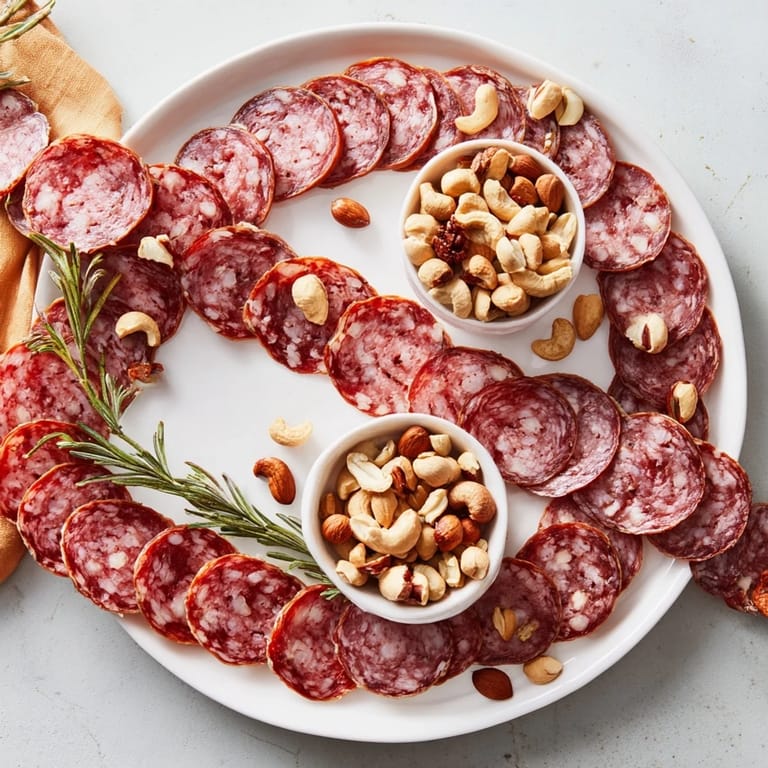
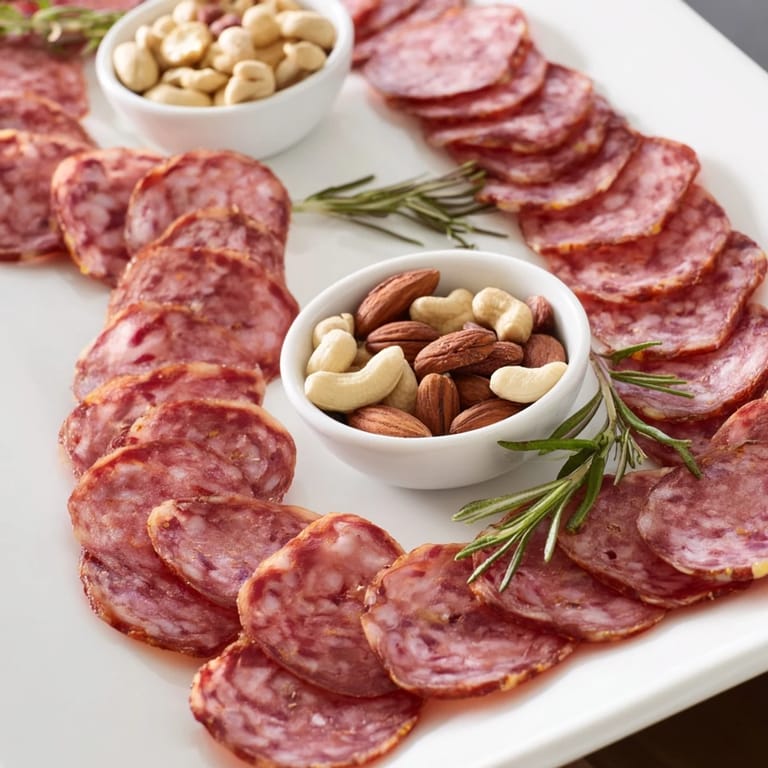
- Guide your salami around and between the bowls in a gentle figure-eight, letting the natural curve of the slices guide you—there's no need to force them into tight shapes. By the time you've laid all twenty-four slices, you'll see the pattern emerge almost on its own.
- Add the finishing touches:
- Tuck herb sprigs into the spaces around the salami, tucking a few right into the bowls for visual continuity. Step back and look at it from above; you're aiming for balance, not perfection.
- Serve with intention:
- Bring it out when you're ready for people to gather, and if you catch their faces when they first see it, you'll understand why this simple trick feels like such a win.
 Save
Save I made this for my mother's book club gathering last spring, and one of her friends spent the whole evening commenting on how impressed she was by the presentation. Later, my mom told me that friend had started asking about entertaining and confidence in the kitchen—all because of a simple salami loop. That moment made me realize that food, even when it's this straightforward, can genuinely inspire people to take a risk and try something a little more creative at home.
The Art of Arrangement
There's something meditative about this kind of plating, even though it takes almost no time. As you lay down each slice, you start to notice which angles look best, which overlaps feel right, and how the pattern begins to reveal itself. It's not about following a strict template; it's more like conversation with the food, letting the salami show you what it wants to become.
Playing With Your Components
While nuts and salami are a natural pairing, this framework is genuinely flexible. I've done it with different types of cured meats—spicy chorizo, fennel salami, even prosciutto—and each one changes the visual and flavor story slightly. The beauty is that you can adapt it to whatever you have on hand or whatever your guests actually prefer to eat.
Beyond the Basic Setup
Once you feel confident with the salami-and-nuts version, start experimenting with what fills those bowls. Marinated olives create a briny contrast, dried apricots add a touch of sweetness, or even roasted chickpeas bring unexpected crunch.
- Try arranging the salami on the board a few minutes before guests arrive so it settles into place and looks intentional rather than hastily thrown together.
- If you're serving a mixed group with different dietary preferences, set aside a small bowl of roasted vegetables or dairy-free spreads so everyone can enjoy their own version of the experience.
- The figure-eight looks best when it's the centerpiece of your spread, so give it room to breathe and don't clutter the board with too many other items competing for attention.
 Save
Save This appetizer has become my go-to move because it proves that entertaining doesn't require hours in the kitchen—just a little thoughtfulness and a willingness to see ordinary ingredients as something playful. Serve it with confidence and watch people smile.
Cooking Questions
- → How do I create the infinity loop with the salami slices?
Arrange the salami slices in a continuous figure-eight shape, weaving them around and between two bowls placed 12 inches apart, slightly overlapping for a seamless look.
- → Can I use different types of nuts?
Yes, roasted mixed nuts such as almonds, cashews, hazelnuts, or pecans work well and add variety to the flavor and texture.
- → Are there alternatives to salami for a vegetarian option?
Substitute the salami with marinated grilled vegetables to maintain a similar presentation and taste profile.
- → What garnishes complement this appetizer?
Fresh herb sprigs like rosemary or thyme add color and aroma, enhancing the overall presentation.
- → What beverages pair best with this appetizer?
Dry white wine, light red wine, or sparkling wine complement the flavors and textures beautifully.