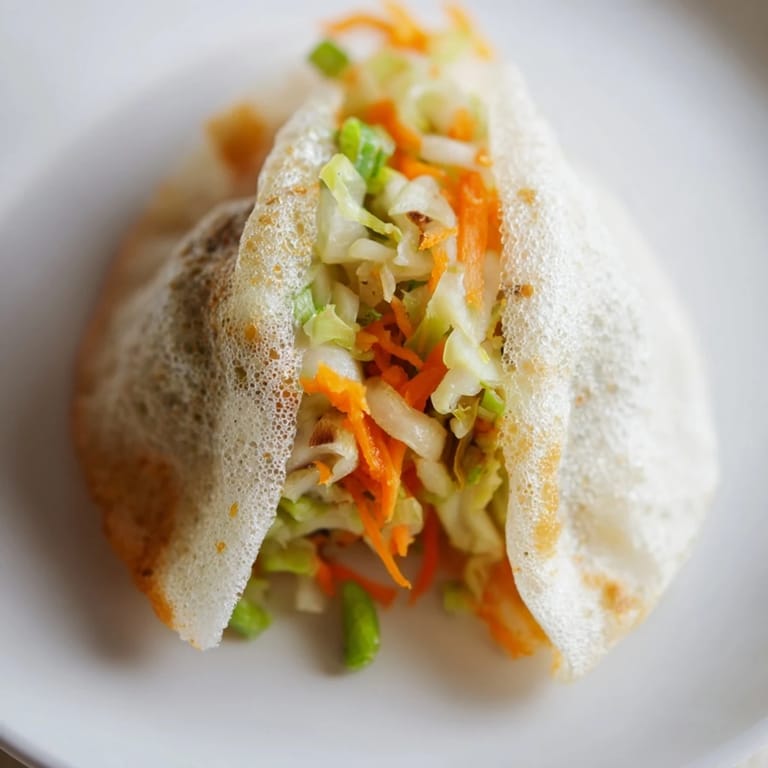
 Save
Save I discovered these crispy rice paper dumplings on a quiet Sunday morning when I was trying to recreate something I'd eaten at a tiny hole-in-the-wall restaurant weeks before. The trick, I learned, wasn't some secret ingredient—it was patience with the rice paper itself and understanding that golden crispiness comes from respecting the heat. Now they're what I make when I want something that feels restaurant-quality but actually takes less time than ordering delivery.
I remember making a batch for a friend who'd been stressed about a work presentation, and watching her face light up when she bit into one—the way the exterior crackled under her teeth—made the 25 minutes of prepping feel completely worth it. Food has this quiet power to shift someone's mood, and these dumplings somehow managed to do that.
Ingredients
- Green cabbage: Shredded fine so it softens evenly and absorbs all the savory flavors without turning mushy.
- Carrot: Grated so it cooks quickly and adds natural sweetness that balances the soy sauce beautifully.
- Shiitake mushrooms: Their umami depth is what makes the filling taste rich and restaurant-worthy, not thin.
- Green onions: Sliced thin for a sharp, fresh note that cuts through the richness of the fried wrapper.
- Garlic and fresh ginger: Both minced small—this is where you build the aromatic backbone of the whole thing.
- Soy sauce or tamari: Use tamari if you need gluten-free; either way, this is your salt and savory anchor.
- Sesame oil: Just a teaspoon; it's potent and adds a toasted, warm depth you'll notice immediately.
- Rice paper: The 22 cm rounds are the right size—too small and filling escapes, too large and they don't crisp evenly.
- Neutral oil: Canola or avocado oil for frying; you want something with a clean taste that lets the filling shine.
- Dipping sauce: Rice vinegar gives brightness, maple syrup or honey adds a subtle sweetness, and chili flakes bring heat if you want it.
Tired of Takeout? 🥡
Get 10 meals you can make faster than delivery arrives. Seriously.
One email. No spam. Unsubscribe anytime.
Instructions
- Build Your Filling Base:
- Combine cabbage, carrot, mushrooms, green onions, garlic, soy sauce, sesame oil, and ginger in a large bowl and mix until every piece is coated. The bowl should smell fragrant and alive at this point—that's how you know the aromatics are working.
- Sauté Until Just Tender:
- Heat a nonstick skillet over medium heat, add the filling, and cook for 3-4 minutes, stirring gently. You want the vegetables softened but still with a little texture; overcooked filling makes soggy dumplings. Let it cool for a minute or two before wrapping.
- The Rice Paper Dance:
- Fill a shallow dish with warm (not hot) water. Dip each sheet of rice paper for 5-10 seconds—this is the moment where impatience fails you because over-soaked paper tears like tissue. Lay it on a damp kitchen towel the moment it's pliable.
- Roll with Intention:
- Place 2 tablespoons of filling in the center of each rice paper sheet, fold in the sides, and roll tightly like a burrito. Not too loose, not so tight you're fighting the wrapper—confident and smooth.
- The Sizzle Matters:
- Heat oil in your skillet over medium heat until it shimmers gently. Place dumplings seam-side down, leaving space between each one so steam can escape and that golden crust can form. Don't crowd the pan or they'll steam instead of fry.
- Achieve That Golden Crust:
- Cook 2-3 minutes per side until they're deeply golden and the rice paper sounds crispy when you tap it with a spatula. Flip gently with tongs to avoid tearing, and be patient—the crust is building.
- Mix Your Dipping Sauce:
- Combine soy sauce or tamari, rice vinegar, maple syrup or honey, and chili flakes in a small bowl. Taste it and adjust—if it's too sharp, add a touch more sweetness; if it's flat, chili flakes wake it up.
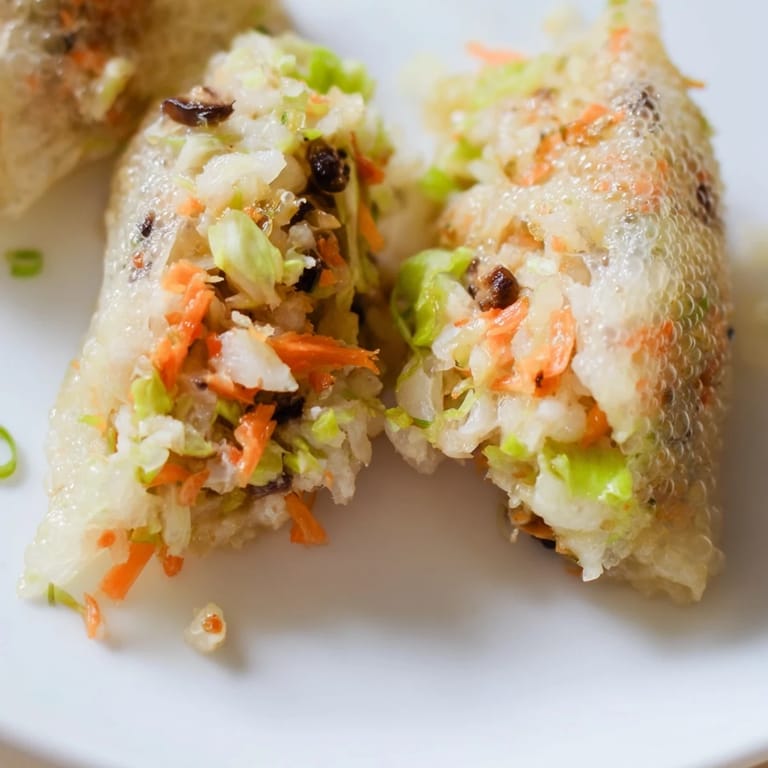 Save
Save There's a moment when you first flip a dumpling and hear that unmistakable crackle—that's the sound of knowing you nailed it. It's a small victory, but it's yours, and it tastes like confidence.
Getting the Wrapper Just Right
Rice paper is delicate but forgiving if you respect it. The water needs to be warm enough to soften the paper but not so hot that it becomes sticky and falls apart in your hands. I learned this the hard way by trying to speed things up with hot water and ending up with a destroyed pile of wrappers. Now I fill a dish at the start of my prep and let it sit—the temperature stays perfect throughout the process. The damp kitchen towel underneath each wrapped dumpling is equally important because it prevents sticking and gives you a stable surface to work from.
Why the Filling Works
This filling tastes complete because it layers flavors instead of relying on one dominant note. The sautéed vegetables soften slightly so they hold together, but they're not mushy because you're only cooking them briefly. The garlic and ginger add warmth without shouting, the sesame oil brings toasted depth, and the soy sauce ties everything into something cohesive and savory. This balance is what makes people ask for the recipe—they can taste that something is right about it, even if they can't name each component.
Variations and Personal Touches
These dumplings are honestly a blank canvas if you want them to be. I've added finely chopped tofu for protein and texture, and it disappears into the filling so seamlessly that you almost forget it's there. Cooked shredded chicken works beautifully too if you're feeding people who want something more substantial. Some days I double-wrap them in a second sheet of rice paper if I'm feeling ambitious and want an extra-crispy exterior—it takes a few more minutes but creates an almost chip-like crunch that's addictive.
- Add minced fresh cilantro or Thai basil for an herbal brightness that shifts the whole flavor profile.
- Swap the filling partly with crispy tofu cubes or ground mushroom for different textures and depths.
- Make extra dipping sauce with different chili pastes or add lime juice for brightness.
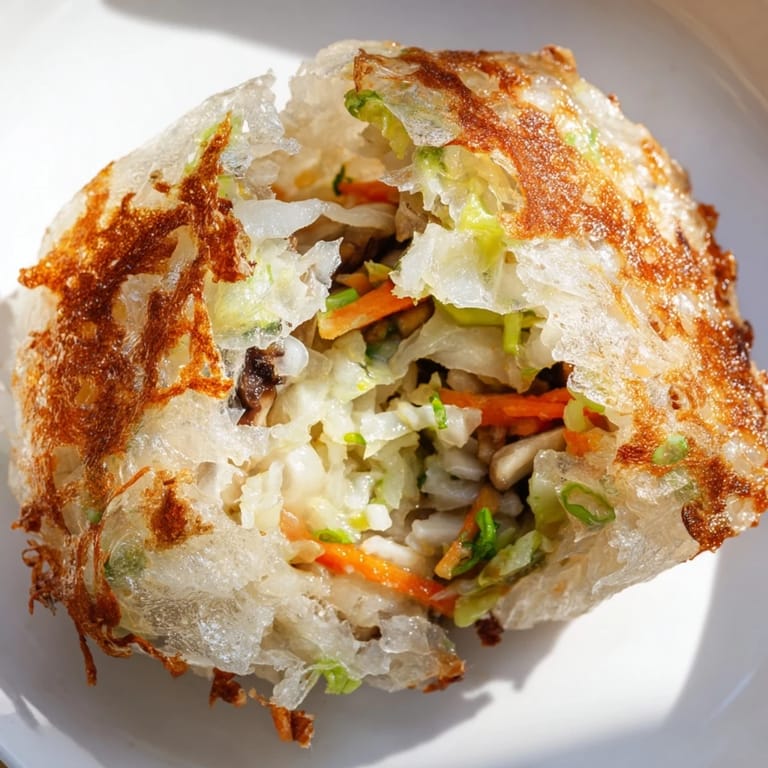 Save
Save These rice paper dumplings remind me that sometimes the simplest techniques create the most satisfying results. Make them once and you'll understand why they've become such a favorite to have in your rotation.
Cooking Questions
- → How do I prevent the rice paper from tearing?
Dip the rice paper briefly (5-10 seconds) in warm water until just pliable. Avoid soaking too long as it weakens the wrapper.
- → Can I prepare the filling in advance?
Yes, the vegetable filling can be made ahead and refrigerated. Reheat slightly before assembling for best results.
- → What oil is best for frying these dumplings?
Neutral oils with a high smoke point, such as canola or avocado oil, work well to achieve a crispy finish.
- → Can I add protein to the filling?
Absolutely. Finely chopped tofu or cooked chicken can be included to enhance protein content and texture.
- → How should I store leftover dumplings?
Cool completely before storing in an airtight container in the refrigerator. Reheat in a skillet to restore crispiness.